



Aiden Robbins grew up in Yardley, Pennsylvania, just outside of Trenton on the other side of the Delaware River, and attended Holy Ghost Preparatory School in nearby Bensalem. A three-year varsity letterman there, he hit a cumulative .414/.508/.828 in 67 games for the Firebirds, logging 25 doubles, 6 triples, 15 home runs, 19 stolen bases in as many attempts, and 46 walks to 43 strikeouts. Multiple members of his family pursued athletics, with his uncle playing football at the University of Delaware,
a cousin playing lacrosse at Rosemont University, and another cousin rowing at the University of Massachusetts, but Robbins elected to take his baseball talents to Seton Hall University due to his positive interactions with the coaching staff there.
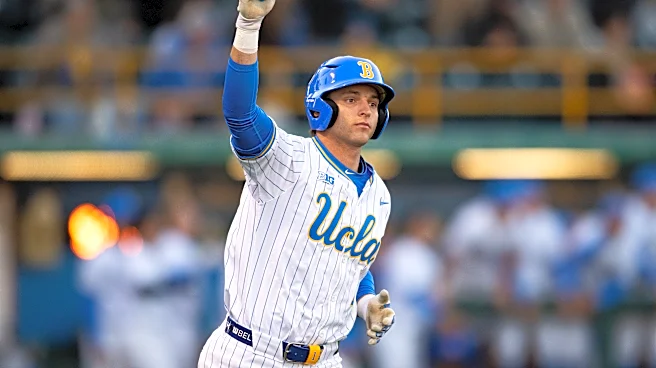
In his freshman year at Seton Hall, Robbins appeared in 43 games for the Pirates and hit .302/.368/.512 with 6 doubles, 5 triples, 6 home runs, 10 stolen bases in 12 attempts, and drew 15 walks to 31 strikeouts. That summer, he played for the Geithersburg Giants of the Cal Ripkin Collegiate League and the Harwich Mariners of the more prestigious Cape Cod Baseball League. At the Cape, he enjoyed a great deal of success, going 10-26 in 7 games with a double, a home run, and a stolen base.
He returned to Seton Hall for his sophomore year and was even better. Appearing in 53 games, Robbins hit .422/.537/.652 with 19 doubles, 5 triples, 6 home runs, 20 stolen bases in 21 attempts, and drew 44 walks to 32 strikeouts. He played for Harwich again that summer, and in 26 games with them over the summer of 2025 hit .307/.391/.545 with 6 doubles, 6 home runs, 2 stolen bases in 3 attempts, and drew 13 walks to 37 strikeouts.
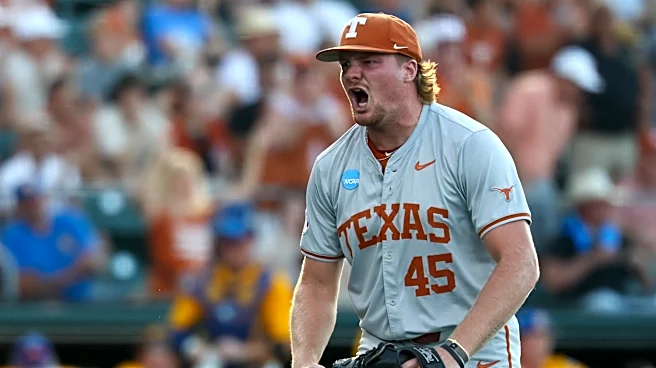
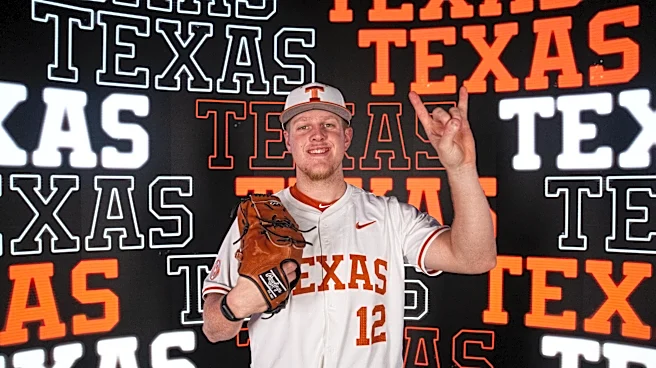
Rather than returning to Seton Hall for his junior season, Robbins entered the NCAA transfer portal and transferred to the University of Texas for the 2026 season. Rather than wilt against tougher competition, the outfielder rose to the occasion. Appearing in 60 games, he hit .333/.426/.696 with 10 doubles, 2 triples, 24 home runs, 12 stolen bases in 13 attempts, and drew 39 walks to 65 strikeouts; his 1.222 OPS was a top 10 among SEC hitters in 2026, and his nearly equal 1.120 OPS against in-conference competition was in the top 5.
At the plate, the 6’2”, 205-pound Robbins stands extremely open, holding his hands high at the eyes and wrapping his bat behind his head at 2:00. More often than not, he begins his weight transfer early and ends up balancing on his back leg with his lead leg hanging in the air. He added this unique movement to his pre-swing set-up after transferring to the University of Texas; prior, at Seton Hall, he had a much more pedestrian set-up, with a standard low leg lift. Whether or not the Mets will consider his unique pre-swing set-up as “signature movements” and leave them be or coach them out of him remains to be seen; it is worth noting that the team has not had success with other players with unique pre-swing set-ups considered “signature movements” as well, such as Kevin Parada or Alex Ramirez.
Robbins generates easy light tower power with his combination of natural bat speed, strength, and swing angle, and when he makes solid contact, the ball flies off of his bat, with numerous recorded 100+ exit velocities. Making solid contact has been a problem for him at times, especially since coming to Texas for the 2026 season. Part of the reason why the outfielder literally quadrupled his single-season home run high was became he became much more aggressive at the plate. His strikeout rate rose from 16.8% and 12.5% in his two seasons at Seton Hall to 22.9%, but with it, his cumulative 10% HR/FB% rates almost tripled to 29.6%. This has exposed some pitch recognition issues in his approach at the plate, particularly regarding secondary pitches; at no point has Robbins had issues with fastballs, even fastballs with premium velocity, but he has shown some underlying issues against breaking balls and off-speed pitches. He generally makes poor contact against such pitches and has an elevated strikeout rate against them as compared to fastballs. The right-hander has a solid sense of the strike zone, highlighted by a cumulative 13.5% walk rate over his three collegiate years, but since adopting his current strategy at the plate, he has struggled to adapt to pitches that move once he commits to swinging.
In the field, Robbins played left field and right field at Seton Hall, and then played most of his time in center this past year with Texas. All in all, while he is athletic, he does not have the second gear that you want in a centerfielder to close in on balls; Robbins has fringe-average speed, but it takes him a while to get there. This affects him on the basepaths as well, where he is more of an opportunistic base thief, rather than a true threat on the basepaths. Coupled with his average arm, and defensive instincts that are not poor but do not stick out either, and Robbins is more likely to develop into a corner outfielder than a centerfielder.
In addition to his on-the-field contributions to the game, Robbins is considered a great teammate and a true leader. In 2010, while still just a child himself, he lost a friend to neuroblastoma, a rare and aggressive form of cancer that primarily affects infants and children under the age of 5. Shortly thereafter, he began participating in St. Baldrick’s head-shaving events, and in the years since has raised tens of thousands of dollars for the pediatric and childhood cancer charity, involving friends, family, and teammates in his “Locks Off for Lauren” initiative.