


The luxury of securing the 2-seed is a comfy view from the top. While the Boston Celtics spent the final weeks of the regular season fine-tuning rotations and monitoring their health, the lower tier of Eastern Conference playoff teams were in a chaotic sprint toward the finish line.
The 5 through 10 seeds shuffled around all season, and now, with the dust settled, the Sixers and Magic find themselves in the Play-In.
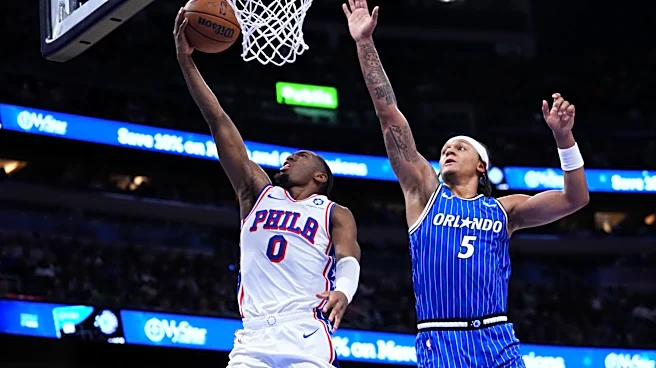
On Wednesday, Philadelphia and Orlando will face off in the 7/8 game. The winner gets
a date with Boston in Round 1. The loser gets one more chance to stay alive, with Detroit waiting.
For the Celtics, waiting on their matchup is familiar territory — and so are their two options. The Magic and Sixers are on different timelines, but they’ve ended up in a similar place statistically.
They rank 17th and 18th in net rating — Orlando at +0.6, Philadelphia at -0.1. On paper, it’s a coin flip. The injury picture says otherwise.

If it’s the Magic
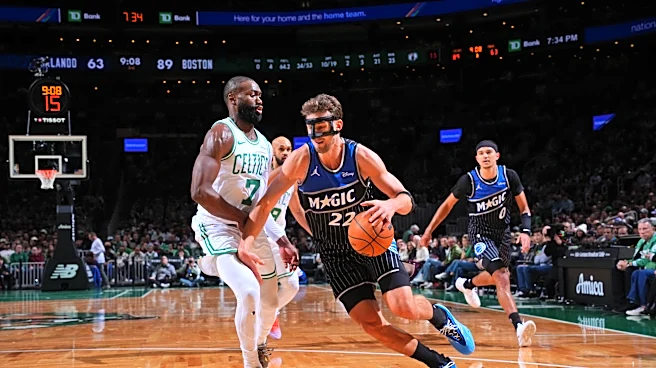
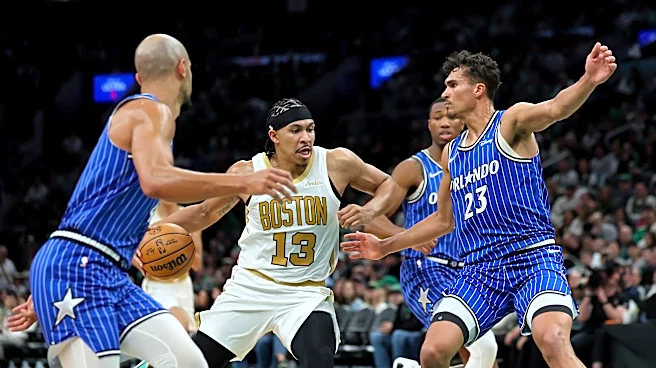
Boston already knows what Orlando looks like up close. The Celtics beat them in five games in last year’s first round. The series was never seriously in doubt, but the Magic were physical enough to leave a mark. They made every possession feel like work, and Tatum missed a game because of it.
That memory is real, but the season finale offered a more comfortable preview of what a rematch might look like.
Watching Boston’s bench take it to Orlando’s starters and come away with a win matters. The Celtics didn’t have much to play for beyond pride, while Orlando was still jockeying for seeding. The loss dropped the Magic below the Sixers, forcing them onto the road for the Play-In.
This year’s version of Orlando hasn’t quite taken the leap many expected, but the core challenges are still there. Franz Wagner missed a significant chunk of the season with a high ankle sprain, playing just 34 games, but he’s had a few outings in April to get his legs back. He’s worth watching closely — Orlando’s net rating swings +4.9 with him on the floor, the largest individual impact on the roster.
As a duo, he and Paolo Banchero still haven’t consistently translated their talent into positive results. The pairing often comes back negative when they share the floor. The shot-making and self-creation are obvious, but the connection between them hasn’t fully clicked.
The Magic’s identity hasn’t really changed. They’re built on defense and physicality, and they can turn half-court offense into a grind. Desmond Bane adds another layer of offensive versatility, and Anthony Black has taken a step forward across the board.
There’s great size and length in Orlando’s creators, and that can cause problems in a playoff setting. Boston, though, is one of the teams most equipped to match that with its own wing depth. It becomes less about stopping them, and more about whether Orlando can consistently generate efficient offense against a defense built to handle that profile.
If it’s the Sixers
Philadelphia is the more manageable problem on paper — and it starts with Joel Embiid not being available.
The Sixers’ center underwent an emergency appendectomy late in the season and has reportedly not been around the team since. Without him, the foundation of their offense shifts dramatically. With Embiid on the floor, Philadelphia’s offensive rating sits at 121.2. Without him, it drops to 114.1 — a seven-point-per-100-possession decline that strips away the interior presence, short-roll playmaking, and gravitational pull that opens everything else up.
The ripple effects show up everywhere. Three-point percentage falls from 37.8% to 33.6% with him off the floor, a reflection of how much more difficult the game becomes for their perimeter creators.
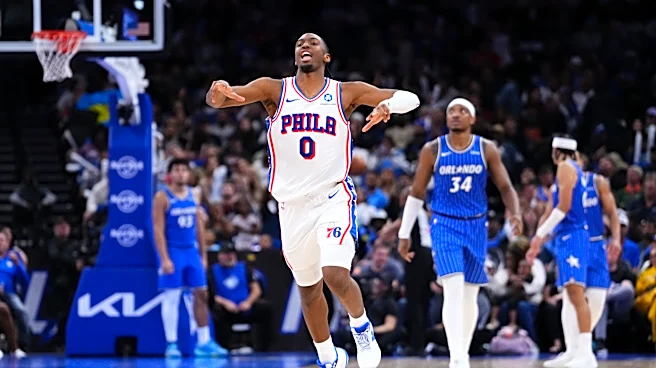
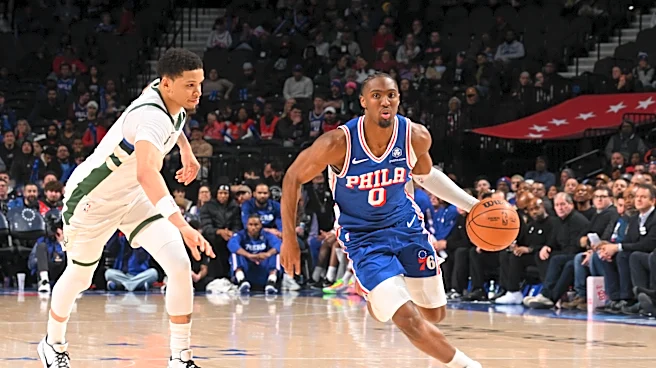
What remains is the Tyrese Maxey show, and that’s a more volatile experience than his numbers might suggest.
Maxey plays at a speed that forces decisions before a defense is set. He’s the type of guard who turns a made Celtics basket into a layup on the other end before the defense can get organized. He finished the season at 28.3 points and 6.6 assists, with the ability to decelerate into floaters and pull-up threes that make him difficult to stay in front of.
That quick-twitch style presents a different kind of challenge than Orlando’s size. It’s less about absorbing contact and more about containing pace and decision-making.
The playoff reality, though, is that Boston gets to simplify things without Embiid. No interior threat to account for means they can focus on keeping Maxey in front and forcing the rest of the roster to prove it can beat them. He can swing a game, but carrying that burden across four wins against Boston’s perimeter defense is a different ask entirely.
Wednesday’s game feels like a toss-up, and the regular season meetings don’t offer a clean answer either. Philadelphia took two of three from Orlando, but the results swung wildly, including a 40-point loss in November.
Boston isn’t running from either matchup, and they’ll be favored either way. But the questions they ask are different. Orlando brings size, physicality, and a defense that can drag a series into the mud. Philadelphia, without Embiid, leans almost entirely on Maxey’s burst and shot creation to sustain anything over seven games.
One of those problems is harder to solve than the other.
If there’s a preference, it starts there.