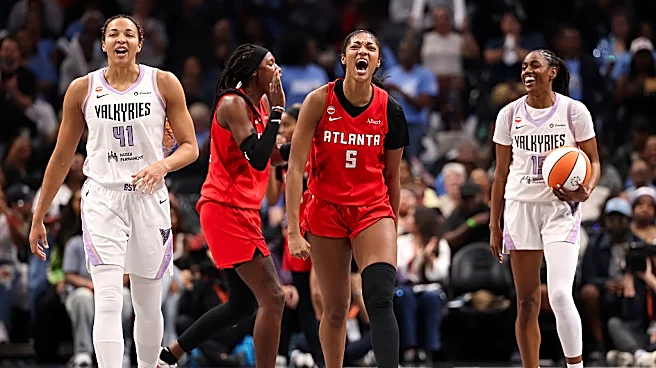



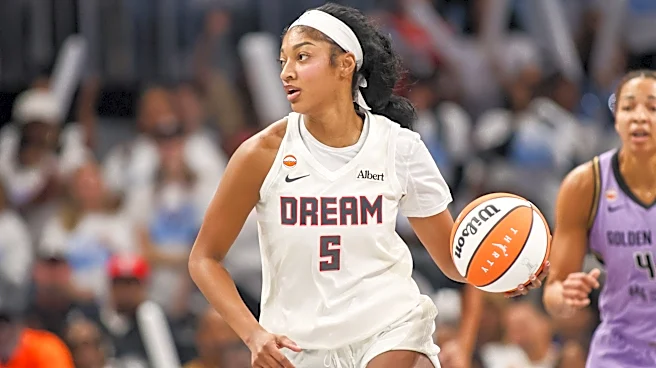

The Atlanta Dream have star power. The Golden State Valkyries have depth and all the intangibles needed in clutch time.
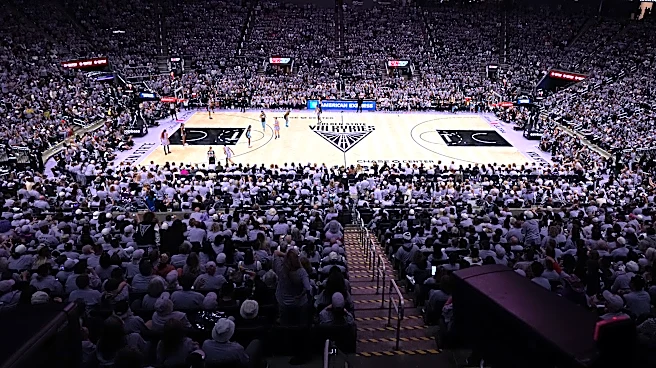
The Dream have State Farm Arena, which proved to be a phenomenal home atmosphere—but that’s over now. The Valkyries have Ballhalla, and if all other strengths cancel out, the fact that Game 7 is there could give Golden State the advantage they need in Saturday’s winner-take-all contest (8 p.m. ET, USA Network/CNBC).
The Ballhalla faithful have usurped the Phoenix Mercury’s X factor
as the loudest crowd in the WNBA. The Valkyries have sold out every home game of their existence (all 18,064 seats), becoming the first WNBA team to do that through their first two seasons. They had the best home record in the league this regular season at 17-5. They were 14-8 at Chase Center last regular season (sixth of 13 despite being the No. 8 seed), and they are 6-2 across two years in the playoffs.
It all comes down to this. Will the homecourt advantage of Ballhalla be the deciding factor of the 2026 WNBA Finals?
Ahead of Game 7, let’s explore why San Francisco fans have quickly created this atmosphere.
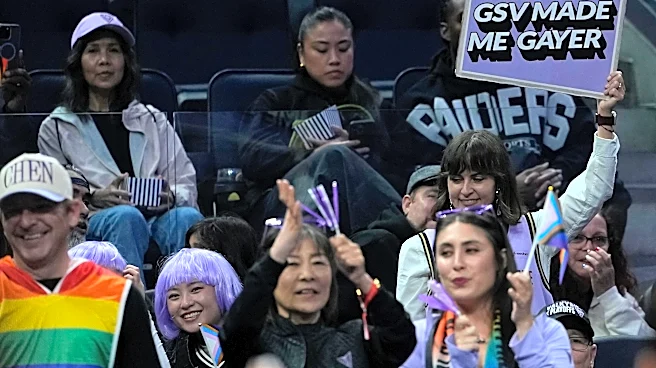
There’s synergy between San Francisco’s LGBTQIA+ culture and the WNBA

San Francisco should have had a WNBA team a long time ago.
Its residents have always been rabid women’s basketball fans, and that relates, in part, to the political leanings they share with the WNBA’s players.
No WNBA team has ever been to Donald Trump’s White House after winning the championship. Meanwhile, former Vice President Kamala Harris won the San Francisco-Oakland-Fremont metropolitan area by 52 percentage points in the 2024 presidential election, the widest Democratic margin of any metropolitan area in the nation.
The city is also a safe haven for the LGBTQIA+ community, free of the hatred spewed by many around the country. It is known as one of the LGBTQIA+ capitals of the world.
It would be stereotypical to say that all LGBTQIA+ individuals like women’s basketball, but there is an undeniable bond between their community and the sport, fostered by the WNBA’s welcoming atmosphere for people of all walks of life and the ability of LGBTQIA+ individuals to see themselves represented by the many proudly out LGBTQIA+ players in the league.
As of the 2025 season, over 25 percent of the WNBA was openly gay. No major American men’s sports league can provide LGBTQIA+ individuals with anywhere near as much representation.
The saying is, “If you can see them, you can be them.” It’s been proven that representation matters, and that’s what members of the LGBTQIA+ community have in the WNBA.
But how did San Francisco become the LGBTQIA+ capital of the country and therefore a prime location for a WNBA team?
San Francisco’s love for the LGBTQIA+ community is deeply rooted in its history

It started all the way back in 1849 with the Gold Rush. The vast majority (in fact, 90 percent) of the individuals who moved to Northern California at that time were men. It therefore became acceptable when two men formed an intimate relationship.
Then, in the 1940s, during World War II, gay soldiers who were discharged from the military ended up in San Francisco because it was the Navy’s major port. Many of them remained in the city because of the already-established tolerance for the LGBTQIA+ community.
In the 1950s a counter-culture movement developed in San Francisco. Writers like Allen Ginsburg and Jack Kerouac challenged mainstream American values, calling for non-conformity and sexual liberation. With that came more tolerance of homosexuality. The Mattachine Society, one of the US’s first gay rights organizations, placed its headquarters in San Francisco in 1956.
Entertainer and drag queen José Sarria ran for San Francisco’s Board of Supervisors in 1961, making him the first openly gay individual to seek public office in the US Later, the National Transsexual Counseling Unit, the first transgender organization in the world, formed in San Francisco after 1966’s Compton’s Cafeteria Riot, a protest defending a trans customer.
All this before the famous Summer of Love in the Haight-Ashbury neighborhood of the city in 1967, where and when, again, the LGBTQIA+ community found solace in San Francisco.
The LGBTQIA+ pride lives on today and is one of the defining features of the city.
Not every Valkyrie fan is LGBTQIA+, but the ones who aren’t are supportive of that community because of the culture of the city.
Fans at Ballhalla will be ready to impact the outcome of Game 7

San Francisco is a great sports city. Combine that with the LGBTQIA+ connection and the fact that the fans have waited so long to have a team of their own to root for, and you get Ballhalla.
Valkyries fans may have been spoiled up to this point, with their team making the playoffs in their expansion season of 2025 and reaching the Finals in just their second year. But you never know when you’re gonna get back to the Finals, so they want this championship now.
At least some of those fans don’t have to feel powerless as Golden State attempts to avoid letting a 3-2 series lead slip away. They get to be the sixth woman at Ballhalla.
GSV earned the right to host Game 7 by finishing the regular season with a better record than the Dream. Now, it’s the No. 1 advantage they have.