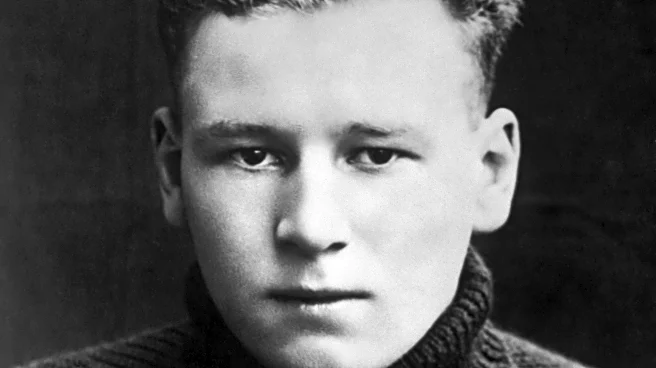




In today’s world of football, many people complain about the protection — or overprotection — that goalkeepers receive from match officials in games yet this wasn’t always the way it was.
Around this time in 1936, Sunderland AFC were riding a crest of a wave in the top tier of English football where they were currently leading the table as they came up against a dogged and intensely physical Chelsea side.
In the goal for Sunderland that day was Jarrow-born 22-year-old goalkeeper Jimmy Thorpe, a promising
youngster considered to one day become among the best in the game. Unfortunately for the young goalkeeper, little did he know that not only would this be his final ever game he played but also one of the final few days of his young life.
In what was an ill-tempered game, Thorpe had been having a fine game where he made some really decent saves from a Chelsea side littered with stars. In the second half, the game took a turn for the worse where it became rougher, more aggressive and uncontrolled by a referee named Mr H. S. Warr.
Chelsea, who were clearly trying to rough up their superior opponents, upped the ante where they were tackling hard. Prior to events in the second half where Chelsea right-half Billy Mitchell was also sent off, the referee had already spoken to them about their devious fouling which was becoming a theme in the game.

Unfortunately, the protests from the referee lacked strength and authority as our young goalkeeper unfortunately paid for with his life. With Sunderland 3-1 up, Chelsea’s forwards ran at the Sunderland goalkeeper again and again in the match. Thorpe had nullified their threat and on one occasion when he dived on the ball, Chelsea players proceeded to repeatedly kick out at Thorpe’s head, neck and upper body for a prolonged length of time until Sunderland players intervened in this assault.
In those days, players could kick at the ball when the goalkeeper had it in his hands but it seemed clear that it had gone too far in this moment with the referee doing nothing about it. Witnesses to the incident at Roker Park said the goalkeeper was deathly white and shaken after the incident yet he inexplicably carried on playing with Chelsea scoring two goals from mistakes made by the clearly unsteady Thorpe.
So unsteady was the young goalkeeper that it was also reported that he had to use the goalposts as a crutch for him to stand up straight whilst he was on the pitch. Simply, he should have been escorted off the pitch to be cared for.
After the game, Thorpe returned home reportedly feeling fine despite the knocks he had taken. Unfortunately he had then collapsed at his Sunderland home and spent the full weekend bedridden and seriously ill, and by this point had already developed a badly bruised face, swollen eye socket and severe head wound.

This was all due to the heavy kicks he sustained from the Chelsea forward-line’s rough play. He was admitted to the Monkwearmouth and Southwick Hospital on Monday, 3 February, and eventually, tragically succumbed to his injuries on Wednesday, 5 February aged just twenty-two.
An inquest ruled he died from diabetes and heart attack accelerated by his injuries, but subsequent inquiries by police and football authorities did not lead to any players facing charges despite the harrowing events that occurred.
Reflecting back on this tragic event, it seems inexplicable now that a goalkeeper was allowed to carry on giving the head injuries he had picked up. Additionally, the subsequent inquiry from the FA shockingly actually ruled that Sunderland were guilty of playing a player who they knew was in fact diabetic.
Newspaper articles after the event appeared to downplay the event. One paper labelled Thorpe a ‘coward’ for the mistakes he made whilst another lambasted the goalkeeper stating that ‘Atrocious goalkeeping cost Sunderland a point’ and whilst it is surely the case that they didn’t know the full extent of the issues that Thorpe was facing, it is saddening to think the man didn’t instantly get the help, respect and support that he deserved.
Far from being an aforementioned coward, Thorpe is a hero in this tragedy and is one that deserves more appreciation and focus than he receives. Although he was tipped to become an England international, he was most importantly a young father and husband.
The events of that day should never have happened and the lack of leadership from the referee up to the FA leave a sour taste in the mouth for anyone who learns more about this harrowing situation.
Jimmy Thorpe should never be forgotten and at a time when Sunderland Association Football Club are getting so much right on the pitch, there is surely something they could do off it to commemorate a man who died playing for his football club.
On the anniversary of his death, we remember Jimmy Thorpe, the husband, the father and the player.