
Oof. I wasn’t trying to tempt the baseball gods when I said that this Cubs team hasn’t had many of these, what I call, “true” blown saves. That is, a lead that gets to the ninth inning and is blown there. For some reason, I can’t readily lay my hands on the records of various teams when winning after eight innings. After a game like this, it’s an interesting thing to look at. The thing is, even the very worst teams often have an extremely lopsided wins to losses ratio. These games are unicorns for
every team. By very nature, it’s a large subset. For instance, noted Cub late inning reliever had to sweat through protecting the Cubs lead after eight innings on Sunday. All of those games are in there.
This Cubs team is a very good one. Notwithstanding that they have a very large number of last team at-bat wins, they just generally have a ton of wins. Many of those games involving them scoring seven or more runs and not being particularly close. So I can say without laying hands on the numbers that the Cub record in these types of games is lopsided, despite what has been an extremely uneven year from their bullpen. The overall numbers have slowly crept into a reasonable range as this season has worn on. It’s hard to identify the right stat or basket of stats to evaluate a team bullpen. The Cubs are 11th in team bullpen ERA. 12th in team bullpen WHIP. Their opponent batting average drops down quite a bit, but their team bullpen BB/9 is sixth. It’s a feature of this team that they have a heavy focus on not issuing walks.
Even with this nightmare stretch with two of these blown ninth-inning leads in just five games on this road trip, the team has a 2.58 in the ninth inning or late (4th) per stats available on MLB.com. When I pull it back to the eighth or later, they drop to 16th (4.04). When I pull it back to the seventh or later, it is 3.61 (8th). If I change the tab to what they define as Late/Close, they don’t show ERA. In terms of WHIP, the Cubs are exactly middle of the road at 1.35 (15th).
I love to give a stat and then contextualize it where reasonable to do so. The blind spot for those seventh, eighth or ninth and later stats, again, is that the numbers from Sunday’s massacre in Seattle are in there. That can be one of the difficult things about trying to analyze how your team did in the line of fire so to speak. If you solely look at the thinnest margins, like Tuesday night’s game, where a one-run lead is being protected in the ninth, you have a very small sample. That can have blind spots for what was an otherwise pretty effective bullpen. But if you try to grab larger samples, it encompasses a lot of really low leverage games. Especially for this Cub team that has really piled up a lot of blow out wins.
So throw away the numbers. It’s highly unlikely that you are a casual Cub fan and also in here reading what I have to write. You’ve followed this team with some level of regularity. What is your honest assessment of the body of work of this year’s Cubs relievers? We have to contextualize it. You can say whatever you want about offseason decisions that went into bringing this very large group of players who have contributed for better or for worse to the overall 2026 Cubs bullpen. If I told you in spring training that there would be this volume of injuries. If I told you that most of the guys who were maybe going to work as multi-inning relievers would instead spend most of their time in the rotation, you’d have assumed this bullpen would be a dumpster fire. So contextualized, you thought this would be the Hindenburg, but this was more of a somewhat controlled burn.
The bullpen has been better than we’d have reasonably hoped given the adversity it has had to battle. At the same time, it has been uneven at best and has clearly been a problem at times. But the very simplest way to look at a bullpen, how may losses does it have? Wins and losses for individual pitchers can be folly. But as a group? There is no painting over it when the bullpen loses the game. The bullpen was handed either a tie or a winning game and then lost it (or they were handed a losing game, held things together while the offense took the lead and then lost it). The Cubs bullpen has 20 losses. That’s fourth fewest in baseball. That context is obvious, this team is usually leading and often by a lot. But on a pass/fail basis, it usually passes.
For amusement only, the bullpen is seventh in wins. I feel like that’s a bit more credit to the offense. There is nothing a bullpen can do to actively win a game. They can hold the line forever and the offense still has to do something to win it. Still, a 31-20 record out of the pen states that Cub bullpens are holding up a fair bit better than their opposition.
So there you have almost a 900-word essay on the 2026 Cubs bullpen. I grade it as solidly better than you’d probably expect and still definitely frustrating at times, particularly so with recency bias. Watching the two relievers you want on the mound late in a Cub postseason game give up a four-run lead over the last two innings was discouraging and frustrating to say the least. But this Cub bullpen has had to be resilient and it’ll bounce back from this.
Three Positives:
- Clay Holmes looks like a terrific deadline acquisition. Seven shutout innings, two hits, two walks, five strikeouts. I can construct an argument that the three Cub starters in a three game series should be Holmes, Kevin Gausman and David Peterson, the three in-season acquisitions who are currently in the Cub rotation.
- Michael Busch had a single, double, walk, RBI and run scored in four plate appearances. The results haven’t been there for him this year, but he’s still a very productive hitter.
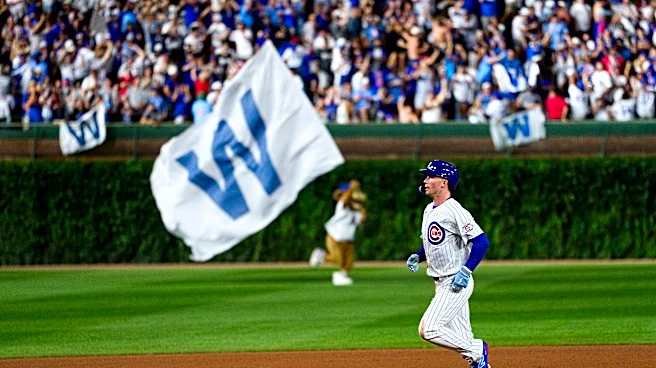
- Ian Happ. After a day where I saw his name repeatedly trashed for being on the Cubs 150th anniversary team, it was fun to see him work a long at-bat and then hit a three-run homer in a game where the Cub offense hadn’t done much of anything to that point. He’s been an above average bat every single year of his Cub career, has four Gold Gloves, one All-Star appearance, was top 10 for Rookie of the Year, had a top 20 MVP season. He doesn’t have a single standout season, to be sure. But on a career basis? Year after year after year being very good. Yeah, he belonged.
Game 133, August 25: Diamondbacks 5, Cubs 4 (76-57)
Reminder: Heroes and Goats are determined by WPA scores and are in no way subjective.
THREE HEROES:
- Superhero: Clay Holmes (.338). 7 IP, 25 BF, 2 H, 2 BB, 5 K
- Hero/Sidekick: (.166). Michael Busch/Ian Happ. Busch: 2-3, 2B, BB, RBI, R; Happ: 1-4, HR, 3 RBI, R
THREE GOATS:
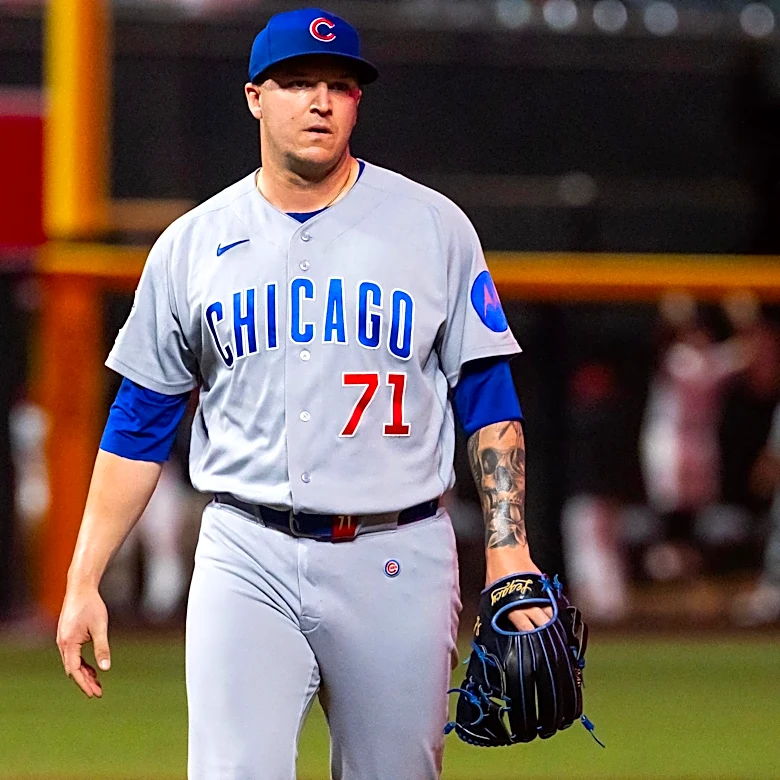
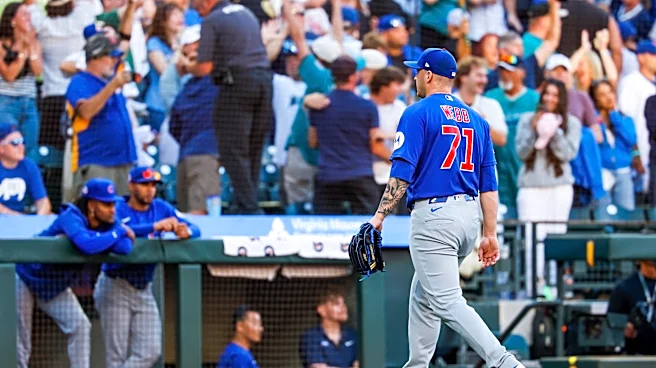
- Billy Goat: Jacob Webb (-.694). IP, 5 BF, H, BB, 2 R (L 6-4)
- Goat: Daniel Palencia (-.221). 0.2 IP, 6 BF, 2 H, BB, 3 R
- Kid: Alex Bregman (-.109). 0-4, DP
Note: Webb’s WPA game score is the second lowest of the year, behind the loss Saturday. It also gives him the four lowest WPA scores of the year and five of the nine lowest. Ouch.
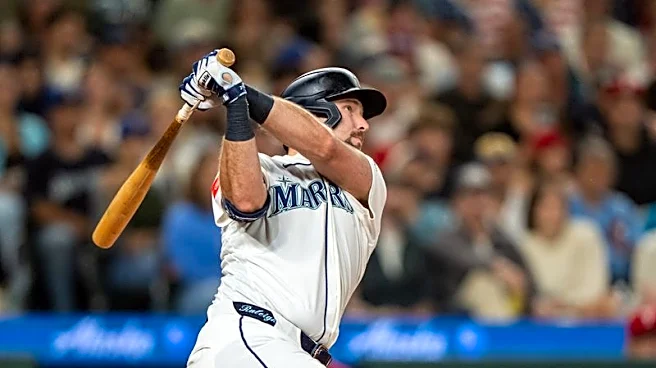
WPA Play of the Game: The Ryan Waldschmidt walk-off homer with two outs in the ninth. (.856)
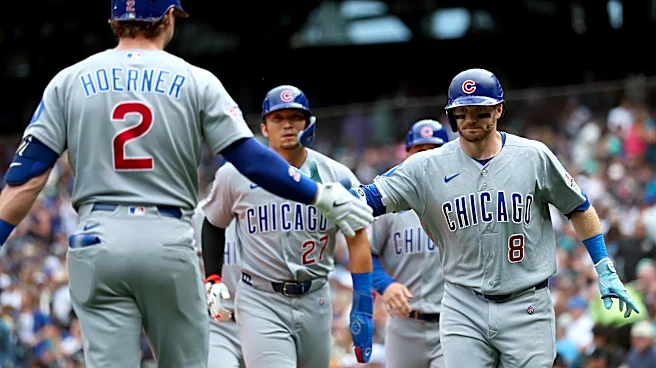
Cubs Play of the Game: Ian Happ’s three-run homer. (.198)
Cubs Player of the Game:
Game 132 Winner: Kevin Gausman received 90 of 95 votes.
Rizzo Award Standings: (Top 5/Bottom 5)
The award is named for Anthony Rizzo, who finished first in this category three of the first four years it was in existence and four times overall. He also recorded the highest season total ever at +65.5. The point scale is three points for a Superhero down to negative three points for a Billy Goat.
- Pete Crow-Armstrong +25
- Alex Bregman +22
- Ben Brown +13.5
- Carson Kelly +12.5
- Javier Assad +12
- Seiya Suzuki/Nico Hoerner -11
- Edward Cabrera -12.5
- Jameson Taillon -13
- Dansby Swanson -17
- Caleb Thielbar -18.5
Scoreboard Watching: Brewers lose (5.5 ahead of Cubs). Dodgers lose (4.5 ahead) to Braves (1.5 ahead). Diamondbacks (six back). Padres lose (five back). Phillies lose (three back).
Up Next: One more game to end this series and this trip against two teams in much more desperate situations than the Cubs. I always hate playing a team that might be playing with a little extra motivation. It definitely hasn’t served the Cubs well. The best they can do is split the trip by winning this game and the series. I snubbed Matthew Boyd (8-2, 4.15) in my comment above about potentially using the three in-season acquisitions to start a three game playoff series. That’s because Matthew has allowed 11 earned runs in 11.1 innings in his last two starts. That after a brilliant seven-start stretch. The Cubs need him to get back in the groove because he should replace Peterson in that three-game grouping.
33-year-old lefty Eduardo Rodriguez (13-4, 2.61) starts for the Diamondbacks. It’s easy to see he’s having a terrific year. It’s slowed down just a little at 5-1, 3.51 over his last seven. But really, even those numbers are still excellent. There are two games in that last seven, starts against the Cardinals 7/19 and the Padres 8/4 that are dragging the recent numbers down. In those two starts, he allowed 12 runs, 10 earner in just 8.1 innings. Both starts were at home. That said, for the year home (2.67) and away (2.54) are similar. He’s 9-1 with a 2.08 at night, so the day game does look like a little break.
This is a tough one. Find a way, win a game and a series.