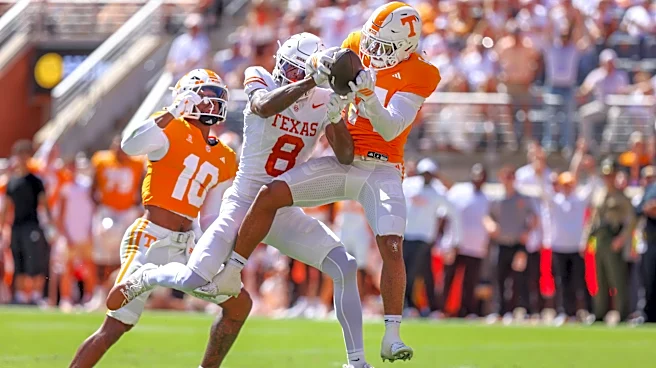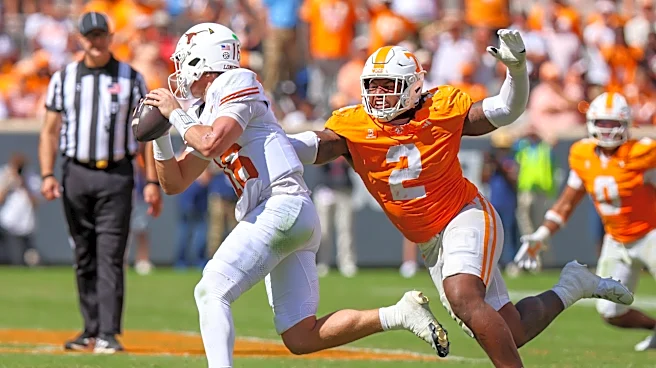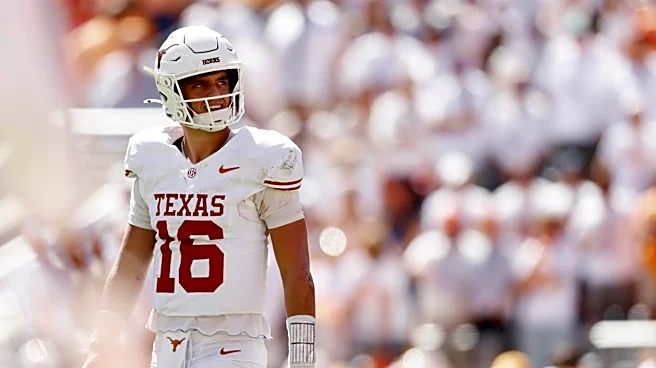


We are four games into the No. 1 Texas Longhorns’ 2026 season, coming off of a bye week where Steve Sarkisian’s program needed to get healthy and get aligned heading into the eight-week slog to close SEC play. Most of the year, the Longhorns have looked like a bit of a half team, with a championship-level defense carrying an offense that has flashes of brilliance but can’t sustain its part when it matters. Texas has lofty goals for the year, hoping to compete for the SEC and national championships,
but what should we watch as they head into the Red River Showdown and beyond?
Third-down conversions: 30-60
Texas is perfectly average offensively on third downs through the first four games, which puts them firmly at No. 3 in the SEC, behind Georgia and LSU. However, it has been a case of diminishing returns for them over the first four games and floated by the 73.3-percent performance against Texas State to open the season. In the following weeks, they converted 56.3 percent, 41.2 percent, and an abysmal 25 percent (3-12) against Tennessee. In fact, against Tennessee, Texas went from the opening drive to the 2:43 mark of the third quarter without converting on a third down.
Most teams in the country struggle in third and long, but Texas has yet to convert a single one this year on nine attempts. That percentage doesn’t get much better on third and medium (between five and eight yards) — the Longhorns are 9-of-25 in that range and were 1-of-7 against Tennessee. The silver lining there is that Texas is almost automatic from anything shorter than five yards, converting 18-of-25 (72 percent) from that range.
A big part of the issue has been quarterback Arch Manning’s play on third down, looking far from the presumptive top-five pick many assumed he would become heading into the season. On the surface, his third-down performance has been good, completing 60 percent of his passes on an eight-yards-per-attempt pace, with four touchdowns, but once again, that number thrives because of the opener against Texas State. In Games 2, 3, and 4, Manning completed 55.5 percent of his passes at 4.5 yards per attempt with just one touchdown.
Arch Manning: 73-115 (63.5 percent), 862 yards, seven TDs, three INTs
Over three weeks, aside from a few flashes of brilliance, Manning’s play hasn’t warranted the preseason acclaim and is becoming concerning as Texas heads to Dallas.
He currently sits ninth in the SEC in yards per game, wedged between Oklahoma’s John Mateer and South Carolina’s LaNorris Sellers, which may have been the company you expected him to keep in the SEC, but probably much closer to the top of the table. Manning came out of the gates hot, passing for 305 yards and four touchdowns against Texas State, but failed to crack 200 yards in the following two games and only beat that mark by one yard against Tennessee. Manning’s seven touchdown passes are tied for No. 11 in the conference, thanks in large part to the four touchdowns he threw in the opener.
Post-Bobcats, he has thrown just three touchdowns and two interceptions and is averaging just 6.33 yards per drop back, which would put him just ahead of Marcel Reed for the worst average in the conference.
Penalties: 25 for 250 yards
There was a lot made of the Longhorns’ undisciplined play in Knoxville, with the glut of penalties and their inability to put together a sustained drive. But outside that one game, Texas has played more disciplined football than we’ve seen in years under Sarkisian. You can’t say Tennessee wasn’t a mess, nearly doubling their season totals in both penalties and penalty yardage in one outing. However, in their first away game in a hostile environment, it’s hard to make a trend out of one week.
Hidden yardage and downs are where this shows up the most for Texas, losing 51 yards on offense while giving opponents 102 yards and eight free first downs due to penalties. What makes it worse is that three of those eight came on third downs, when Texas would have gotten off of the field otherwise.
Through the first three weeks, Texas was penalized just 14 times for just 135 yards – an average of just four penalties for 45 yards per game, which would put them second in the conference. If Texas’s current average holds for the year, they will have improved from last year’s performance, and Tennessee will be more of an outlier and less of a red flag.