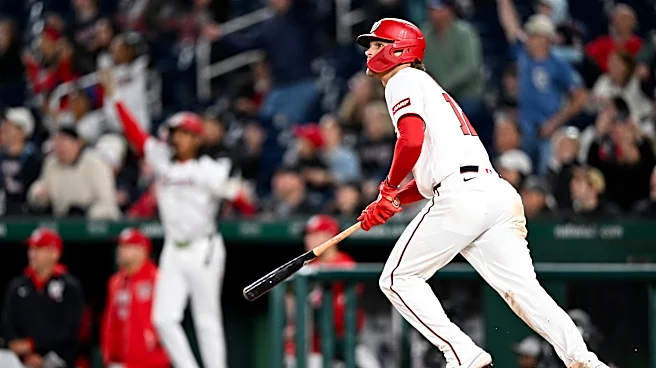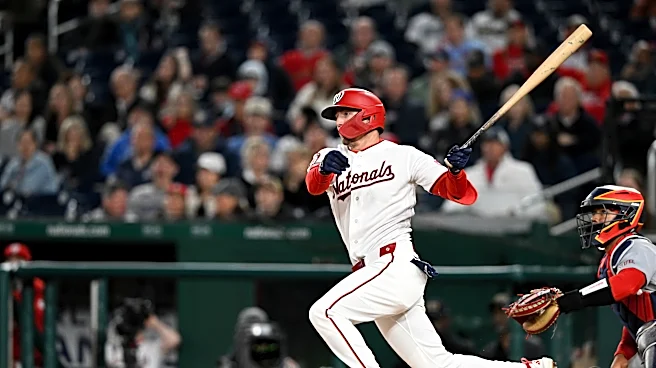



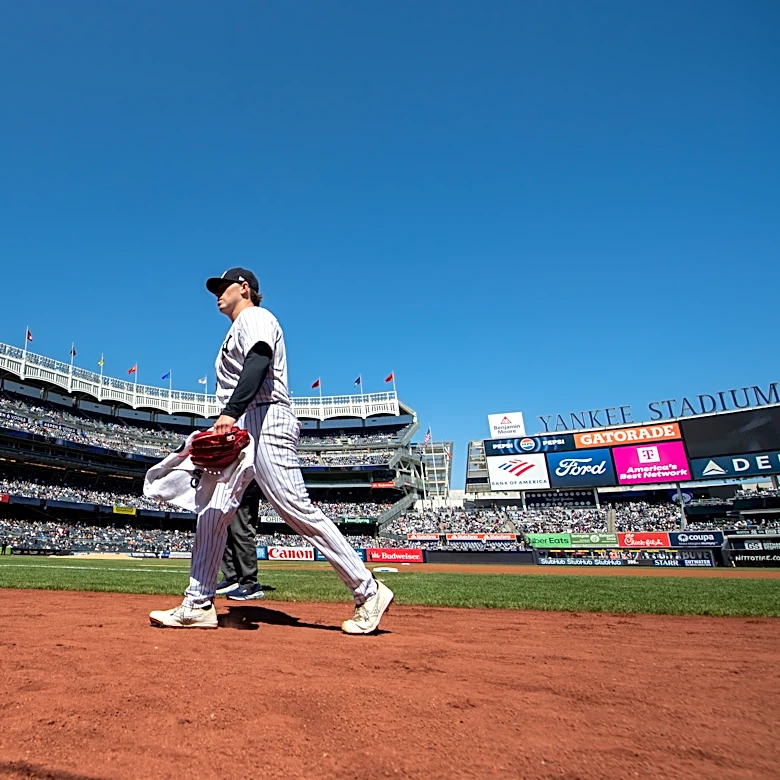

Jacob Young is posting a .660 OPS through 11 games. That sounds about right for the defensive specialist outfielder who has not provided a ton with the bat. However, when you look at some of the underlying data, you will find that Young looks like a much better hitter. We are going to break down some of the changes he made.
So far, Jacob Young has been your prototypical defense first center fielder, who has a great glove and legs, but provides no power and okay contact skills. He only has six career
homers in over 1,000 plate appearances, and consistently ranked towards the bottom of the league in quality of contact stats.
Young did not hit the ball hard and hit it on the ground a lot. He looked to change that this offseason by going to Driveline and training with hitting expert Travis Fitta. Ironically, Fitta now works in the Nationals organization as an assistant hitting coach in Rochester. The pair worked on making his swing more athletic and improving his bat path.
They also worked on improving his bat speed, which has been up to start this season. In 2024 and 2025, Young’s average swing speed was about 68 MPH, which is on the lower end. So far this season, Young’s average swing speed is 70.9 MPH, which is closer to average. It is still slightly below average, but that is much better than swinging a noodle at the plate.
This new found bat speed is helping Young hit the ball harder. His average exit velocity is only up about one tick, but he is hitting the ball hard on a much more consistent basis. Young’s hard hit percentage has gone from 34.2% last year to 44.4% so far this year. Even if that slides closer to 40%, that is a serious improvement and will help Young’s game a lot.
While his batting average is only .226 right now, that should rise quickly if he keeps up this process. His expected batting average is a crazy .348, which is in the 99th percentile. I remember last year Daylen Lile was underperforming his expected batting average for a while, and then went on a roll to get closer to that xBA number. Hopefully we can see the same thing from Young soon.
Young’s improvements do not just come from hitting the ball harder though. He is also hitting the ball at better angles. In 2024 and 2025, Young’s ground ball percentage was 56.5% both seasons. Now, that is below 50%, which we love to see. He is replacing those grounders with line drives too. Right now, his line drive percentage is up over 9%. If this process continues, it is only a matter of time before those hits start falling.
So what did Young do to cut out those ground balls? Well, a big part of it comes from a flatter bat path. There was a crazy graphic that showed the difference in Young’s swing path from last year to this year. Last season, it honestly looked like he was trying to chop a cherry tree. Now, it is a much more level swing geared for line drives.
This is what good coaching can do. Young seemed like a lost cause at the plate. Sure, he made a good amount of contact and did not chase a ton, but he was just hitting weak ground balls. Even for a fast guy, you are not going to beat out enough of those ground balls to be close to an effective hitter.
However, something seems to have clicked for Young. He is a great athlete and not a tiny guy, so this swing optimization has given him some juice at the plate. If some of this sticks, there is a real path for Young to be a league average hitter. Jacob Young being a league average hitter is a tremendously valuable player because of how elite his defense is. Just look at how good a guy like Kevin Kiermaier was.
These changes are also a good way to conceptualize the importance of batted ball angles. When most people think about launch angle, they think about big sluggers taking huge upper cut swings to try and hit homers. However, there is more to it than that. Launch angles are also very important for contact hitters who want to spray line drives around the yard to get hits.
Just looking at a side by side of Young’s hitting data from last year compared to this year tells a compelling story. Yes, he has added bat speed and has made exit velocity gains. However, the thing that really sticks out is the improvement of his xBA, which comes from the batted ball angles.
When you look at the batting average and OPS numbers for Young, you may not see a ton of improvement. However, when you dig below the surface you find some real breakout indicators here. Young just needs to trust this process and stick to it. Eventually, the hits will come. With Young’s speed and new found angles, he is not going to run a .240 BABIP for much longer.
Jacob Young has always felt destined to be a 4th outfielder on a good team due to his offensive limitations. However, what he is doing this year could change the calculus. He already compiles a good amount of WAR with a bad bat, imagine what he can do with a solid one.