





The Toronto Tempo and Seattle Storm need a win.
Together, the teams are trudging through a combined 19-straight losses, with the Tempo dropping eight games in a row and the Storm now on their second 11-game losing streak of the season. Toronto hasn’t tasted a victory since July 12, while Seattle last celebrated a win on July 6.
On Monday night, the Tempo will attempt to end their skid against the Atlanta Dream, a team that already has beaten them three times in rather dominant fashion (8 p.m. ET, NBCSN).
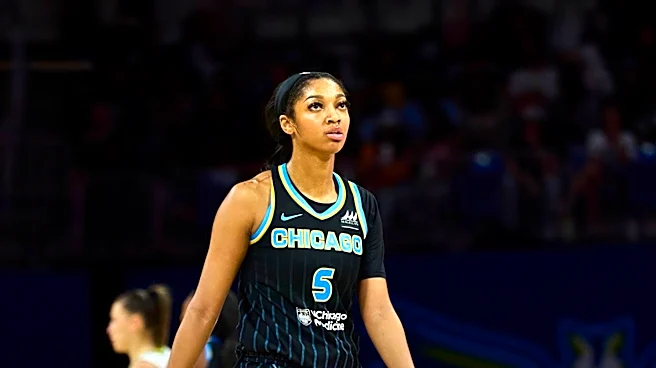
The Storm host a Chicago Sky squad they lost to in the third game of their current streak (10 p.m. ET, USA Network).
It’s hard to have much confidence that either team can get their much-needed victory.
The array of injuries that have infected Toronto throughout their inaugural season have begun to take a severe toll. Absences to key contributors prevented opportunities to build chemistry and cohesion, with those lost opportunities now showing up as uncompetitive losses.
During their losing streak, Toronto has just one single-digit loss, compared to two losses of more than 25 points. They’ve lost their eight games by an average of almost 18 points per game. As that awful point differential indicates, both sides of the ball have been an issue. Their formerly explosive offense has stalled out, registering a meager offensive rating of 100.9; prior to this eight-game slide, their offensive rating was 109.3. Their defensive rating, never near elite, has spiked to 123.9, over eight points worse than their season-long average.
Seattle’s stretch of losses also has been painful, albeit in a different way.
Whereas the Tempo have suffered through blowout after blowout, the Storm have been competitive in the majority of the 11-straight losses, only to come up short down the stretch in game after game. Among their consecutive losses, their worst defense was by 12 points, one of four double-digit losses. Four losses came by five points or less.
Overall, their offensive and defensive numbers are not demonstrably worse than their season averages during this stretch, a sign that it’s inexperience, and the late-game execution issues that come with it, that have doomed them to defeat. While still distressing, it’s possible to be somewhat encouraged by Seattle, despite the losses.
So, that’s what we’re going to do here for both the Storm and Tempo. Let’s celebrate some small wins, among all the losses. In the comments, let us know what encouraging developments, big or small, you’ve seen from Toronto and Seattle.
The Tempo backcourt will be the foundation of future success

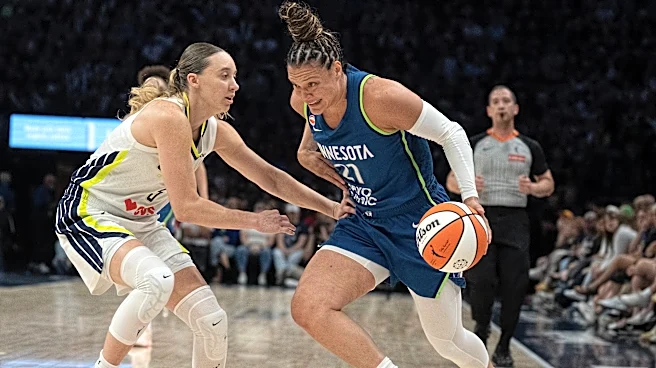
In the bigger picture, the Tempo can derive confidence from their record with Brittney Sykes, which was a respectable 7-8 as Sykes was compiling an All-Star-caliber season.
Marina Mabrey, of course, did make the All-Star team for the first time in her career. Although she’s staggering through a post-All-Star downturn, suggesting she might be overextended as a the sole primary offensive option, Marina is still averaging over 20 points per game, a top six mark in the league. With over three 3s made per game at an average of 38 percent, she’s also remains one of the most dangerous 3-point shooters in the league due to how she combines volume and proficiency. So, although she’s shooting under 30 percent from 3 on seven attempts per game since the All-Star break, no team is going to leave Mabrey alone when she is behind the arc.
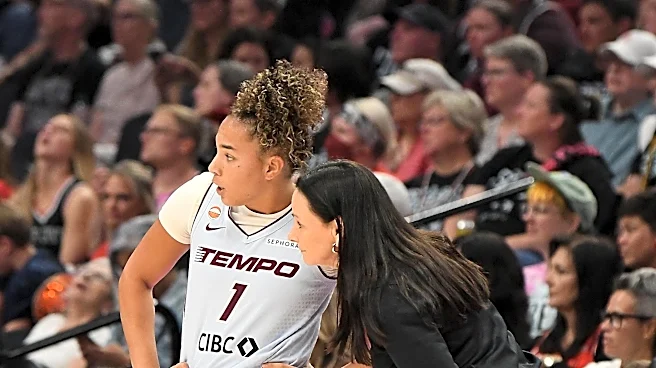
The performances of Slim and Marina have more than justified Toronto’s significant investment in them, just Kiki Rice has confirmed that the Tempo made the right decision on draft night.
While a nasty ankle injury interrupted Rice’s impressive start to her rookie season, she did enough, and continues to do enough, to make it reasonable to claim that, although she was the third UCLA Bruin selected in the 2026 draft, she might end up being the best one.
A strong driver and defender whose improved 3-point shooting has translated to the WNBA, she gives Toronto a third backcourt pillar to be confident in moving forward, even if that confidence may not bear out often over the remainder of the 2026 season.
In Year 2, a healthy Sykes-Mabrey-Rice foundation can accelerate the Tempo towards the heights the organization had hoped to achieve in Year 1.
The Dom-Awa duo will be special for the Storm

The future, however, is even brighter in Seattle, although it may take longer to fully realize.
Offense has been an issue for the Storm for much of the season. Although it is concerning that a Seattle defense that had impressed early has slipped significantly over the course of the season, an elite offensive is more important in the modern WNBA, where the principles of space and pace, aided by an increased emphasis on freedom of movement, have produced record offensive numbers.
Seattle’s season-long offensive rating is 102.3, which ranks 13th in league. Encouragingly, it has creeped up month over month, and even more encouragingly, the Storm’s best offensive duo is Dominique Malonga and Awa Fam.
In the minutes the No. 2 pick in the 2025 draft and No. 3 pick in the 2026 draft have shared, Seattle’s offensive rating has spiked to 111.3. Their success is not driven by outlier shooting. Malonga’s 3-pointer remains a work in progress, just as her inside-the-arc scoring is still inconsistent; Fam’s scoring, including her 3-pointer, has been more efficient than anticipated.
Together, however, they’ve dominated both the offensive glass and around the basket, grabbing offensive boards and finishing at the rim. Their profile and performance suggests the outlines of a pairing that could round into an even more dangerous version of what the Washington Mystics have developed with Shakira Austin and Kiki Iriafen, where they not only overwhelm opponents with their physical advantages on the inside but also can exploit advantages away from the basket. And Malonga and Fam, compared to Austin and Iriafen, arrived in the WNBA with more offensively versatile skillsets that should only improve.
Because two-big lineups can be clunky on the offensive side of the ball, this early compatibility between Malonga and Fam inspires more confidence in the future promise of this pair, especially presuming that, as they gain more WNBA experience, they’ll also improve on the other side of the ball; the defensive metrics when the two share the floor are not great, which, at least for now, can be excused by their youth.
That youth is the salve for Seattle fans as the team suffers through another double-digit losing streak. Lessons, even if not immediate, are coming with the losses. And both Dom and Awa appear to be star students, ready to apply what they learn in order to lead the Storm’s eventual ascent.