



Barcelona’s midfield situation has changed considerably over the last few weeks. Frenkie de Jong’s injury has left Hansi Flick with fewer reliable options in the double pivot, while Marc Bernal is still returning from a lengthy layoff and cannot immediately be expected to carry a full workload.
Pedri remains an automatic starter and Gavi has proven that he can play alongside him, but the depth behind them suddenly looks far less secure than it did at the beginning of the summer.
There have also been
rumours that Flick had already begun losing some trust in Frenkie towards the end of last season. The Dutchman reportedly did not manage his previous injury particularly well and continued playing during a World Cup year despite not being fully fit.
That was said to have frustrated Flick, who began trusting Gavi more during the closing stages of the campaign. Frenkie has still travelled with the team for pre-season, although some have interpreted that as Flick wanting him to recover under the club’s supervision and, in a way, holding him accountable for how the situation was handled.
With Barcelona still expected to complete more business before the transfer window closes, another midfielder may now have become a genuine necessity rather than a luxury.
Casadó Opens the Door
Marc Casadó’s potential departure could completely change Barcelona’s approach to the market. Reports suggest the club would be willing to sell him for approximately €40 million, a significant amount for a player who was developed internally and would therefore represent almost pure profit on the books.
More importantly, the sale would help Barcelona remain within La Liga’s 1:1 rule, giving the club the ability to reinvest the money into a replacement midfielder.
Casadó has proven himself to be a dependable member of the squad, but €40 million would be difficult for Barcelona to reject given their financial situation.
Selling him without bringing in another midfielder, however, would leave Flick dangerously short. Pedri and Gavi can form the starting partnership, but Bernal is still finding his rhythm after a long absence and Tommy Marqués is only beginning his transition into the senior team.
Tommy is expected to be counted on by Flick and deserves the opportunity to prove himself, but Barcelona should not place too much responsibility on him immediately. There is a difference between giving a talented academy player opportunities and entering an entire season expecting him to cover major minutes in one of the most demanding positions in Flick’s system.
A Casadó sale would therefore create both the need and the financial opportunity to sign another midfielder.
Trusting La Masia
Barcelona’s youngsters have once again been among the biggest stories of pre-season. An article published two days ago highlighted Ibrahim Diarra, Ebrima Tunkara and Alex González as three academy talents who have particularly impressed the coaching staff. All three made an impact in the recent 4-1 friendly win over Europa and the 2-2 draw against Birmingham City.
Diarra is a strong and direct attacker who can operate all over the front four, while Tunkara is considered one of La Masia’s most talented prospects and can play as an attacking midfielder or false nine.
González, who only joined the club in April, has already impressed with his positioning and movement around the penalty area. Their performances are another reminder that Flick will not hesitate to trust young players when they prove themselves.
However, none of those three directly solves Barcelona’s shortage in the double pivot. Their emergence could strengthen the attacking areas of the squad, but the midfield still depends heavily on Pedri, Gavi, Bernal and potentially Tommy.
Barcelona should continue creating pathways for La Masia, but signing Kees Smit would not necessarily close those pathways. At only 20 years old, he would be another long-term investment capable of growing alongside the club’s existing young core.
The question is whether Barcelona should place all their faith in Bernal’s recovery and Tommy’s development, or take advantage of the market while an ideal young midfielder is still attainable.
Limited Market Alternatives
Several midfielders have been mentioned as possible options, but most of them are either unrealistic or do not make enough sense for Barcelona.
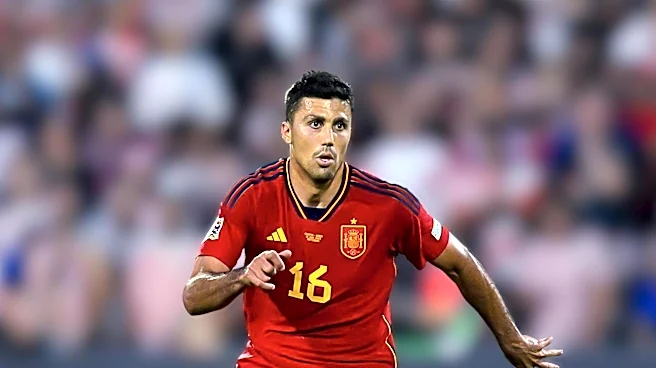
Rodri would obviously be the dream signing, but Manchester City would demand an enormous fee and the player appears more likely to favour Real Madrid if he ever returns to Spain. His family is from Madrid and his history with Atlético makes the possibility of eventually returning to the city difficult to ignore.
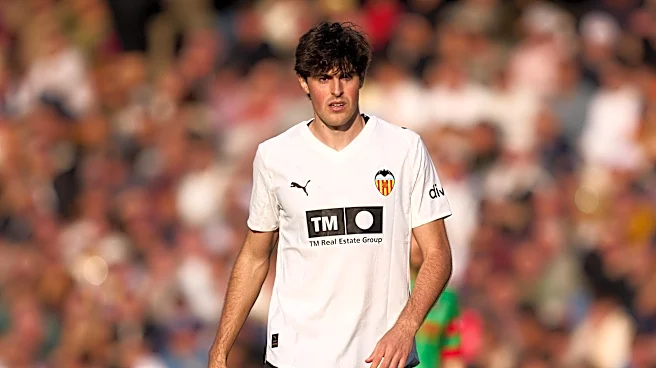
Javi Guerra is another name that has regularly appeared in connection with Barcelona, but he has now renewed with Valencia and made it clear that he wants to remain there. His release clause currently stands at €40 million and is expected to rise to €60 million soon. Guerra is undoubtedly talented, but for that price Barcelona should be targeting someone who fits the club’s midfield identity more naturally. He is at his best when carrying the ball forward and operating as a dynamic box-to-box midfielder, rather than controlling possession and setting the rhythm of a match.
Mikel Merino is not realistically available after Arsenal reached the Champions League Final and have little reason to weaken their midfield. Fabián Ruiz remains a very good player, but he turned 30 only a few months ago and would offer little resale value. Barcelona’s recent success has been built around younger players who can grow together, making a significant investment in Fabián difficult to justify at this stage of his career.
When the realistic alternatives are examined closely, Kees Smit begins to stand out.
The Barça Archetype

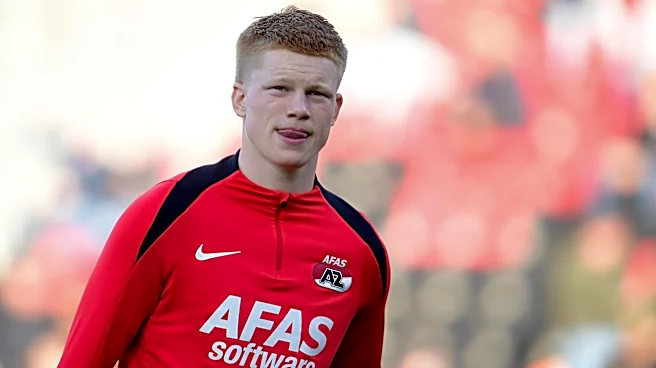
Smit possesses many of the qualities Barcelona traditionally look for in a midfielder. He is comfortable receiving the ball under pressure, can progress possession through both passing and carrying, and plays with a level of composure that is unusual for someone of his age. He is capable of combining quickly in tight areas, switching the play over longer distances and breaking through midfield lines without appearing rushed.
He also contributes without the ball. Smit presses aggressively, anticipates passes well and positions himself intelligently when his team loses possession. He is not simply a creative midfielder who waits for the ball to reach him. He actively participates in recovering it and has the physical confidence to compete in midfield duels.
Comparisons have been made to players such as Frenkie de Jong, Pedri, Tijjani Reijnders and Enzo Fernández. Those comparisons should obviously be treated as stylistic rather than an indication that he has already reached their level, but they help explain why his profile is so attractive.
He combines the press resistance and ball progression associated with Frenkie with the awareness and technical sharpness Barcelona require from their interior midfielders.
Ronald Koeman has even described Smit as a mixture of Pedri and De Jong, while Arda Turan has praised his ability to control matches and predicted that he could become an important player for the Netherlands.
Smit himself has spoken openly about his admiration for Barcelona, revealing that he watches the club regularly and grew up admiring players such as Andrés Iniesta and Lionel Messi.
It does not guarantee that he would succeed, but everything about his footballing education and preferred style suggests that the adaptation would be more natural than it would be for many of the other midfielders available.
Less Recognition, Better Value
Smit remains relatively untested at the highest level, and that will naturally create doubts over spending a significant fee on him. Transfermarkt values him at approximately €25 million, although AZ Alkmaar would reportedly demand closer to €40-45 million because of his potential and the interest from other major European clubs.
That price may appear high for a player with limited experience, but it is also considerably lower than what Barcelona could be asked to pay a year from now. Smit has already won the UEFA Youth League with AZ, was named Player of the Tournament as the Netherlands won the European Under-19 Championship and was recognised as the Conference League’s Revelation of the Season after recording five assists in ten appearances.
He is still at the stage where Barcelona would be paying for what he could become rather than competing for a finished product at an inflated price. Waiting until he proves himself at a higher level may feel safer, but it would also allow wealthier clubs to enter the race and could push his value beyond €60 million.
Barcelona experienced something similar with Raphinha. The opportunity was questioned at the time because the player was not yet viewed as an established superstar, but the club identified qualities that could translate to a higher level. Smit would represent the same type of forward-thinking recruitment: investing before the player’s reputation becomes larger than the opportunity itself.
Dutch Footsteps
Barcelona and Dutch football have always shared a special relationship. Johan Cruyff did not merely represent the club as a player and manager; he helped shape the footballing identity Barcelona still follows today. Ronald Koeman, Frank de Boer, Phillip Cocu and Frenkie de Jong are among the many Dutch players who have continued that connection across different generations.
Smit should not be signed simply because he is Dutch, nor should he be burdened with comparisons to those who came before him. However, his understanding of positional football, his comfort in possession and his ability to control matches make him a natural continuation of that tradition.
There would also be something fitting about Barcelona replacing one Dutch midfielder with another. Frenkie’s future has become increasingly uncertain, and even if he remains at the club, his latest injury has shown that Barcelona cannot continue depending on him without a long-term alternative.
The Right Move
If Casadó leaves for €40 million, Barcelona should make Kees Smit one of their main priorities. The sale would provide the club with the financial room to act under the 1:1 rule, while Smit would fill an immediate squad need without compromising the long-term project.
He would not arrive as a guaranteed starter ahead of Pedri, Gavi or Bernal. He would arrive to compete, provide depth and develop into a midfielder capable of eventually controlling Barcelona’s midfield for years. At 20, he fits the age profile of the squad, and stylistically he appears far more suited to the club than most of the alternatives currently being discussed.
The risk is that Barcelona would be signing him before he has fully proven himself. The greater risk may be waiting until everybody else knows exactly how good he is.