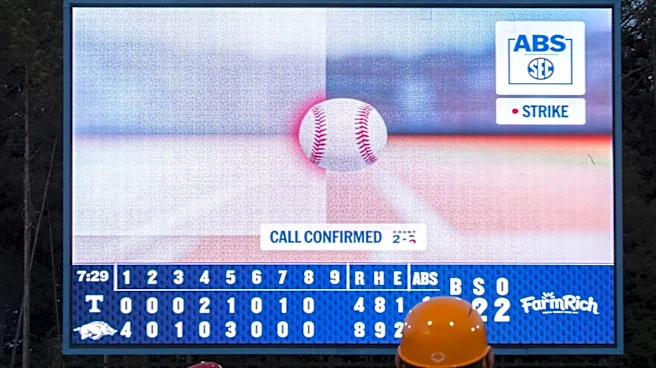



Entering the 2026 season, the introduction of the automated balls and strikes challenge system was a major topic. Throughout the early part of the season, we were heavily focused on who was winning or losing challenges, and what the best strategies for hitters and for pitcher and catchers were to get the most calls in their favor without squandering challenges in low leverage spots. As the season went on, the whole process became more natural and integrated into the approach on both sides of the ball.
In low leverage situations, you absolutely better be correct. In higher leverage situations, it’s more reasonable to take a shot at a pitch the hitter or catcher feels is really a borderline call. And so, the game of baseball changes and keeps moving.
Having watched the evolution of the technology unfold in Low-A and Triple-A, there was less of an adjustment period for fans who do follow the minor leagues. Indeed, the real annoyance for prospect writers now is the dark mode at High-A and Double-A, where there is no public Statcast data, and players who broke into full season ball using the system are then left up to the widely varying skills of minor league umpires through two levels, before getting back to ABS ball in Triple-A. Evaluating hitters in particular through those changing rule sets is a bit trickier.
Overall, the league did a really good job developing and implementing the ABS system. It’s quick enough not to impede the flow of the game much, and the two challenge allotment keeps it from being used excessively. We could argue about whether there should be one challenge allowed or three, or whether teams should automatically get an additional challenge in the eighth and ninth innings to help insure that in the highest leverage situations and most pressure packed moments, that the game isn’t decided by the umpires, but overall I’d call it a pretty solid success.
As a somewhat older fan now, do I love every aspect of it? Not really. Catchers used to be able to expand the zone with their target, and if the pitcher hit the glove without much movement required, you could expand the edges of the strike zone, which rewarded pitchers with good command. On the other side of it, if that catcher set up inside and you missed your target by two feet, it was never a strike even if it techically caught the by the book strike zone. Those differences have really taken some getting used to over the past few years as the system was tested in the minors.
And of course, this impacts how the game is played and how it will be taught and played moving forward. The strict zone now enforced really puts even more emphasis on raw stuff, because you have to be able to draw whiffs and weak contact in the zone. The emphasis on velocity, spin, and nasty offspeed stuff over precision command is only going to continue to grow, and the soft tossing command artists of the past have very little space in the game at this point. Such is the way of things as ambiguity becomes a problem to be solved rather than just a fact of life.
The benefits are there as well though. Watching a game end on a really bad ball or strike call was one of the more infuriating things in sports. Perhaps that sort of thing does build character, but it always felt brutal to be on the wrong end of one of those calls. Taking more of the umpire’s discretion out of the game was necessary, and it doesn’t help that the explosion of legal sports gambling has only added suspicion about games or individual pitches or plays in the major sports being rigged somehow. This short-circuited a lot of those concerns in baseball, at least in terms of the umpires.
What do you think? After a year of the ABS, do you like it or not? What would you change if you were running the Show?