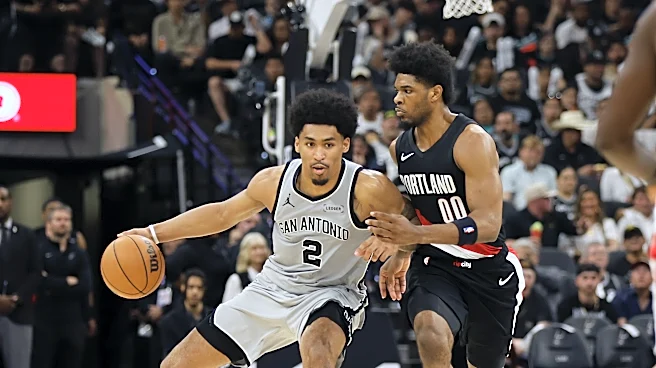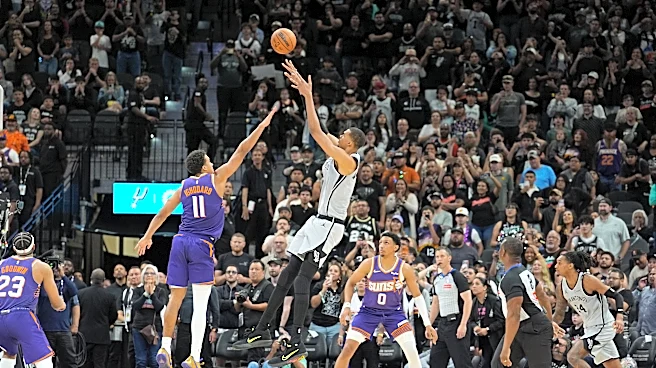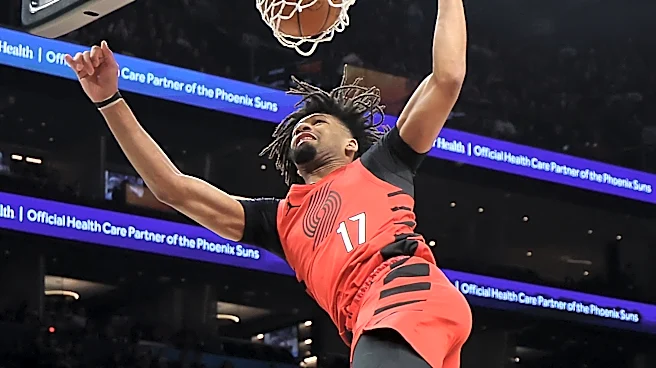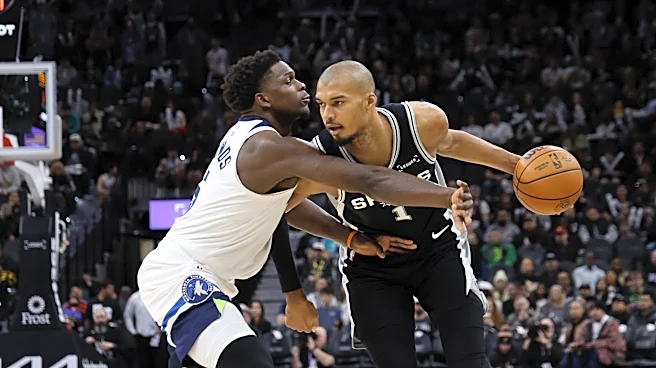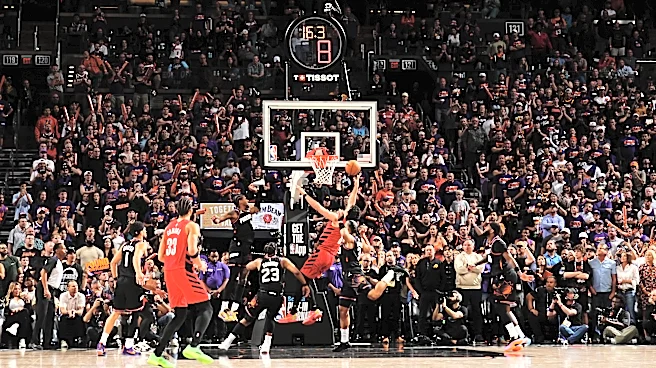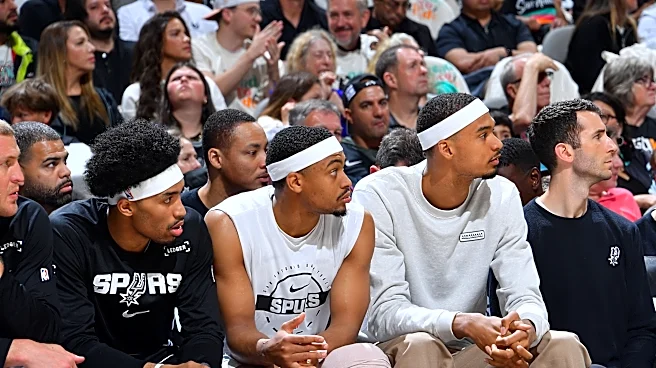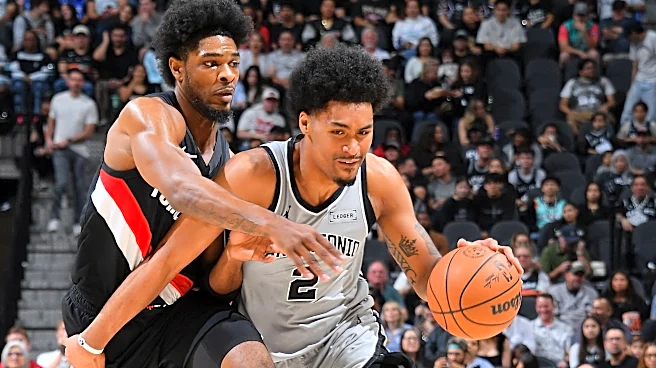

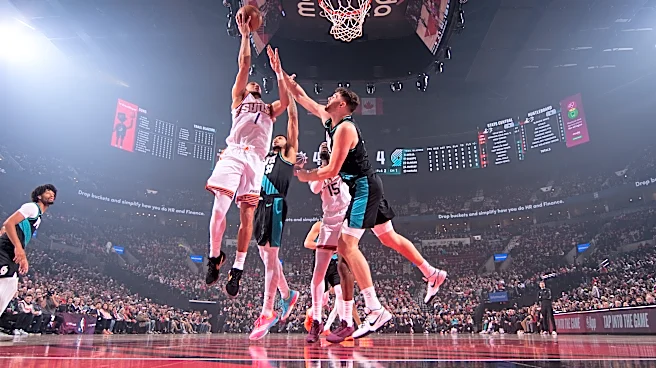
The Portland Trail Blazers and San Antonio Spurs are set to face off in the first round of the 2026 NBA Playoffs this weekend. Game 1 will be Sunday at 6:00 PM, Pacific time. Before we get there, though, let’s break down the matchup with potential strengths and weaknesses for both teams based on their regular-season performances.
We’re going to examine statistics from the season while comparing these teams. Whenever we do this, people argue, “In this slice of time the stats changed!” That’s valid.
We will note that when appropriate. It’s usually smarter to use the aggregate regular-season statistics as a base and modify based on circumstances than it is to use particular circumstances as a base from which to invalidate the aggregate whole. That’s true because:
- Every team has slices of the season where they look like more (or less) than they are.
- Basketball, particularly playoffs-caliber basketball, happens at a lightning-quick, nearly instinctive level. Contrary to popular belief, it’s not easy to change your habits on a dime. That requires foresight, thought, and general processing power that the cauldron of a postseason game doesn’t allow. Individual plays go different ways all the time. That’s sports! But if you’ve done something the same way a thousand times during the year, that’s going to have some bearing on how you do it now. (I’m looking at you, late-game Blazers inbounders.)
- Playoffs opponents seldom let you be your best selves. They’re in the business of breaking open any cracks they can find, pushing you towards your weaknesses. They sit night and day plotting nothing else. We all remember the time we bowled 230 on a random Saturday night. That doesn’t mean we can pull out that 230 game with spotlights on us, a crowd heckling our form, and $10000 on the line. When push comes to shove, we’re probably going to do it like we did it.
So yes, those smaller statistical slices matter. But they’re brush strokes over a canvas of what you did all season, not a redefinition of the season itself. Most often teams are who they are, and who they are is what they’ve shown.
So what have Portland and San Antonio shown? Here’s the breakdown.
Offense
If we just look at the offensive side of the ball, the Blazers are in trouble in this series. I’ve previewed plenty of playoffs matchups in my time. None have been as lopsided as the Spurs offense versus Portland’s.
Here are some of the highlights:
- San Antonio is 3rd in the league in point production at 119.7 ppg. The Blazers are 17th at 115.5. That’s over a 4-point margin for the Spurs even though the Blazers are faster in pace overall (103.6 to 102.5).
- Field goal percentage provides another huge gap. San Antonio shoots 48.2%, 6th in the NBA. Portland shoots 45.3%, 29th.
- The Spurs aren’t great at three-point percentage, 35.9%, 15th in the league. That still blows away Portland’s 34.3%, 27th.
- Unsurprisingly given all this, the Spurs’ offensive efficiency ranks 4th at 116.6. The Blazers rank 22nd at 110.6. That’s a massive difference.
- San Antonio has a big edge in points in the paint (52.1 vs. 48.2) and a significant lead in fast break points scored (16.3 to 14.7).
- Portland has two small leads. They attempt slightly more free throws than the Spurs per game (25.2 to 24.6, a virtual tie) and they attempt and make more threes (42.3 attempts for Portland and 14.5 makes versus 37.9 attempts for the Spurs and 13.6 makes).
- The Spurs generate more assists per possession than the Blazers, with 27.1% of their possessions generating dimes versus 24.0% for Portland. That’s 8th in the league versus 25th.
The Blazers get seriously outclassed in every department, save a small statistical edge in free throw attempts and three-point attempts, neither of which leads to significantly more made shots.
Clearly the onus is on Portland to do something to disrupt the process. If the two teams walk/jog down the court and take turns running their offenses, San Antonio is going to outclass Portland and it won’t be close.
The Blazers cannot come into this matchup casually. Whatever voodoo, mystique, movie-magic “when he eats an Oreo, that’s his tell” plan Portland’s coaching staff can dig up, they better come up with it right now. It’s the classic “Step 1: Plan Step 2: Practice Step 3: ??? Step 4: Profit!” scenario, but that’s what the Blazers have got. They’re brining a kazoo to a gunfight offensively. Unless they do something big, this isn’t going to be, “Remember the Alamo” as much as, “Remember your Band-Aids”.
The thing is, Portland’s coaching staff may come up with the best schemes ever. There’s a decent chance they won’t work because the Blazers just don’t have the personnel to carry them out.
Reality check: Portland is going to have to hope to play more or less even with San Antonio in most areas, then get hot from the arc, taking advantage of that big lead in three-point attempts per game. Three-pointers can change anything in the modern NBA. The problem is, that’s a recipe to win one game. It’s hard to win 4 of 7 that way.
There’s a modifying factor here, though. Portland shot better in the second half of the season from the arc than they did in the first, probably because they were able to put more threats on the floor, freeing up shooters. The Blazers generate as many open threes as anybody in the league. If those start falling—as they did towards the end of the season—Portland’s offense looks far better.
It’s also generally true that an ugly game favors the underdog. Mathematically, the lower the overall score, the fewer shots it takes to make up any margin. Portland won’t want to slow down the action per se. That’s not their game. But playing a physical, grinding, dog-eared-and-donkey-reared series is going to pull the Spurs off their perch. Maybe that leaves San Antonio’s margin in the closing minutes at 96-92 instead of 125-116. That’s what Portland wants. Three-stop-score and walk away with the game.
Honestly, though, if the Blazers are going to persevere, it’s probably going to come in other areas besides offense.
Defense
The Spurs hold a similar edge on defense as on offense, just not quite as wide. Here are the highlights.
- The Spurs allow 111.7 ppg, 8th in the league. Portland allows 115.7, 15th.
- San Antonio allows opponents 45.1% field goal shooting, 4th overall. The Blazers rank 16th at 47.1%
- The teams are more evenly matched defending the arc. The Spurs allow 35.2% (10th), the Blazers 35.8% (16th). Portland edges the Spurs in three-point attempts allowed. San Antonio allows 37.0 (17th), Portland 34.9 (5th)
- Following the trend, San Antonio ranks 3rd in the NBA in Defensive Efficiency (107.9) while the Blazers rank 13th (110.4).
- Both teams are good shot blockers. The Blazers rank 6th in the NBA with a 6.2% block rate, the Spurs 8th at 6.0%.
- The Spurs allow opponents 46.7 points in the paint, 7th overall. Portland allows 50.4, 15th.
- Fast Break points are a big differentiator. San Antonio is 3rd best in the league at 12.8 points allowed per game, Portland 25th at 16.5 points. That’s a major difference in a category that narrow.
- The Spurs give up 20.7 free throw attempts per game, 2nd in the NBA. Portland gives up 24.4, 22nd.
- A potential bright spot for Portland: the Spurs rank 25th in the league in opponent field goal attempts allowed. At least they’ll let you shoot a lot.
The overall story here: San Antonio’s defense is great, Portland’s decent.
The free-throw-attempts-allowed numbers are an area of concern for Portland. San Antonio doesn’t have to foul you inside because they have a one-man deterrent, the shot-blocking machine that is Victor Wembanyama. They’re going to channel you towards the hoop, throw up the bat signal, then pat you on the head and wish you luck on your trip. But Portland lives on free throws. They’re a crutch making up for their lack of scoring power in the halfcourt. If Portland, and particularly Deni Avdija, can’t get to the foul line, their already-weak offense becomes a desert.
Nor can the Blazers hope to make up the difference on the break. As you can see, the Spurs allow very few points in transition. Portland isn’t playing an older team like the Clippers or Warriors. San Antonio is as young, springy, and energetic as the Blazers are. Outrunning them probably won’t be an option.
Another mournful realization comes when you import a stat from offense: the Blazers are 25th in the league in Assists per Possession. Part of that is passing to players who miss shots, but Portland also tends towards isolation ball, especially when other things aren’t working. That’s going to feed right into San Antonio’s lane defense and shot-blocking. Portland better learn how to pass without generating more turnovers and missed shots, because their Plan B appears to help the Spurs defensively.
There is some hope. The Blazers have gotten better defensively since their health improved at the end of the season. They have more depth than they fielded for most of the year. The question might not be what each team can do on defense, but which team can do what they do longer. In that vein, at least, the Blazers have a chance. A healthy Portland team can rotate eight decent-to-great defenders onto the floor without thinking too hard. Making the series an endurance contest instead of skill-based would be a good idea for Portland.
There’s also potential light shining through cracks in the overall field goal attempts and the three-point numbers. If the Blazers can get up more shots overall, or at least more threes, than the Spurs, mathematics might take over instead of just talent. This, too, is a hallmark of modern basketball. If you can’t beat them, outproduce them. A duffer selling 100,000 Twinkies out-earns a gourmet chef selling 100 meticulously-crafted tiramisu plates. San Antonio will let you open a box of Hostess.
The Blazers can hope that sheer, brute-force numbers and/or energy might make up the natural difference between themselves and San Antonio. If Portland plays hard enough, long enough, and gets enough quality minutes from their bench, they might generate a puncher’s chance, at least.
In-Between Game
Here’s the scoop on some transitional factors that might come to bear.
- The Spurs are good offensive rebounders. They have a 26.3% offensive rebounding percentage, 10th in the league. The Blazers exceed them by far with a 31.3% rate, 2nd in the league.
- The story is not as good defensive rebounding. San Antonio is first in the NBA at 77.0%. The Blazers are 25th with 72.7%.
- The turnover story is interesting. San Antonio commits few and forces few. They have a 12.9% turnover rate per possession themselves (5th overall) and force at a 12.5% rate (28th). Portland is the polar opposite. They commit turnovers 16.5% of the time (dead last in the league) and force 14.9% (7th).
- As we said above, the two teams play at a similar pace, Portland 8th in the NBA, San Antonio 12th.
Here we have a couple areas where games might turn.
Offensive rebounding will be a big deal. The Blazers want to dominate opponents in this category. The Spurs are the best defensive rebounders in the league, though. An edge for Portland in real time probably means something is going right. Unless, of course, that edge comes because the Blazers missed 100 shots and San Antonio only 10. If the Spurs can keep Portland off of the offensive glass, though, this series is probably over before it starts.
Turnovers are another battleground. San Antonio wants a polite game. The Blazers usually do too. They’re not the most blue-collar guys in the universe. But they better channel that chippy, take-no-prisoners side of themselves. As we said at the top, taking turns in a chess match is going to favor the Spurs. They have more options, more matchup advantages, and the ultimate trump card in Wemby. But if the Blazers disrupt all that with turnovers, they take away that edge by taking away shots before they happen. A messy game favors the underdog. Besides, Portland is going to commit turnovers anyway. They’ll need to force them just to keep up.
One more factor not listed in the stats. San Antonio is the best first-half team in the NBA. Their margins of victory in the first and second quarters are astonishing, far outclassing Portland. They become much more pedestrian in the second half.
We could say this happens because the Spurs are often ahead and easing up on inferior opponents, but that should affect fourth-quarter margin far more than third. They’re both relatively equal. The Spurs are around a +3.5 points per quarter team before intermission, +0.7 per quarter after.
This matters because the Blazers are used to closing deficits in the second half. They often give up advantages in the second half too, but that’s kind of the point. Nothing is ever decided with Portland until the final horn sounds. If the Blazers can weather the storm in the first half, there might be room for comebacks.
For perspective, Portland has a zeroed-out or negative margin in every quarter but the second. San Antonio is much better. But better is relative. Second halves might re-open doors that got slammed at the opening of these games.
Summary
Here’s the summation:
- San Antonio is better in almost every possible way. The margin is less on defense than on offense, but it’s still there.
- Offensive rebounding and turnover generation provide true, contrasting battlegrounds between the teams. Those might be areas the Blazers could take advantage of, controlling the game via other means.
- On offense, the best hope seems to be getting up three-pointers and shots in quantity. Portland’s usual trick of generating more foul shots might not work.
- The Blazers probably won’t be better than the Spurs, but doing what they do best for longer might be in reach. Depth and energy need to tell for Portland.
- The Blazers shouldn’t give up on games if they go poorly early. San Antonio hasn’t been as good in the second half of contests as they have in the first.
- If all else fails, “ugly up” the game. Get physical. Grind. Portland doesn’t have an analytical chance or a gambler’s edge in this matchup. They need to get dirty. Make the game about trading body blows instead of Hurricanranas and top-rope dives. The Blazers need some Memphis Grizzlies-vintage Zach Randolph or Brian Grant vs. Karl Malone in this series. If both teams play pretty, San Antonio wins. Change the terms of engagement and maybe you change the game.
What did we miss? Fill in the gaps, augment, or argue in the comments section below!
——