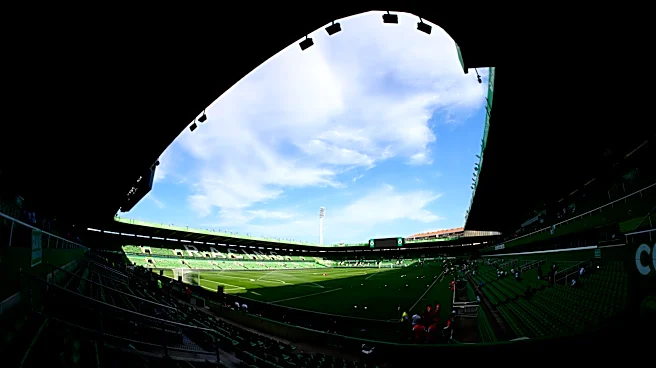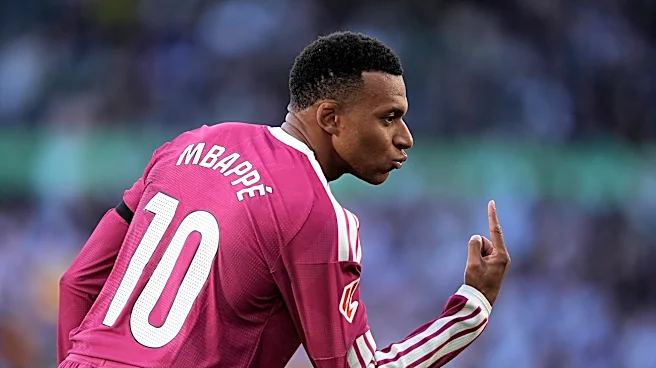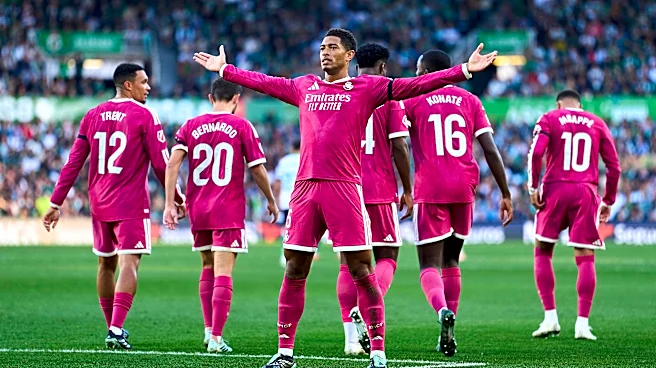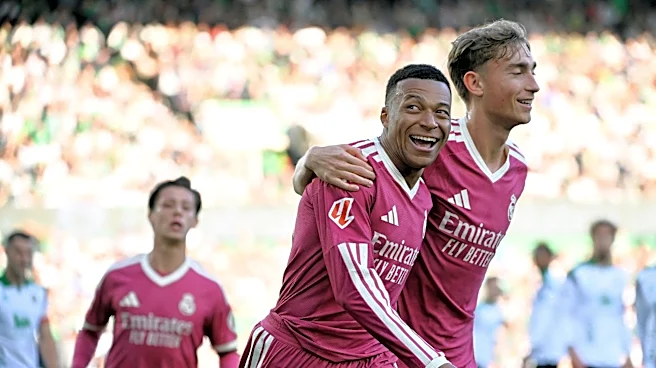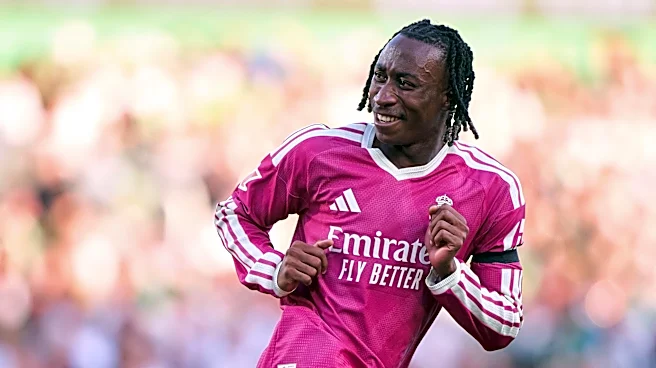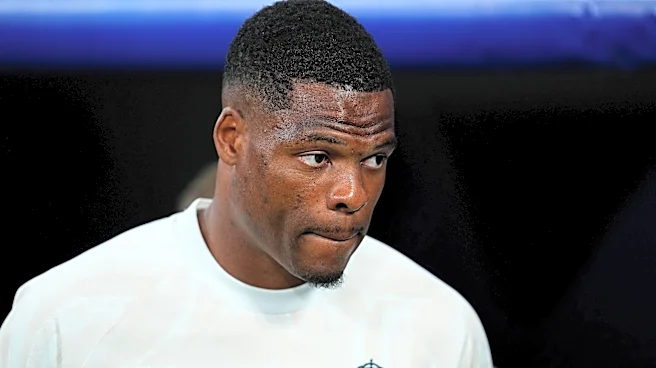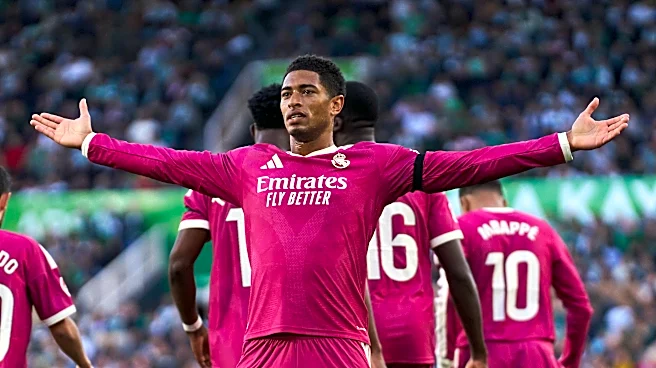




Real Madrid are on a six-game winning streak after ending Racing Santander’s unbeaten home record. Mourinho kept faith in most of the players who started El Clásico. The tactical ideas introduced since the Leipzig game are being progressively instilled in the team.
Against Racing Santander, these ideas tipped the balance in Real Madrid’s favour, allowing them to dominate the first half and take control of the game early.
When José Alberto’s side pressed high, Mourinho’s team found ways to escape pressure
and attack the spaces in behind. At the same time, they worked the ball out progressively, settled in the final third, and relied on wide connections to create chances.
In one of Real Madrid’s direct attacks, Tchouaméni dropped between Konaté and Huijsen, giving Real Madrid a numerical advantage in the build-up. Alexander-Arnold’s inversion and Diomandé tucking inside forced the wingers to narrow. This opened a passing lane to Güler on the right:

Güler’s wide position encouraged the opposing left-back to step up. Arnold then made a diagonal run behind Vicente and past Martin. The open out-to-in passing lane allowed Güler and Arnold to combine with a series of give-and-goes, getting the English right-back in behind Racing Santander’s centre-back:

Mbappé attacked the depth, with Diomandé arriving late behind him. Arnold’s cross, however, was not accurate enough to reach Mbappé or the supporting runners:

In the move that led to Real Madrid’s second goal, Tchouaméni dropped closer to Courtois, prompting Canales to close the out-to-in passing lane. Cucurella pushed slightly higher, dragging Luque with him. This freed Huijsen to advance near the touchline and play a diagonal ball directly to Mbappé.
Mbappé held the ball up well and laid it off to Arda Güler. The Turkish midfielder then played a through ball to Bellingham, who made a late run into the space behind Racing Santander’s defence. Bellingham dribbled past the goalkeeper and guided the ball into the net:

Racing Santander tried to force Real Madrid into wide traps, but Los Blancos’ setup gave Mourinho’s side the tools to escape pressure on the flanks.
In one example, Huijsen operated as a situational left-back while Cucurella stayed high and wide, pinning Luque. This allowed Tchouaméni to dart behind Canales and offer Huijsen a passing option to progress the ball. When Luque left Cucurella to cut off the forward passing lane, it freed the Spanish left-back near the touchline. At the same time, Bellingham moved ahead of his marker as Martin was caught ball-watching.
Real Madrid progressed diagonally to the opposite side. Arda Güler then chose the individual option and shot from close range:

Since the Leipzig game, Real Madrid’s attacking patterns have increasingly relied on wide connections in the final third, with the team’s distribution across the pitch becoming more balanced.
On the left, Cucurella attacked the channel between the right-back and centre-back as Mbappé moved behind him, while Diomandé held the width. The right side mirrored this structure. In the centre, Bellingham had the freedom to roam. He dropped near Prati, while Bernardo Silva and Arda Güler occupied the opposing right-back and winger in the right half-space. This left Arnold free out wide:

After the switch of play, Arnold laid the ball off to Güler, and Racing Santander’s block dropped deeper. Güler was able to deliver an uncontested inswinging cross. Bellingham and Mbappé attacked the blind side of Ramon and Mantilla. The ball reached Bellingham at the edge of the six-yard box, but the goalkeeper saved his header:

In another sequence, Jude Bellingham completed a wide triangle on the left with Mbappé joining the action around the ball:

The movements and spacing among the four players pushed Racing Santander’s block deeper. Rotations between Cucurella, Diomandé, and Bellingham manipulated their markers and created space inside for the English midfielder to receive. Similar rotations occurred on the right. Bellingham’s switch then found Arnold in space on the opposite flank. As Arnold prepared to cross, Bellingham attacked the blind side of Belocian. This time, Racing Santander’s centre-back cleared the danger:

To progress into the final third in another phase, Tchouaméni darted behind Canales to draw him out and open a passing lane between Konaté and Bellingham. Bellingham moved against his marker’s momentum to find Bernardo Silva on the right. As the ball advanced, Bernardo Silva and Arda Güler swapped positions, with the Portuguese midfielder attacking the box. Bellingham shifted toward the ball side, taking Bernardo’s place in the triangle:

The close proximity of Bellingham, Güler, and Bernardo Silva around the box allowed them to play short passes in tight spaces and work the ball to the overlapping Arnold. Arnold’s cutback was blocked by Martin:

Real Madrid dominated every aspect of the first half against Racing Santander, generating 2.71 xG while conceding only 0.26 xGA and controlling 57% of possession. These numbers dropped sharply in the second half: the team produced just 0.64 xG, allowed 0.71 xGA, and saw possession fall to 51%. This shift enabled Racing Santander to gain a foothold in the game.
Dominating and effectively closing out a match in the first half makes things easier for Real Madrid. However, easing off in the second half gives opponents the chance to build momentum and could ultimately cost the team points.