



Sunderland’s success in recent years can be attributed to many factors, but I’d argue that one of the main drivers of our success has been the fuel provided by doubt.
Time after time, year after year, game after game, Sunderland are written off. Sometimes by our own supporters, yes, but mostly by people in the media, pundits, journalists and other notable figures in the game.
And perhaps, in some strange way, we should be grateful for it.
Because there is something about being underestimated that seems
to bring out the very best in this football club.
We’ve had plenty of credit for how we’ve operated in that time too, but following the end of last season – where we managed to achieve the unthinkable with a seventh-place finish in our first year back in the top flight – there’s definitely been an undercurrent that Sunderland were a little bit lucky to end up where we did.
That we somehow stumbled into seventh.
That the football gods smiled upon us.
That the numbers say one thing, while the league table says another.
Just check the way we’ve been analysed over the summer and since the season started, particularly after the loss to Ipswich on the opening day – many people have been keen to point out how Sunderland may have done well, but we’ve overachieved and the ‘numbers’ reflect that.
xG statistics have been used as a stick to beat us with, and pundits such as Jamie Carragher even went as far as to say he thought we’d finish rock bottom of the Premier League, because of… reasons.
I don’t own a crystal ball and I could well be proven wrong here, but I find it all so baffling. It’s lazy.
I get it, because these people – and let’s pick on Carragher specifically here since he went on the biggest football show in the country to say what he said about Sunderland – aren’t Sunderland fans, aren’t engrossed in how our football club works and what it is that makes this team special.
Their job is to try and provide analysis on 20 different clubs, and at the end of the day, it’s just their opinion.
It doesn’t make it right.
I’m not a complete dinosaur and I understand that statistics are a key part of the game these days, but the complete overreliance on them to help form the basis of strong opinions really winds me up.
Because the things that make Sunderland such a special team cannot be plotted on a graph.
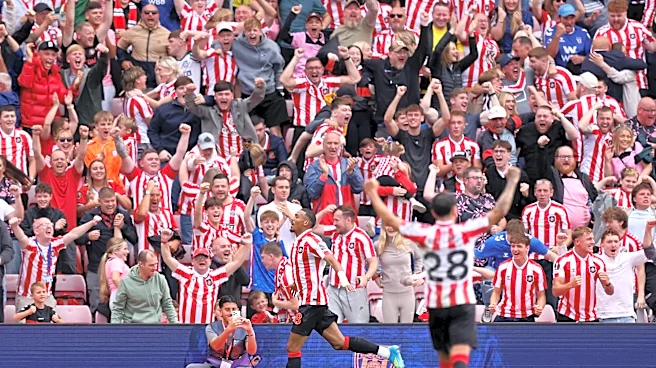
You can’t measure team spirit. You can’t put a number on belief. You can’t calculate the value of a player throwing himself in front of a shot because he refuses to let his teammate down. You can’t quantify the roar of forty-odd thousand people when Sunderland score.
You can’t measure doggedness, togetherness, resilience or emotion.
You certainly can’t put a percentage on what it means to pull on that red and white shirt and know that there are generations of supporters who have spent their lives desperately wanting to see their football club back where it belongs.
What we’ve got can’t be bottled up — It can’t be reduced to a spreadsheet. And it certainly can’t be dismissed because an algorithm says we shouldn’t be where we are.
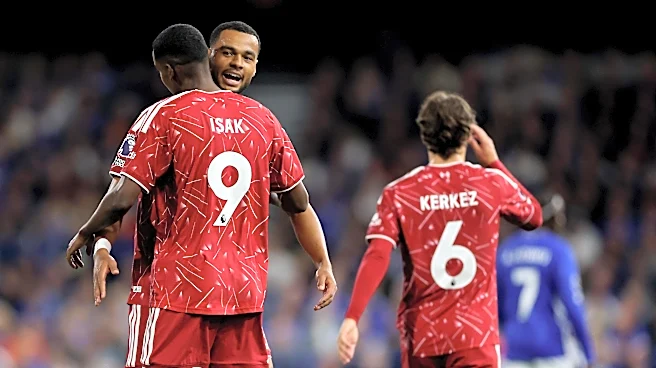
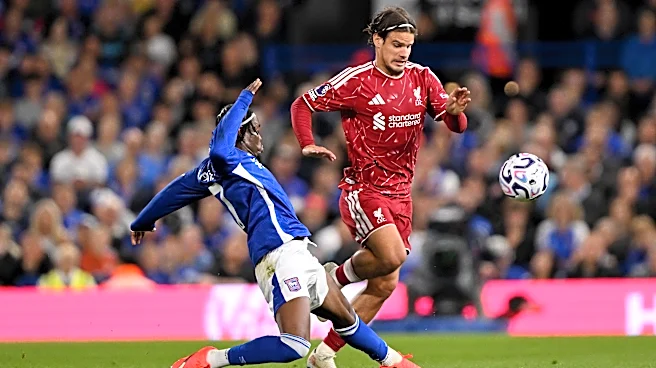
Aye, the performance and result on the opening day was immensely disappointing – Sunderland gifted Ipswich a win, and even though playing a newly promoted side away is an unenviable task, we made it far too easy for them by hand-wrapping the three points in a neat little bundle for Jack Clarke and his teammates.
But that doesn’t tell the full story, because something happened after that game.
The criticism came. The questions came. The dismissals came.
And rather than Sunderland shrinking beneath it, something seemed to ignite.
The criticism of the team that followed that game put fire in our bellies, and what we saw against Fulham was more ‘Sunderland’.
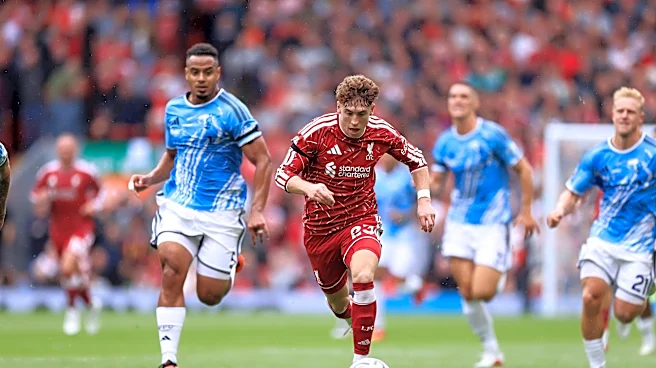
Nordi Mukiele, who was outstanding on the day, made reference to the criticisms afterwards and noted honestly that it had irritated him:
And I bloody love that, because that is what I want Sunderland to be. I want us to be the team that people don’t fancy playing, the team that gets under people’s skin and, most importantly, the team that hears the doubts, remembers them and then uses them. Not because we need validation from people outside the football club, but because there is something deeply satisfying about proving people wrong when they’ve already decided what you are capable of.
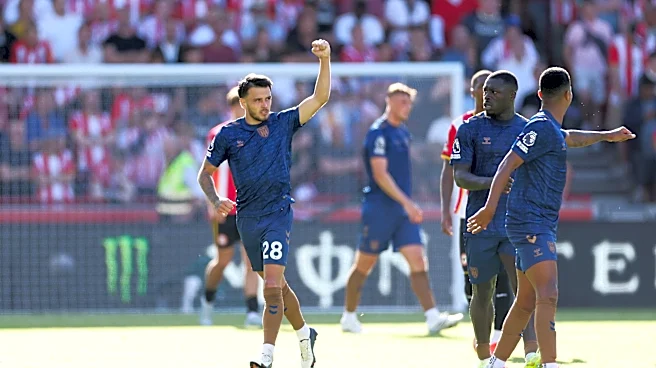
Again, in the lead-up to Brentford, we were written off, with plenty of pundits expecting the home team to turn us over. What we got instead was a confident, aggressive and spirited Sunderland performance where we actually dominated the ball for most of the game and, had it not been for some questionable officiating, we may well have walked away with all three points. That wasn’t luck, and it wasn’t some xG anomaly; that was a football team standing toe-to-toe with an established Premier League side and refusing to be intimidated.
And that’s the bit that I think some people still don’t understand about Sunderland. They look at the players, the numbers, the fixtures and the squad, and compare us to the teams around us, but they don’t see what we see. They don’t feel what we feel. They don’t understand what it means to be part of this football club, or what it takes to play in front of 48,000 people who have spent years being told that their club is finished, only to watch it slowly claw its way back to where it belongs.
Nothing that I’ve seen from Sunderland in the last two games would suggest that we’ve got a group of players who are going to fold, implode and start turning on one another. Nothing we’ve seen from them over the last two seasons gives me any reason to believe that this is a group who will suddenly stop fighting for every ball, stop believing in one another or crumble when the pressure starts to build. There simply isn’t any evidence of it.
I know people are going to point to the increase in the amount of games we have to play, and that’s fair enough, but I honestly don’t see this as the huge issue some are making it out to be. Régis Le Bris, seemingly, doesn’t either, and he’s been at pains to point out that it was only just over a year ago that we were basically playing this sort of schedule in the Championship, albeit with a mostly different group of players. We didn’t particularly suffer then either.

We’re about to enter the first proper busy period of our season, with four games in twelve days. Luckily, three of those are on home soil, but this is the point where people are expecting us to fall. This is where the pressure will be on us to show that we can perform under duress, and this is where the doubters will be sitting waiting for the first wobble, the first bad result, the first opportunity to dust off their predictions and tell us they knew this was coming all along.
“Look, see, I told you so – Sunderland aren’t what they’re cracked up to be.”
And honestly, I hope they continue.
I hope they keep writing us off. I hope they keep telling us that seventh was a fluke and keep looking at their numbers and convincing themselves that Sunderland will eventually fall back into line. Because we’ve seen this film before, and we know how it ends.
Read again what Nordi Mukiele said after Fulham. The criticism gets to us and, rather than creating negativity amongst the group, they use it to inject life into their performances on the pitch and achieve results. That is the mentality I want to see, because that is the mentality this football club has been built on over the last few years. Maybe that’s why the constant doubting doesn’t bother me as much as it probably should. In fact, I quite like it.
Sunderland have spent years being told what we cannot do. We were told we couldn’t get back to the Premier League. We did. We were told we wouldn’t stay there. We did. We were told we’d struggle to compete, and we finished seventh. Now we’re being told that it was all a bit fortunate.
Fine. Keep telling us.
Keep moving the goalposts. Keep finding another reason why Sunderland shouldn’t be where Sunderland are, because every time you do, you give this club another reason to fight. There is something wonderfully defiant about that, and I think it’s something supporters of this football club have always understood instinctively. We’ve spent so long being underestimated that, in some ways, it has become part of our identity.

We don’t need everyone to believe in us. We don’t need pundits to predict us to succeed and we certainly don’t need the approval of people who spend their weekends watching Sunderland from a studio hundreds of miles away. We need the people inside that dressing room to believe in one another. We need the players to believe in the manager, the manager to believe in his methods and, above all else, we need to keep that connection between the team and the supporters that has become such a huge part of what Sunderland are again.
Because this isn’t really about proving Jamie Carragher wrong. It isn’t about winning some imaginary argument with Sky Sports, and it isn’t even about silencing the doubters. It’s about Sunderland.
It’s about a football club that has spent far too long being told that its best days were behind it, and which has finally rediscovered its identity, its ambition and that bloody-mindedness that makes this place feel different when things start going our way. It’s about a group of players who have an opportunity to write their own chapter in the history of this football club, and supporters who have waited, suffered, travelled, argued, celebrated, cried and kept coming back through all of it.
We’ve earned the right to dream again.
So let them doubt us. Let them underestimate us. Let them tell us we’re not good enough and let them look at their spreadsheets, their models and their predictions. We’ll look at the league table, we’ll look at the badge, we’ll look at the man standing next to us and we’ll keep going.
Because we’re big enough and ugly enough to deal with a bit of stick. If you want to have a pop at Sunderland, go for it. By all means, tell us we’re going down. Tell us seventh was a fluke. Tell us we’re punching above our weight. Tell us the numbers say we shouldn’t be here.
Just remember that people have been stupid enough to do it before, and they’ve ended up with egg on their faces.
So keep doubting us. Keep writing us off. Keep giving us something to fight against. Because if there’s one thing Sunderland have taught us over these last few years, it’s that sometimes the best fuel you can give this football club is the belief that we still have something left to prove.