


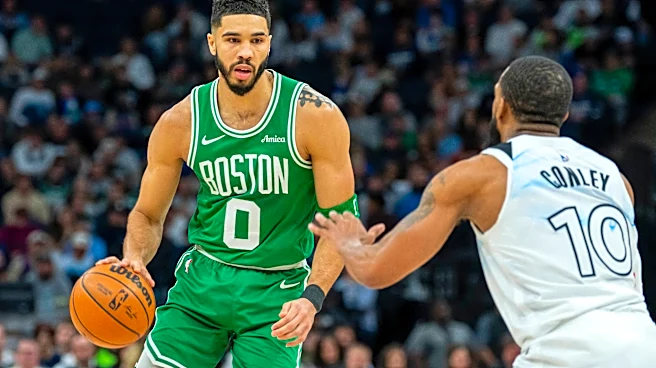
The Celtics have developed a reputation as one of the NBA’s best player-development organizations, and that has extended to improving the shooting of players who arrived with questions about their jumper. Over the years, Boston has helped several players very recently make significant strides from three, and the results speak for themselves.


It’s safe to say the Celtics already have a proven track record of developing shooters. But if Boston can turn Dillon Mitchell into a 32-percent-or-better three-point
shooter, it could be the organization’s most impressive shooting-development success yet regarding the starting point.
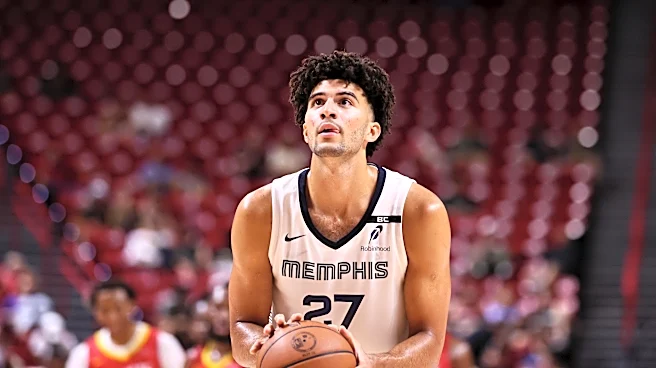
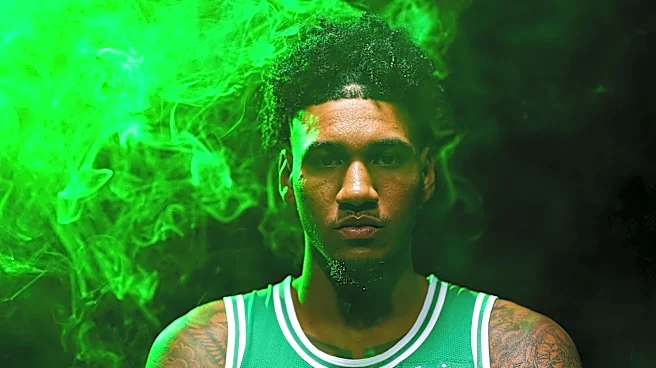
The 23-year-old Mitchell (22 on Draft Night) was selected with the 40th overall pick in this year’s draft. He spent four years in college, with stops at Texas and Cincinnati before finishing his career at St. John’s. The 6-foot-7 forward was undoubtedly one of the better defenders and athletes in his draft class, using those traits to be a disruptive defender and reliable rebounder on both ends of the floor. However, after diving into his college film following the draft, it became clear that some of the more understated aspects of his game were intriguing as well.
Mitchell is really good with the ball in his hands, an underrated passer that averaged a career high-three assists per game in his final year and is someone that consistently showed an ability to read the game at a high level. On offense, that high basketball IQ manifests itself through timely cuts, a strong understanding of spacing, and freelanced screen setting. On defense though, it’s the anticipation skills that lead to him being able to cut off drives and get steals in passing lanes.
So, if Mitchell was an elite athlete and defender in his class, a strong rebounder and high-level processor of the game, and a capable handler and passer, what ultimately pushed him to the middle of the second round?
The answer is simple: his jumper.
Mitchell shot just 6.7 percent from three on 15 attempts during his senior season and connected on only 49.4 percent of his free throws. Those numbers weren’t much of an isolated dip, either. He finished his college career shooting just 13 percent from three and 47 percent from the free-throw line, leaving a glaring question for NBA teams. Some questions possibly revolve around the concern of him ever being able to shoot.
Although the numbers are more than damning, Celtics Vice President of Basketball Operations Mike Zarren had no reservations about Mitchell’s ability to improve as a shooter.
“He’ll get better at his shot. We don’t have any doubt about that,” Zarren said after the Celtics drafted Mitchell.
Guaranteeing the upgrade of someone with the priors of Mitchell was very bold, but the progress the rookie seems to be making already has Zarren looking like a genius.
I definitely understood how far the staff would have to go with Mitchell as a shooter, but I never viewed his shot as a broken one.
The first moment that caught the attention of Celtics fans came during Summer League, when Mitchell knocked down 2-of-5 three-point attempts in his second game after again, only hitting one his entire senior season.
Even some of his misses offered encouraging signs, suggesting subtle changes to his shot, the fluidity, and a growing confidence in it.
Mitchell gave reports some insight into that exact topic during a Summer League practice saying, “Yeah, I think so,” when asked if his jumper has changed since being drafted. He then elaborated, pointing to two key areas: “I think as far as just shooting on the way up, and then just having confidence with it.”
Across the three games he played during the summer, Mitchell shot 3-of-8 from beyond the arc while also displaying unexpected comfort with the in-between game, knocking down several mid-range jumpers.
Fast forward to training camp and his work with development coach Craig Luschenat has his shot looking even better.
At yesterday’s practice, Mitchell offered some valuable insight into what he has been working on and how he feels about his progress. Shooting has been a major focus of his workouts, and he said his confidence has grown alongside the changes he has made to his form.
“Even [in] the little time we’ve had how much I feel like my form has changed it’s helping me with a lot of confidence just moving forward.”
Most importantly, we still need to see that progress come to fruition in real games, but the strides Mitchell has already made, especially given where he started, are extremely encouraging.