

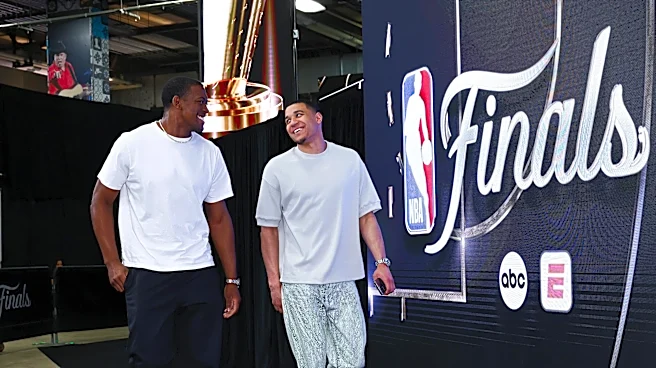


The San Antonio Spurs came up short in the Finals, but it’s unfair to call the season a failure because of the growth shown and the bonds strengthened in 2025-26. Fortunately, for them, their mighty nucleus is still in its infancy and with proper development, they will have more opportunities to raise the Larry O’Brien trophy.
In many cases, humiliation is one of life’s greatest teachers, and the Spurs must be feeling some of that after folding late in each of their four Finals losses. It’s what the team
felt 13 years ago in 2013 when they let a title slip away in Miami, but it made them stronger and more determined the next season when they went on the warpath.
Those Spurs, who celebrated their 12th championship anniversary on Monday, were at the time recognized for their selfless style of play and determination, but in terms of being viewed as truly great, they quickly fell into the shadow of the dynastic Warriors, who built on that style and would dominate the rest of the decade, led by a much more socially outgoing superstar. (But maybe they’ll get more respect in the future, like old films that were under appreciated at the time but later become cult classics.)
Like their 2013 counterparts, the current Spurs team now knows that being good is not good enough. Sixty-two wins may not happen every year, but there was a point in time in the in 2025-26 season in which Spurs fans started expecting to win every game, and that needs to be the standard going forward.
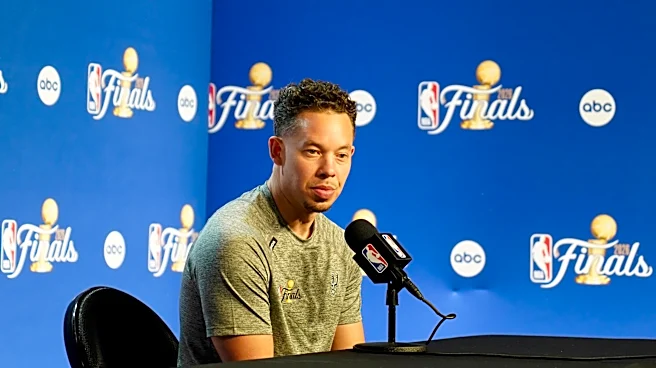
The front office and Coach Mitch Johnson are likely already examining what areas need improvement. Among the things the Spurs will be addressing in the offseason, here are the changes and adjustments I’d like to see that could significantly raise their potency and be the difference between them hosting their own parade and going home empty-handed. Let’s review.
1. Passing
The Spurs were not a bad passing team, logging the second highest potential assists in the playoffs (45.7), but they were unremarkable in the playoffs as they were 12th of 16 in passes made and in the middle of ball security. Keep in mind that the greatest strength is the pass because it is faster than the dribble. The Spurs’ offense was too reliant on dribble penetration, while the New York Knicks ran more motion.
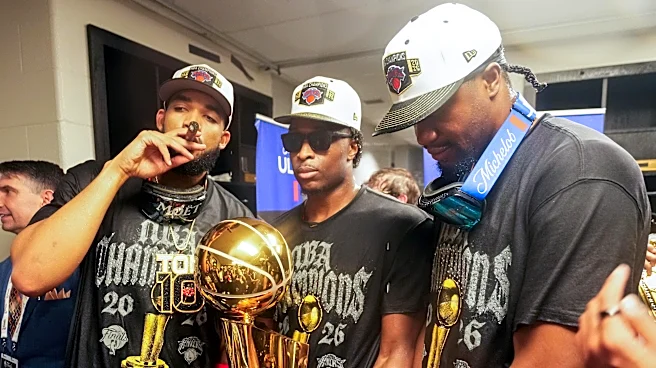
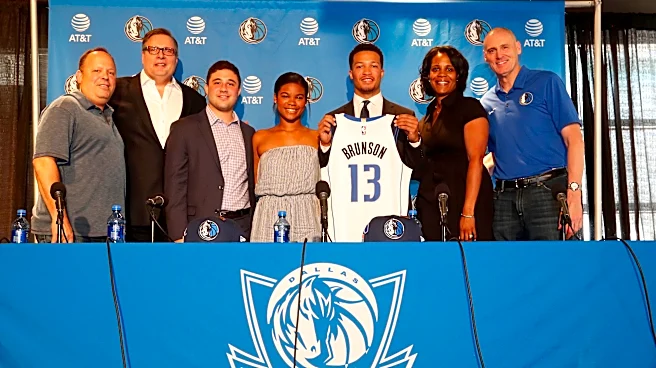
Additionally, the 2024-25 Knicks did not look this sharp offensively under coach Tim Thibodeau as they did with Mike Brown, a former Spurs assistant, who helped them win a championship. The Knicks that lost against the Indiana Pacers in the 2025 ECF made 25.8 less passes per game than this year’s champs. One of the biggest effects this had was saving some of the juice in Jalen Brunson’s legs for clutch time.
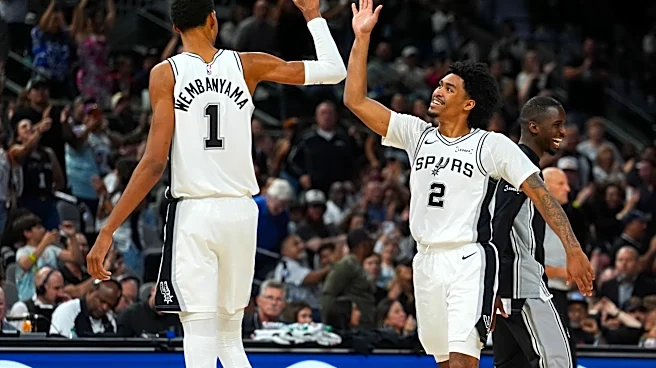
More passes could help Victor Wembanyama because a good chunk of his offense starts with him dribbling down from the perimeter. Greater effort is exerted getting past a man in a defensive stance than slipping past someone who is trying to pay attention to the ball while guarding an off-ball player.
Furthermore, it’s hard to have witnessed the Beautiful Game Spurs and think the current ball movement is enough. In 2014, they passed the ball 44 more times than the current squad, which makes them a completely different team.
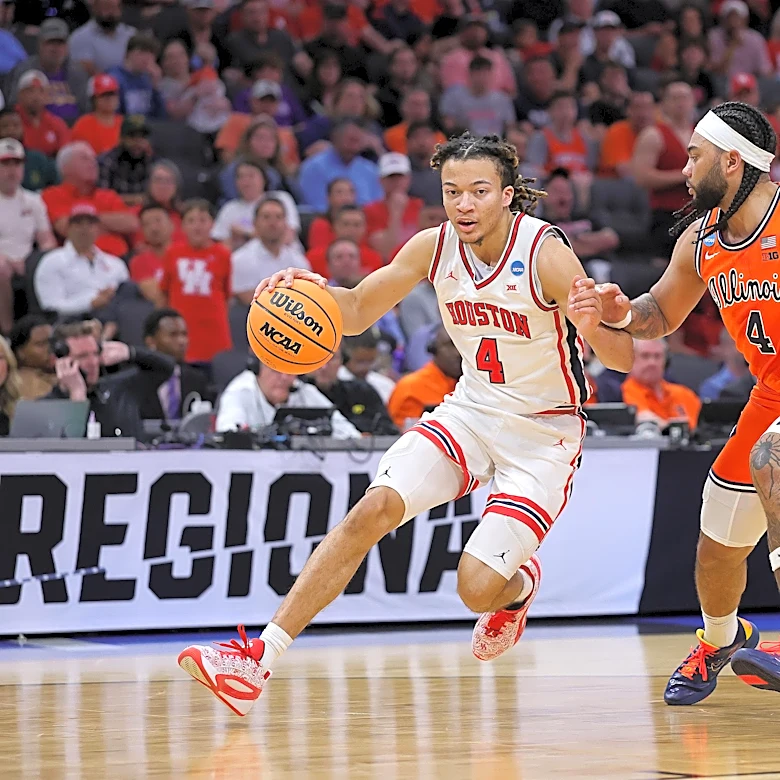
Think of the swift first step De’Aaron Fox, Stephon Castle and Dylan Harper have. Putting them in a system with more ball movement could make their jobs easier with more catch-and-go moves, ensuring they see less help defenders.
One of the reasons the 2024-25 Indiana Pacers ripped through the East was because they averaged 318 passes per game, which was 49.4 more than the next East team (Orlando Magic), and 70.7 more than the Oklahoma City Thunder in the Finals. The Pacers lost in the finale, but who knows what happens if Tyrese Haliburton doesn’t pop his Achilles tendon? (Count yourself lucky, Chet Holmgren.)
With the right buy in and coaching, this adjustment can be done without the players sacrificing much of their identities.
2. Covering the 3-point line
The paint will always be the heart of the defense, but the importance of the 3-point line increases each year as the average attempts rise. On top of that, with respect to past eras, this one is the hardest to guard in since lots of carrying violations never get called, which is a ridiculously unfair advantage, and there are more areas of the half-court to cover.
Coach Johnson explained to me at All-Star weekend in the scrum that some of the reasons for so many open to wide-open 3-point attempts come from offensive rebounds, transition and unscripted plays. Some stuff is almost impossible to help unless the team is going to be perfect in other areas.
Nonetheless, teams can save themselves about 10 points per game by defending in the half-court with more attention to detail, and the Spurs are no different. One of the big mistakes made league wide is the corner defender standing in no man’s land. When the pass is made to his man, most times either an open shot is taken, or the hard close out causes a breakdown. This can be avoided by letting the backline defender, in a lot of cases Wembanyama, take care of it.
Additionally, drop coverage should be used only on players who aren’t threats outside of 10 feet from the rim. The second defender has to play at the level of the screen against dynamic scorers in case a switch has to be made on the perimeter.
Better corner and screen-roll defense plus staying home at important moments, like the last five seconds of Game 4 of the Finals, are about trust. Being out of position doesn’t just lead to an open jumper for the other side as it can cause a straight line to the hoop, too. Doubles can’t happen in the last four-to-five minutes when it’s a tight game or they are trying to preserve a lead.
And then there’s the cardinal sin: fouling 3-point shooters. One of the Spurs’ goals next season should be to commit the least amount of these. It’s such a serious concern that every player should be fined $1,000 every time they do it and double that in the playoffs. Those three 3-point fouls Harper, Castle and Fox committed on Brunson in the second half of Game 5 probably brought Spurs fans somewhere to their knees.
The Spurs will solve a great deal of the fouling part by staying down and keeping their arms vertical.
3. More close range action for Wemby
Ok, fine. I’ve been spoiled by tapes of David Robinson and saw Tim Duncan. How can you blame me, especially when they have a real successor?
Wembanyama had big-time moments in the playoffs, but there is still work to be done. He shot 42.5 percent in the paint non-restricted area in the playoffs and made 28.3 percent of attempts outside of the lane in the Finals. He naturally plays like a taller Kevin Durant but some of the outside shots happened because his body isn’t strong enough yet to take advantage of guys like Karl-Anthony Towns and Mitchell Robinson.
Preferably, the strategy would be more post play when his body is ready, but to be clear, he doesn’t need to turn into Kareem Abdul-Jabbar. Yet, he should some day be good enough to where he can go to it as an adjustment and score a bucket every time.
This could positively affect the teams passing because he’d be such a mismatch that he would unfasten coverages as soon as he catches it close, and then hit the open man on the move. Having this in the arsenal would help take him from a great player today to one for the ages.
Great post players are usually more dangerous on the second catch, and with his size advantage passing over the top, imagine Wembanyama getting the ball back while his defender isn’t looking. Shaquille O’Neal thrived in those moments created by the triangle offense.
This year, the Spurs’ post-up frequency was 1.7 percent in the playoffs. Unfortunately, the NBA’s tracking data for post-ups only goes as far back as 2015-16, but interestingly, the Spurs were first in frequency that season at 14.5 percent. They fell in round two to the Oklahoma City Thunder that year, but made the Western Conference Finals in 2016-17 against the overkill Golden State Warriors, while running nearly a third less post-ups. So, there are other avenues aside from the post to get Wemby more looks at close range, like getting him involved more at the elbow and nail, or using him at the dunker spot.
It doesn’t matter how it happens. He needs to impose his size more inside the arc.