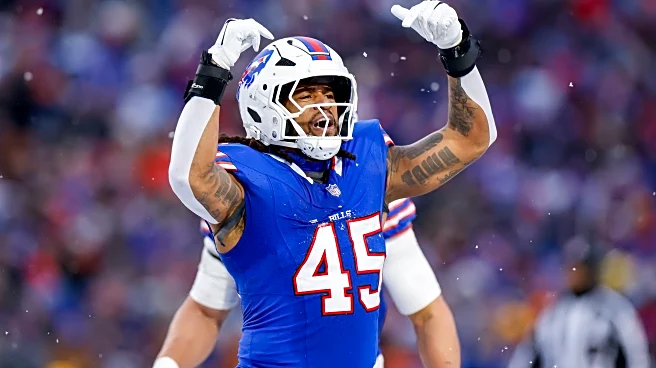

The Buffalo Bills and Cincinnati Bengals squared off on a cold, snowy day in Orchard Park, NY. With both teams featuring some of the worst run defense the league has seen in 2025, naturally the game was
run heavy on both sides of the ball. Well, not quite.
The Bills held up to their end of the bargain, with 29 rushing attempts. That’s one more rush than they had passing attempts. The Bengals on the other hand, were shut down in the run game overall. With the Bills’ defense solid against the run, surely that meant it was a dominant effort by the D with their passing game typically toward the elite end…
Opposite day
Rush defense
On the day, Buffalo faced 19 rushing attempts by Cincinnati. Those rushing attempts went for 62 yards. That’s 3.26 yards per attempt. The Denver Broncos currently have the best rush defense in the league in that metric and allow 3.7 yards per attempt on average.
The Bills, even including this game, allow 5.1 rushing yards per attempt. That makes what they did to the Bengals an obvious anomaly. Let’s take a quick peek at something.
What makes things doubly odd with the Bills’ performance is that they allowed no explosive runs. The second rush in the clip by running back Samaje Perine went for nine yards and was the longest of the day from Cincinnati. The first clip shows the shortest run, a tackle for a loss of three. There weren’t many TFLs either, with this one and just one other.
Why point these things out? The Bengals had only 19 carries, meaning a busted play or two could sway things in either direction. The 3.26 yards per carry was earned with a steady performance the entire game.
Pass defense
When it comes to the passing game, the Bills allowed 7.89 yards per attempt against the Bengals. The second worst team in the league right now happens to be the Cincinnati Bengals who allow 7.65 yards per attempt. Or in other words, Buffalo’s defense did not hold up remotely well against the pass.
Which is very weird as even with that debacle on the books, Buffalo is the ninth-best team in the league with this metric. On average they allow 6.17 yards per pass.
For our play selections here, the first is one I don’t think needs much explanation. Or rather, I’d prefer not to dwell on it. Seriously, what a ****ing catch by wide receiver Tee Higgins. I know I don’t have the best angle on the catch, but if you’re not convinced that’s defensive pass interference, just note that Higgins wasn’t showboating and only using one hand for funsies.
I also had some good choices for the Christian Benford interception, but chose to frame it in “Joe Burrow Vision.” That’s where you don’t see the defensive back until they’re catching the ball.
Kidding aside, Benford came on a blitz for this play and Burrow had a VERY easy pitch-and-catch for the blitz beater. All he had to do was get it over Benford. Obviously that did not occur.
The Final Straw
This game is a good illustration of how head coach Sean McDermott has prioritized defense over the years. If you’re going to be bad at one thing, let it be the run defense.
The Bills have had one of the worst run defenses in the league this season along with some overall defensive struggles, but if you can believe it are still allowing 0.6 points per game LESS than the league average. That’s 14th in the league. Not incredible by any means, but still fine. If you’re curious, they allow 22.5 points per game.
Buffalo kicked butt against the run but struggled against the pass. They allowed 34 points to the Bengals — the second-highest total they’ve allowed all year. Now I want to be clear. This is a good philosophy if you HAVE to be bad at one thing. It’s of course preferable to be good at both run and pass defense if you can. That’s rarely played that way for the Bills this year, but perhaps they can catch lighting in a bottle down the stretch.