
Projecting the Seattle Seahawks draft class is less about predicting exact picks and more about understanding how the board is likely to fall. This exercise follows that approach — not as a mock draft, but as a value-based framework built around where prospects are generally expected to come off the board.
With just four selections, Seattle doesn’t have the flexibility to chase need recklessly or reach outside consensus ranges. Every pick has to balance talent, role projection, and positional value
— especially at a position like running back, where impact players can be found across multiple rounds.
The goal here is simple: map realistic names to each of Seattle’s draft slots and evaluate how their profiles translate within the offense, highlighting not just who fits, but when the value actually makes sense.
Round 1
Jadarian Price, Notre Dame
Jadarian Price is still a player with a lot to prove, but when projecting pure run-game translation, he might be one of the closest stylistic approximations to Kenneth Walker III in this class when it comes to 10–20 yard gains. He doesn’t bring the same level of creativity or true top-end speed, but the pacing and instincts are clearly there.
Price is a tempo-driven back with smooth hips, elite vision, and a natural feel for finding the end zone. He’s widely viewed as a more natural runner than his more heralded teammate Jeremiyah Love, stacking movements and adjusting to run-lane spacing with rare instinctiveness. He consistently contours his path to maximize available space and avoid tacklers for as long as possible.
He moves like a zone runner but lacks ideal downhill burst for a one-cut back, and while he has the leg strength to survive contact, he’s more of an average finisher than a tone-setter. His limited third-down value (particularly as a pass catcher) could cap his ceiling in terms of draft slot.
Even with those concerns, his feel as a runner is difficult to find. Still, this would be a clear reach in Round 1, and with Seattle not picking again until 64, it’s very unlikely he would still be available there — creating a difficult value dilemma.
Round 2
Mike Washington Jr., Arkansas
Mike Washington Jr. is a traits-based projection who improved at every stop in his college journey. He’s fast, fluid through his hips, and shows adequate agility once he gets going, with the ability to glide through traffic and swerve around interior congestion.
He isn’t particularly sudden in tight areas and can be a step late in processing developing lanes, which shows up in hesitation at the line. However, once he builds momentum, he has legitimate breakaway speed and can function both inside and outside.
The key for Washington at the next level will be running more consistently to his size with greater aggression. There are also ball security concerns — fumbles have shown up enough on tape to be a real discussion point for evaluators. Even so, the physical tools and growth trajectory point toward a solid rotational back with upside if things click.
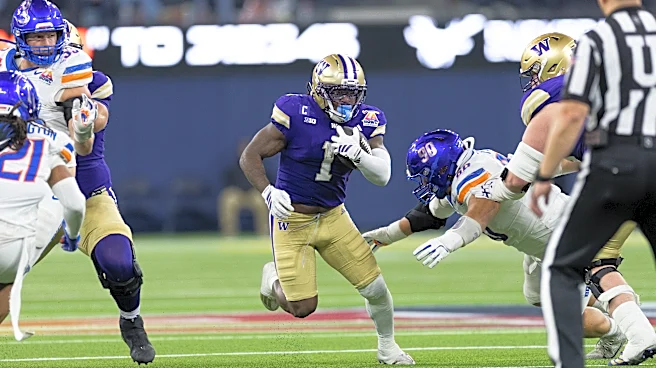
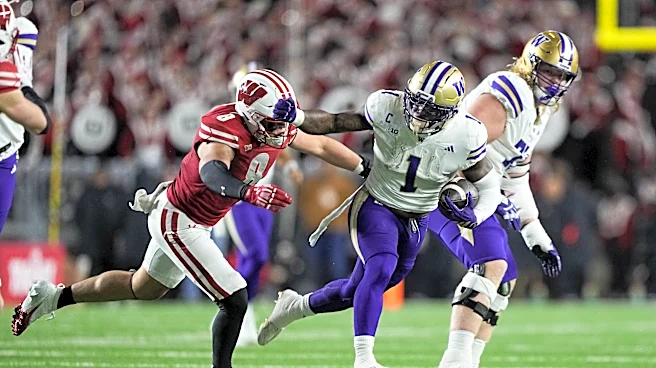
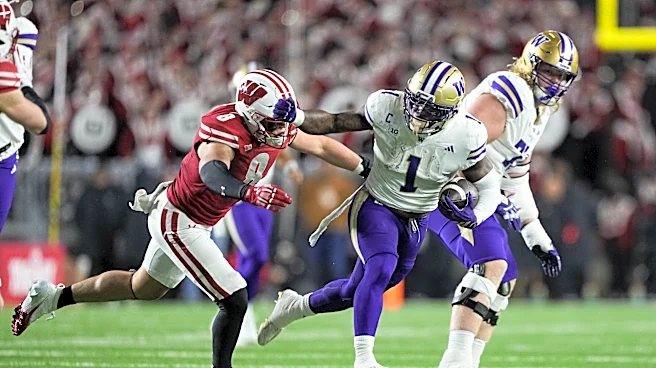
Jonah Coleman, Washington
Jonah Coleman is a team captain who had a pre-draft visit with Seattle. Originally a member of the Arizona Wildcats, Coleman is a productive three-down back with a strong understanding of run schemes and protection responsibilities, consistently putting himself in the right place based on how blocks develop.
Coleman lacks true speed as an outside runner (note: he did not run the 40-yard dash at his Pro Day) and he only brings average between the tackles burst. His success depends heavily on tempo and staying ahead of pursuit angles rather than overpowering defenders.
While Coleman was injured for a good chunk of 2025, his 2024 production, playing fully healthy, reinforced his reliability and consistency. He projects more cleanly as a Day 3 player, but his intelligence, discipline, and well-rounded skill set give him a pathway to compete for a three-down backup role early in his career.
Round 3
Emmett Johnson, Nebraska
At Nebraska, Emmett Johnson established himself as a consistent and productive runner within a structured role. He’s a hard-charging, gap-scheme back who runs with urgency and decisiveness, sticking to defined tracks and maximizing what’s blocked.
His production stands out largely because of that consistency, even without ideal size or top-end speed. He accelerates quickly once he commits, but his runs can become segmented when forced into lateral adjustments, and he struggles to create when the initial read is cloudy.
Johnson can beat linebackers to their fit points but doesn’t consistently run through contact with power. He does bring some value as a pass-catcher, which helps round out his profile. Overall, he projects as a solid backup option best suited for downhill, gap-oriented systems.
Round 6
Adam Randall, Clemson
Randall is one of the more intriguing developmental bets in this group. A former wide receiver, he’s still learning the nuances of the position, but his combination of size, long speed, and receiving ability stands out immediately.
He runs upright with long strides but flashes surprising one-cut quickness and real home-run potential. The lack of rhythm, timing, and recognition is evident, which is expected given his transition, but there’s clear room for growth.
Once downhill, he runs with intent, using balance and physicality to finish runs, and his background as a receiver allows him to create mismatches and align across formations. It’s a raw profile, but one with rare traits that could develop into an RB2 in a zone-heavy system.
Seth McGowan, Kentucky
McGowan is a process-first runner who shows good quickness and enough lateral movement to create when needed. He can handle short-yardage situations and flashes competence as a backup option.
However, the lack of explosive plays combined with recurring fumbling problems raises concerns. His age (24) and limited third-down value also work against him in terms of draft positioning. He’s a functional depth option, but with a narrower margin for development.
Chip Trayanum, Toledo
Trayanum is one of the 30-visit players for Seattle and also one of the more unique evaluations in this group. A former linebacker who transitioned back to running back during his college career, that defensive background still shows up in pass protection, where he brings physicality and awareness.
He has a dense build and generates solid yards after contact thanks to his leg drive, but he’s a below-average overall athlete for the position and lacks the speed to consistently threaten defenses at the next level. Despite extensive experience across multiple programs, his production never fully matched expectations.
He projects as a depth option who could carve out a role in specific packages, particularly where physicality and protection are prioritized.
Jaydn Ott, Oklahoma
Jaydn Ott’s evaluation is complicated. At his best earlier in his career, he looked like a well-rounded back with good patience, vision, and enough athletic ability to win both inside and outside.
He consistently allowed blocks to develop and showed awareness in space, while also contributing as a receiver. Pass protection had occasional lapses, but the baseline tools were there.
The concern is his 2025 season. He appeared disengaged at times and didn’t resemble the same player, despite entering as a high-profile transfer. Limited playing time — even accounting for a shoulder injury — creates uncertainty that’s difficult to fully explain, and that lack of clarity impacts his projection.
Coleman Bennett, Kennesaw State
Coleman Bennett is another 30-visit for Seattle and comes from an NFL lineage, with his father, Donnell Coleman Jr., having been a second-round pick in 1994. His college career took a unique path through multiple programs, consistently producing while also maintaining elite academic performance, finishing with a perfect GPA and earning team captain honors.
On the field, Bennett runs with a physical and aggressive mindset, regularly fighting through contact and breaking arm tackles. While he can dominate open-field matchups at lower levels, he doesn’t have the leg drive to consistently move piles in tighter NFL spaces.
His early experience as a receiver shows up in his route running and hands out of the backfield, adding versatility to his profile. Against NFL-level competition, he’s unlikely to win purely through power, but his intelligence, toughness, and well-rounded skill set give him a legitimate chance to stick as a depth option.
Final Thoughts
With only four selections, the Seahawks need to be precise in how they allocate value across the board. Running back is rarely a position to force early, and this class reinforces that idea.
Jadarian Price highlights the danger of chasing traits over value in Round 1, especially given the gap to pick 64. The more realistic sweet spots come in the second and third rounds, where players like Mike Washington Jr., Jonah Coleman, and Emmett Johnson offer defined roles and projectable translation without overextending draft capital.
Late in the draft, the focus shifts to traits, versatility, and special teams pathways. The inclusion of 30-visit players like Chip Trayanum and Coleman Bennett suggests Seattle is doing its homework on physical, intelligent backs who can contribute beyond just carrying the football.
Ultimately, if Seattle addresses the position, the most efficient path remains targeting a back in the middle rounds while using late picks on developmental or role-specific options, maximizing both value and roster flexibility.