


The Los Angeles Rams are beginning to feel the consequences of what could go down as one of the worst drafts of the Sean McVay era. More than a year after selecting six players in the 2025 NFL Draft, the organization has received remarkably little production from the class. While some players are still developing, others have already fallen out of the team’s plans. And perhaps the biggest consequence is what the Rams passed on while making those selections.
Los Angeles has received little return on
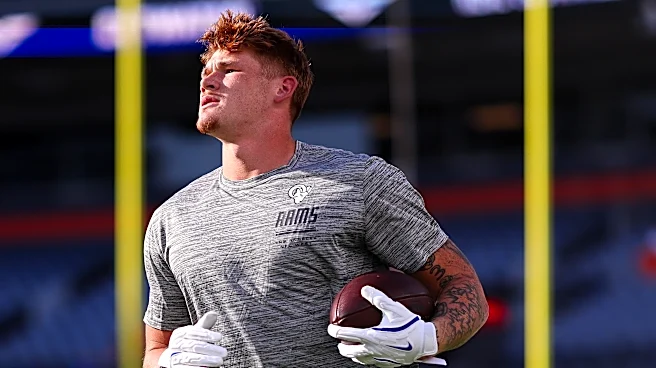
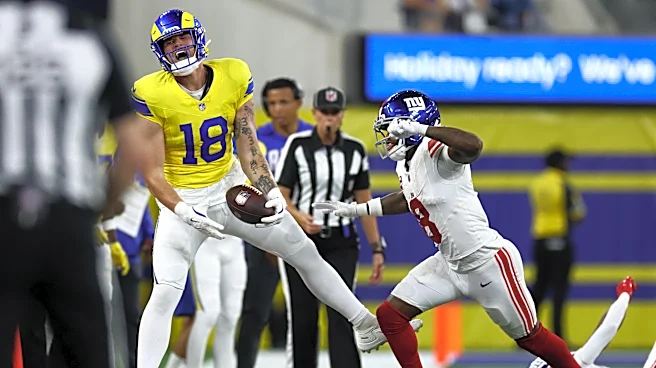
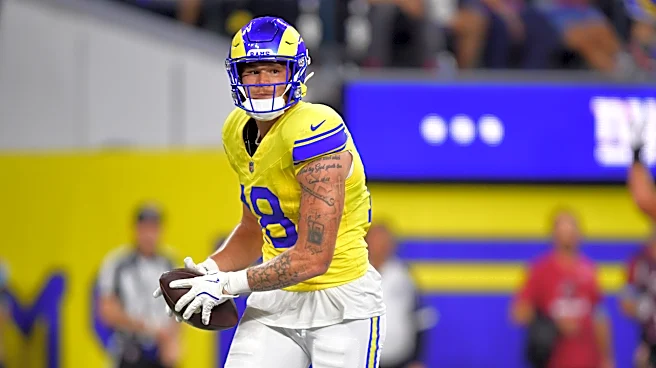
its investment in the 2025 draft class. Chris Paul failed to make the roster in 2025, while running back Jarquez Hunter was traded at the end of the 2026 preseason. Tight end Terrance Ferguson has been inactive for more than half of his career, and defensive end Josiah Stewart has already lost playing time to undrafted free agent Wesley Bailey.
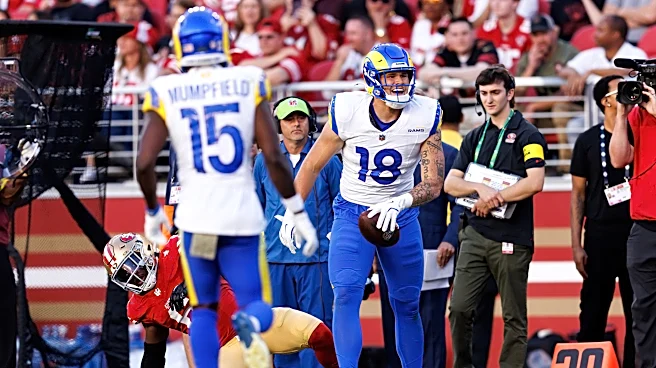
Defensive tackle Ty Hamilton has barely seen the field in 2026 after not appearing in a single game as a rookie. Meanwhile, wide receiver Konata Mumpfield has accumulated just 335 receiving yards throughout his career.
That’s an underwhelming return from an entire draft class. However, the lack of production is only part of the problem. The biggest issue with the Rams’ 2025 draft might not be who they selected. It’s who they passed on.
Los Angeles had an opportunity to address its wide receiver position with young talent. Instead, the organization passed on several intriguing options, including Matthew Golden and Luther Burden III. Golden was available late in the first round, and the Rams potentially could have moved up four spots to secure his services. Burden, meanwhile, fell into the second round before being selected by the Chicago Bears.
Both represented opportunities to add a young, ascending receiver to an offense that would eventually need one. That decision is becoming increasingly difficult to ignore. The Rams are feeling the effects of not having a young wide receiver developing behind Puka Nacua and Davante Adams. With injuries and availability becoming an ongoing concern, having another legitimate receiving option could have made a significant difference. Instead, Los Angeles has been forced to look elsewhere for answers at a position that could have been addressed during the 2025 draft.
Perhaps the most frustrating part of the Rams’ recent draft strategy is their investment in the tight end position. Los Angeles selected Ferguson in the second round of the 2025 NFL Draft before going back to the position in the second round of the 2026 draft with Max Klare. Ferguson has struggled to establish himself as a consistent contributor, while Klare has hardly played during his rookie season. Rather than adding another potential weapon at wide receiver, the Rams have now spent consecutive second-round selections on tight ends who have yet to provide meaningful production.
That doesn’t mean either player is destined to fail. Young players deserve time to develop, and draft evaluations shouldn’t be finalized after one or two seasons.
The Rams are trying to build a roster capable of competing for another Super Bowl, but their 2025 draft class has provided very little help toward that goal. More importantly, the organization passed on opportunities to address a position that is now becoming a significant concern. For the Rams, the fallout from 2025 is no longer just about missed evaluations. It’s about the talent they could have had, the roster holes they still need to fill, and the opportunities they may have wasted.