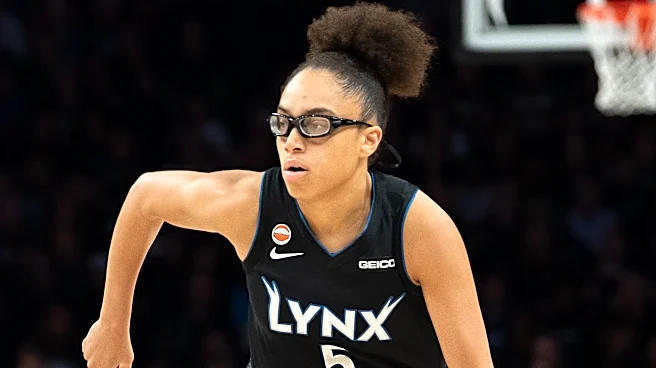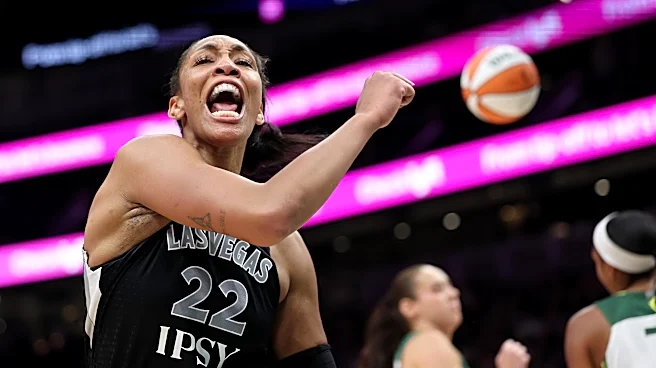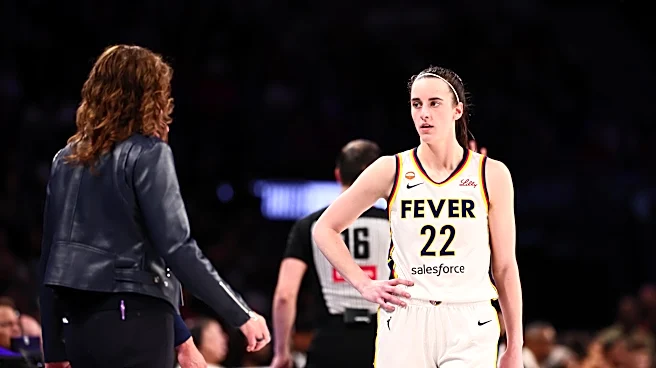



Both the Indiana Fever and Minnesota Lynx can tell themselves that everything went wrong when they suffered blowout losses in their respective Game 1s of the first round of the 2026 WNBA Playoffs.
Such a mindset is a well-worn sports cliché, intended to signal belief that the next game will be better. Much better. And, it’s sometimes true.
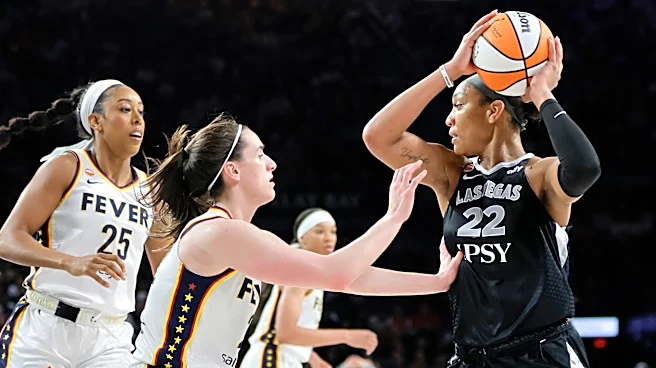
For instance, on Sunday afternoon, the Las Vegas Aces shot almost 60 percent from the field and 47 percent from 3. Even if the Fever hadn’t turned the ball over
too many times, it’s still hard to overcome such scintillating shooting. The New York Liberty enjoyed a similarly effortless offensive outing against the Lynx, draining 13 triples as they shot 52 percent from behind the arc.
Of course, the Fever and Lynx are not innocent. Their actions, or inactions, allowed Vegas and New York to find their offensive flows and run away in Game 1 routs.
In Game 2, expect both teams to be better. The No. 6-seed Fever will host the No. 3-seed Aces at 6:30 p.m. ET on Prime Video before the No. 1-seed Lynx visit the No. 8-seed Liberty at 8:30 p.m. ET on USA Network.
But, can they be better enough?
Even if more things go right, could they still end up on the wrong end of the scoreboard, and out of the first round? Both teams have a lot of questions to answer in order to inspire confidence in their abilities to extend their first-round series to a decisive Game 3.
Here are the questions I have for the Fever and Lynx ahead of Game 2. Jump in the comments to share how you think Indiana and Minnesota might answer these questions, while also adding your own.
Indiana Fever

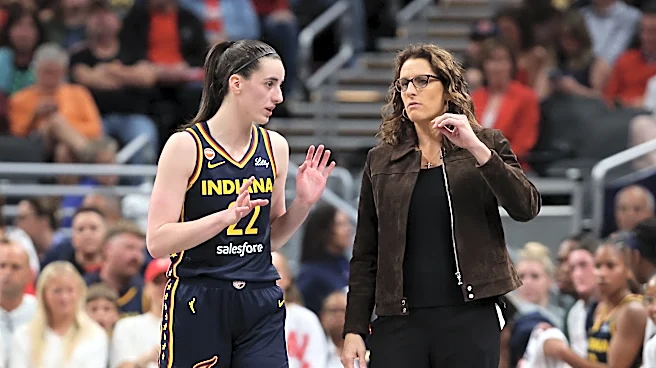
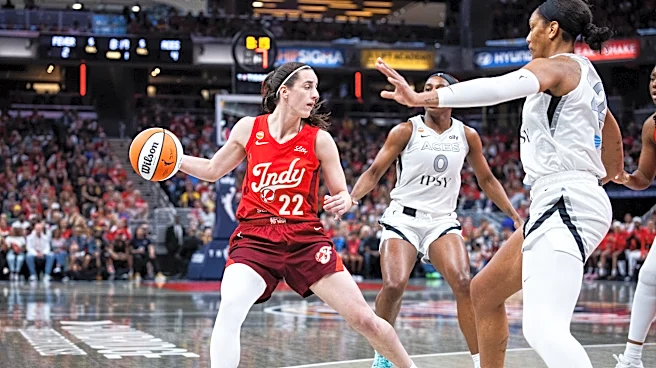
After Game 1, Caitlin Clark assessed the Fever’s defense as an “F.” How does Indiana improve it?
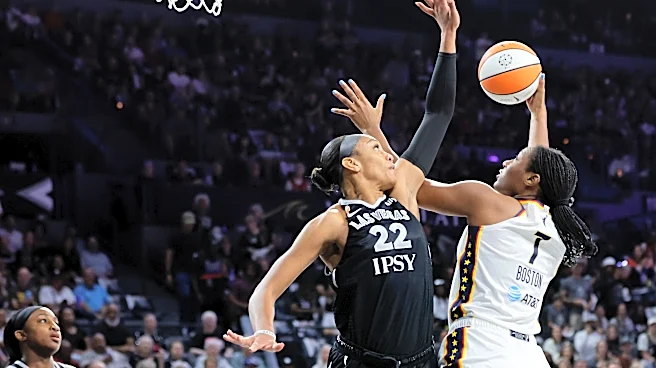
First, Aliyah Boston avoiding foul trouble is a near-necessity for Indiana’s defensive viability, but, even if she does, how many minutes can Boston play, considering she’s be managing a leg injury all season? This year, she averaged just over 27 minutes, the fewest of her career.
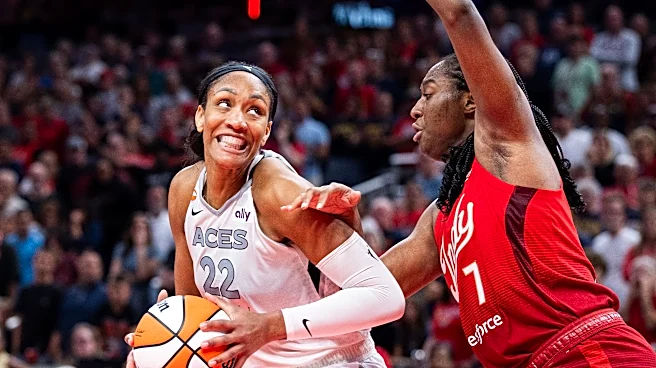
There’s even more pressure on Boston to be on the court because of a lack of a reliable alternative. That includes the promising Mikayala Timpson, who might not have a place in this series. To begin Game 1, the Fever attempted to get creative, having Timpson guard Chelsea Gray. Gray, however, seem to relish the opportunity to school the second-year forward. Timpson also proved unable to do anything with A’ja Wilson.
If the options on the interior are less-than-ideal, can Indy improve at the point of attack?
Raven Johnson was the lone bright spot for the Fever in Game 1. In addition to finishing efficiently on the offensive end, she also caused some trouble for Jackie Young, who, when marked by anyone else, got whatever she wanted.
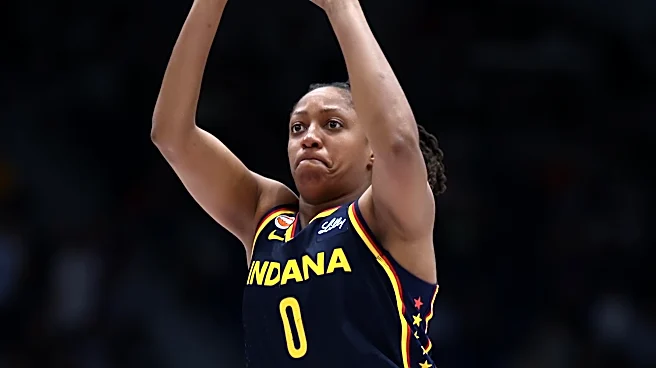
Game 1 also was the second recent blowout loss in which head coach Stephanie White, seemingly searching for a defensive spark, turned to Johnson. In the Fever’s home loss to the Mystics in the third-to-last game of the regular season, Johnson also offered solid minutes during an otherwise desultory showing.
Will White turn to Raven before things start to go sideways? That likely means sitting one of her star offensive guards. Is White intent upon maximizing Indiana’s defensive upside and, therefore, making rotational room for Johnson? Or, will she continue to endorse Indy’s offensive identity until, possibly, it’s too late?
Clark also called Indiana’s offense “sloppy,” suggesting the team’s actions made it difficult to generate good shots. What’s the Fever’s offensive fix?
In Game 1, the Aces succeeded in neutralizing Fever’s offensive firepower, particularly by preventing Indiana from running after makes.
Stephanie Talbot or Jewell Loyd were committed to infringing upon Clark’s desire to push the pace. While some opponents look to trouble Clark by attacking her dribble, the Aces opted to obstruct her path, with Talbot and Loyd using their size to keep her from zipping up the court or slinging a hit-ahead pass.
Vegas’ strategy, in turn, forced Indiana to execute in the halfcourt.
Too often that execution was Clark or Kelsey Mitchell deciding it was their responsibility to get a bucket, with both resorting to difficult shots rather that using the defensive attention they attracted to move the ball and find easier opportunities.
That lack of movement made things much easier for the Aces defense. Clark is considered a premier playmaker, Mitchell is an elite off-the-ball mover and Boston can function as an offensive hub. Indiana has the personnel to cause problems. Will their key players choose to make a simple pass over the big shot?
Minnesota Lynx

Can Olivia Miles “fake it until you make it ”and play like the unanimous Rookie of the Year?
Credit to Olivia Miles for admitting she was nervous before her first-ever WNBA playoff game. In a sports world full of clichés, as discussed above, the honesty is refreshing.
However, Miles might need to adopt the “fake it until you make it” attitude she mentioned in her Rookie of the Year presser. In a Barclays Center ready to pounce on the Lynx, Miles needs to project the confidence, even cockiness, she flashed during the highest moments of her record-breaking rookie season.
Can she tap into the freedom and flair that makes her “The Spectacle” while still playing with the control and command demanded by the playoff crucible? Now five-time Coach of the Year Cheryl Reeve surely is working with her precocious PG to “program” solutions.
Considering the Liberty’s excess of interior size, encouraging Miles to fire away from 3, and begin to stretch out and loosen the New York defense by doing so, might be a first step. Draining a stepback 3 or two should wash away any lingering nerves.
Kayla McBride called for an “FU” attitude. Is finding that mindset, or better execution, more important for the Lynx?
As the end of the regular season wound down and the Lynx were turning in subpar performances, Kayla McBride shared that the Lynx needed to find an “FU” attitude, emphasizing that she wanted to see her team “taking and ripping people’s hearts out and taking momentum back.”
Any sense of “FU” was absent in Game 1.
Timidity, uncertainty and hesitancy extended beyond Miles and through the entire roster. There were moments when McBride or Courtney Williams attempted to inspire their team with aggressiveness, trying to change the game’s momentum with a bold shot. But, those hero-ball moments went wanting. They’re also not a sustainable solution.
So, can the Lynx translate a sense of “FU” into productive outcomes?
As McBride and Reeve both stressed after Game 1, the Lynx were too stagnant on the offensive end. McBride called their offense “sticky,” while Reeve noted that Napheesa Collier needed to be “way more assertive,” calling on more movement from Collier.
McBride, however, ultimately expressed her faith in her team, insisting, “I believe in us, I don’t have any doubt inside my body that we can’t got to New York and bring this s*** back here.”
Then, in her Coach of the Year acceptance speech, Reeve paid tribute to her players, specifically sharing her appreciation for McBride, Williams and Collier for choosing to return to Minnesota for a season that wasn’t expected to end with a No. 1 seed.
That’s all well and good. But, this is the playoffs.
Should mushy things like mindset, whether tapping into a killer mentality, projecting confidence or believing in the power of friendship, be the talking points for a team that earned the No. 1 seed?
I’ll once again suggest that Zack Ward was exactly right when he cited the Lynx as the team under the most pressure to win it all. That pressure seems to have Minnesota trying to say the right things as they are spinning and searching for the relief that will allow them to achieve their championship upside—rather than be swept.