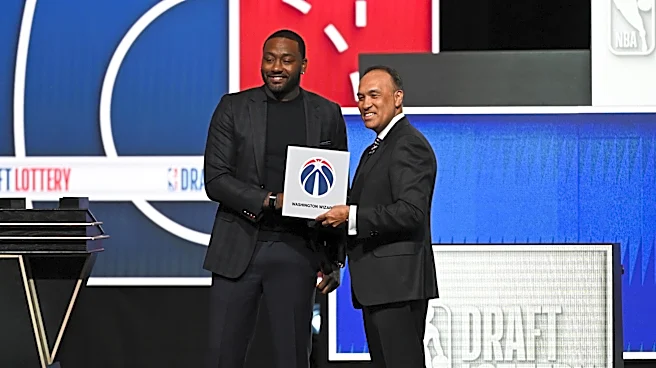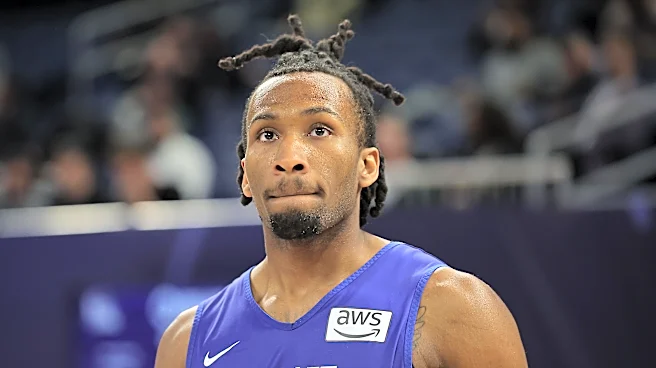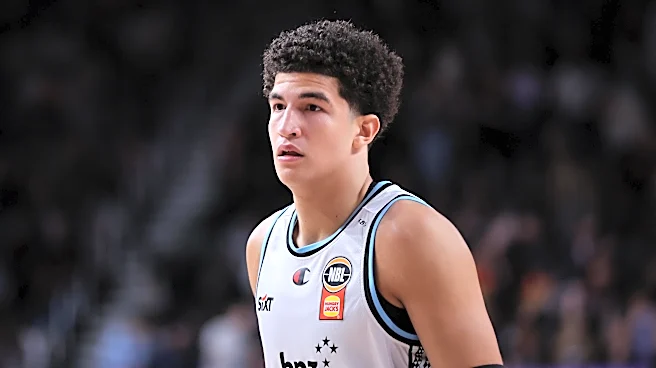








Editor’s note: You likely have noticed we continued this series past 10th, where the Bucks’ first-round pick landed. With rumors that they were operating as if they’d have multiple picks—not necessarily firsts—in this draft at the combine, we’ll continue it for a couple more days until we reach 18th. Why? Two teams have two picks in the teens: Oklahoma City has 12 and 17, while Charlotte has 14 and 18. If the Bucks trade down from 10 for multiple selections, these seem like the likeliest spots.
Hannes
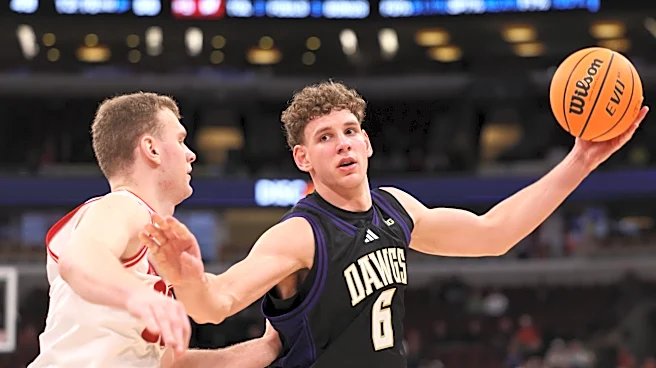
Steinbach was one of the few draft prospects whose team didn’t make it to March Madness this year. Despite putting together a league-leading rebounding season, averaging 11.8 per contest, his Washington Huskies finished 16-17 and missed out on an at-large bid. His team didn’t play any high-stakes, nationally televised games or wrestle with the nation’s elite for coveted championships. Therefore, Steinbach’s dominance flew under the radar for most of the season.
With all that said, it’s still very difficult to miss Steinbach’s imposing build, a body that allows him to grab boards at an absurdly high rate. Steinbach stands at 6’9” barefoot (around 6’11” in shoes) and has a 7’3” wingspan. He has solid weight to complement his large frame, but still boasts surprising bounce and agility. Steinbach seems genetically predestined to grab boards, and he has a really solid, league-ready frame.
Steinbach is also a pretty polished scorer on the inside. He averaged 18.5 PPG at Washington while converting around 70% of his attempts at the rim, per Barttorvik.com. He has a good touch off the glass and post moves that go beyond simply getting downhill and dunking. He’s completed some exciting reverse layups, Euro steps, baby hooks, and tough finishes through contact. Because Washington was one of the worst perimeter shooting teams in D1 basketball, Steinbach frequently attracted double teams on the block, which he navigated impressively. His outside shooting is a work in progress, but it’s still something to build on. He shot 34.0% from three on low volume, but he has steady form and pacing on his shot. It seems like something that he will build on at the next level, to be sure.
The best part about Steinbach’s game is rebounding. High-motor bigs willing to do the dirty work of boxing out and grappling for boards are in high demand (especially for the Bucks, one of the worst rebounding teams in the league). His frame and strength allow him to fight for positioning, but he also understands angles. He doesn’t blindly fling himself towards the glass on every shot; he is just as calculated and precise when it comes to rebounding as he is physical and relentless.
In the league, NBA teams will value his screening ability and lethality on pick-and-rolls. They will also value his underrated ball-handling and ease on the perimeter. He isn’t a three-level scorer, but being able to operate outside the paint to complete pick-and-pop actions or make connecting passes will be a big plus for the team that drafts him.
Steinbach’s biggest negative is his lack of rim protection. He doesn’t block many shots as you’d hope when you account for how tall and physical he is. Additionally, although he can play above the rim, he’s not an elite leaper, and he lacks true NBA center size. Thus, when he wasn’t paired with a solid shot-blocker on defense, Steinbach struggled to contest shots at the rim. He relies heavily on the strength and high motor evident in his rebounding, but his worth in the NBA may plummet when you consider his ‘tweener profile. He’s a tad too small to guard dominant centers, but too clunky to guard smaller, more mobile power forwards.
Finally, many aspects of Steinbach’s game remain untested. We aren’t sure whether his outside shot will continue improving in the NBA. We don’t know whether he has the vision to make connective passes and use his pull to find open teammates (1.6 assists to 2.0 turnovers per game at Washington). There are several factors that may hold Steinbach back from his high-percentile NBA outcome as a hard-nosed, traditional center, but his elite rebounding gives him a comfortable floor.
To conclude, Steinbach is a very real option for Milwaukee at the 10th pick. The Athletic’s Sam Vecenie noted that Steinbach is indeed being considered by the Bucks’ brass. If Milwaukee prioritizes rebounding, physicality, and frontcourt depth, Steinbach could emerge as one of the more intriguing options when they’re on the clock at 10.
Vote on the next poll on who should go with the 17th draft pick?