




The Utah Jazz are planning on winning in the coming years, and Yaxel Lendeborg should be a serious candidate for them even if they land somewhere in the top 5 come May/June.
Draft Philosophy
First, I want to start with my personal draft philosophy and why I believe Yaxel checks every box of what a high-impact basketball player looks like:
Basketball is a game built up of ~100 possessions a night, and whichever team wins the possession battle ultimately wins the game. It’s what teams do to maximize each possession that
is so important to the game of basketball. It’s not just about scoring points; even though points do matter, it’s more than that. Maximizing a possession comes in many forms, and possibly in more ways than I know, but what I value is similar to the NBA’s Four Factors. The most important thing to me in basketball is TOV%. Turnovers are a cancer to your team; nothing comes out of them. There is no potential positive outcome to it; the possession is over. The best teams in the league this year also average the lowest number of turnovers: BOS, OKC, DEN, and SAS.
Because turnovers have a negative team impact, one could say that forcing TOs plays a role in a team’s offensive value. If you force an opponent to turn over the basketball, you’re essentially ending their possession and starting one for yourself. STOCK% (stl% + blk%) is a very quantifiable metric to use regarding either ending (steals) or potentially ending/disrupting (blocks) opponent possessions, and of course, a baseline defensive projection in the NBA.
A missed shot is more valuable than a turnover; while I’ve already stated that turnovers amount to nothing because they only benefit opponents, missed shots create a potential avenue for team gain in terms of possession value: it offers a chance at an offensive rebound. Offensive rebounds are valuable because they offer an additional chance at maximizing a possession.
I look at rate stats (such as Oreb%, stl%, blk%) individually rather than the all-in-one metrics such as BPM — I still believe that BPM captures a beautiful picture and summarizes a player’s season regarding impact. However, I believe that there is added team value where BPM doesn’t contextualize it completely, so personally, I find that looking at each rate stat individually and looking at other statistical correlations of said rate stats (ex. 3PT rate & Oreb), helps me weed out some of that context.
This is the basis of my draft philosophy.
Additional Basketball Thoughts:
One of the most destructive talking points in basketball is the idea that usage-based production implies a greater perceived impact on a per-possession basis. While sustaining a surplus of usage is inherently difficult and a skill to have, it is not necessary when there are other surrounding factors that actually drive impact value. Usage can become functionally unethical, not in a moral sense, but in how it redistributes value. When a player operates past their efficiency threshold, they’re taking possession that likely would’ve, or could’ve, produced more elsewhere. It turns into a quiet trade-off: individual volume over team optimization. At that point, it’s not about carrying an offense; it’s about consuming it.
R/T @PenguinHoops on X:
The point of #TheTyrannyOfUsage is that, in a broad sense, on-ball value has an outsized role in a way that we analyze basketball. The ideas that 1) Players with more offensive usage are incomparable and/or inherently better than players with less, and 2) The events happening on the ball are inherently more important than those happening off of it, are deeply harmful to basketball and basketball discourse, and arguably basketball in general. This is not to say that the absolute best players don’t (in most cases) add a great deal of on-ball value. It’s to say that extrapolating the original point to a lesser on ball creators is imprudent and can (does) lead teams and individuals to come to poor value judgements.
The Utah Jazz had a prime example of how much one player could impact the game with limited on-ball usage. Rudy Gobert was a dominant force of nature and the most important player for the Jazz every year throughout his tenure here.
While players who can sustain usage are important for potentially maximizing the players who cannot, one would be mistaken for believing that usage is the sole driver behind team success, hence the term “tyranny of usage”.
Yaxel Lendeborg

BIO: 6 ft, 8.5 in (w/o shoes) | 234 lbs | 7’4 wingspan | 9’0 standing reach | 23.7 years old on draft day | Michigan
STATS: 15.1 PPG | 6.8 RPG | 3.2 APG | 1.1 SPG | 1.2 BPG | 51.5% FG / 37.2% 3FG / 82.4 FT%
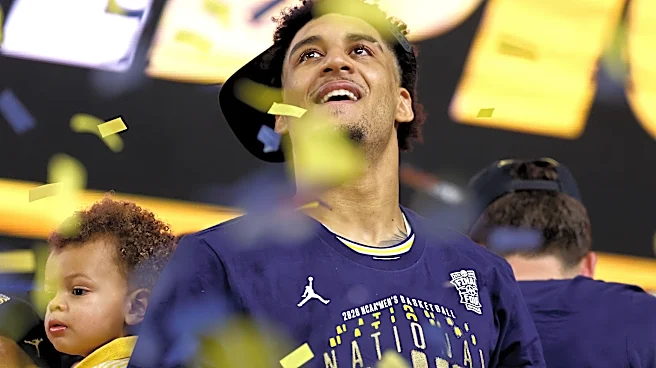
ACCOLADES: 1x NCAA Champion (Michigan), 1st Team All-American, 2026 B10 Player of the Year, 2026 Naismith POY finalist, NCAA Midwest Region Most Outstanding Player, First-Team All-B10, B10 All-Defensive Team, 2x AAC DPOY, 2x 1st Team All-AAC, AAC Tournament MVP, Riley Wallace Award Winner, UAB Career Leader in Double-Doubles, 2x NJCAA All-American, 2x ACCAC Player of the Year.
NBA COMPARISON: Draymond Green, 6’9 Derrick White, Pascal Siakam, Jae Crowder+, Royce O’Neale on Blue Chew™, Josh Hart+
Evaluation:
I highly recommend listening to The Double Bonus’s section on Yaxel Lendeborg that starts around 1:30:15.
Offense:
Yaxel Lendeborg is a prospect “unc”. Being an older prospect has its woes along with placed expectations. A player who is older, especially north of 22 years old, and drafted high, is expected to produce as soon as possible. The deadlines are tighter, and players are given less grace than those who are 3-4 years younger. However, we have seen players such as Austin Reaves and Alex Caruso go undrafted and provide immense impact. The Utah Jazz acquired 24-year-old Royce O’Neale, who was playing overseas after 4 years in college, and still he found a way to bring back top-10 to lottery value! Here’s the fun part: Yaxel Lendeborg has the GOAT analytical profile for older players. This is the ultimate test of whether analytics can beat the foregone conclusion that age ≠ top 5 value.
In my eyes, Yaxel has the easiest path to becoming an impactful NBA player down the road. He is someone who offers a whole lot of offensive utility & scalability in just a myriad of ways, whether it means driving the ball, being a connector, or just spacing the floor.

Yaxel’s ancillary skills are too good to pass up on, and the shooting development over the years has been anomalous relative to his peers.

The unheralded arrival of Yaxel’s 3PT rate and the success that he has found with it is astonishing. Going from a low 3PT rate of ~13.5 in his year’s at UAB and jumping all the way to 46.4 is ridiculous and is part of one of the distinguishing factors that have helped unlock him as a true wing. I wish this were the craziest part of it all, but it gets even more unfathomable when you remember that he has a 7’4 wingspan. Yaxel Lendeborg has the longest recorded wingspan (since 2008) for players who have a 3PR over .40 and a FT% over 80% (with Jaren Jackson Jr. only 0.3% off from being over him).
Another component of his game that has helped raise his scalability and impact value is his innate feel for the game.

Yaxel’s playmaking and turnover aversion have developed at such a high rate over the years that he has become a positional outlier. Players of his size are not this turnover-averse. Yax has the highest passing volume of players who have weighed in over 230+ lbs and have an A:TO > 2.0 for 2 years in a row.
While I’ve already expressed my thoughts about usage, if that is something you value, Yaxel Lendeborg did the helio-ball gimmick last year at UAB on a much worse team.

I’ve mentioned that BPM can be inflated to an extent due to team strength, and if you look at the picture above, the 2nd highest BPM after Yaxel is Christian Coleman at 1.5(!!!). Yaxel having an 11.1 BPM on a bad team, while doing the heliocentric gimmick on volume and staying turnover-averse, is every indicator of being a high-leverage player.

The last thing I want to emphasize regarding Yaxel’s offensive utility is that his ancillary scoring process, along with his connectivity, has only produced positive results in the NBA. Having a higher 3-point rate typically lowers your offensive rebounding, and relating to Yaxel, we saw his 3-point rate skyrocket, which did have a direct impact on his offensive rebounding, but it wasn’t a detrimental drop that became a hindrance to his ability to extend possessions. Instead, he offered greater team value with spacing and outrebounded for his shot diet relative to his 3PR. I believe there is a direct correlation in Yaxel’s 3PR and A:TO jump as well; theoretically, more space offered him better looks (shoutout Dusty May).
Yaxel would be a luxurious asset on offense for any team.
Defense
The defensive projection is rather simple. He has the tools and uses them on the defensive end. For his career, he has rebounded at the rate of a center, stocked (stl+blk) in the upper percentile for a wing relative to his peers, and has obvious cognition for his size (using A:TO for a proxy).

Out of the players listed, only 2 have received legitimate NBA minutes: Xavier Tillman and Anthony Davis. I won’t go over Anthony Davis because his defensive impact is notoriously known, but Xavier Tillman is an underrated defender, especially for having suboptimal tools as an undersized center.

In his years with Memphis, Xavier Tillman forced opponent turnovers at a higher rate when he was on the court than off.
Relative to league average, Xavier Tillman forced turnovers at a high rate and outperformed his position in deflections per 100 possessions.
Despite forcing turnovers at a high rate when he was on the court (>+3.0%), because of his inability to be a wing and being pigeonholed into playing the Center position, he did not rebound well, nor was his contest data good at all! However, if he had the responsibilities of a wing along with the added capabilities of a wing, then I’d imagine there would be more positive results. If this is an indicator that Yaxel can provide a dTOV% at this rate and force opponent turnovers at a high level, then count me in!
Needless to say, Yaxel was the best defender on the best defensive team in basketball. His team was about 11 points better on defense with him on the court, and because there is a possession discrepancy in those numbers, due to the nature of being the best player on the best team in CBB, he is about 6 points better when it is luck-adjusted.
Why the Jazz?
So why would the Utah Jazz be so blessed to draft Yaxel Lendeborg this June? There is no doubt in my mind that with the frontcourt help of Yaxel, Jaren Jackson Jr., and Walker Kesser, we would be the best defensive frontcourt in the league. After years of hair-ripping defensive breakdowns, we would finally have a potential championship defense as soon as next year. One thing I did not touch on was how positionless he is. Yaxel can defend 1-5 and found himself being the main point-of-attack defender night in and night out. He took it upon himself to take the primary matchups, and guess what? He took that task to heart and was very successful in that role. Sliding a switchable guy that can defend guards and centers, who also gets in the passing lanes, and is a terrific weak-side help defender, next to our guys, would make me feel worlds better about Keyonte being our long-term guard moving forward.
He would fit Will Hardy’s offense because of how willing he is to move the ball. Will Hardy’s offense plays with a lot of movement off the ball, so Yaxel being able to make quick reads would become invaluable to the Utah Jazz team and bring a playmaking revitalization to our frontcourt.
FUN FACT:
The Utah Jazz were one of 2 teams that Yaxel Lendeborg worked out with last year before he withdrew his name from the 2025 NBA Draft and transferred to Michigan.
Conclusion
I know it’s not sexy to draft an older prospect, especially as high as the Jazz will be selecting, but what’s truly sexy is how much he will bring to any team, not just on a nightly basis, but on a possession-to-possession basis. He does everything you want in any prospect; he can rebound, dribble, pass, shoot, and defend, and all of which he does at an exceptionally high level. Are we not done with projects? Are we not choosing to contend? Are we still praying for leaps in players that may not come? Yaxel’s ability to maximize his baseline projection is very apparent, and it starts with his game cognition on both ends. 50% of the game is offense, and the other 50% of the game is on defense, and Yaxel can play 100% of the game consistently. I won’t belabor the point more than I already have, but I implore you to see the vision I am painting for you. There is absolutely no doubt in my mind that Yaxel Lendeborg would bring the Utah Jazz that much closer to their first championship in franchise history, and I know you want that goal to be reached as much as I do.