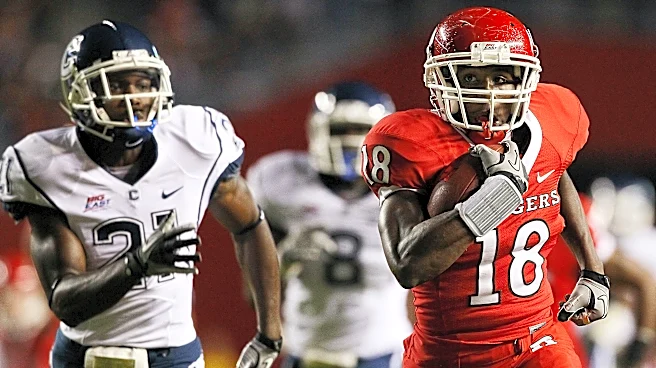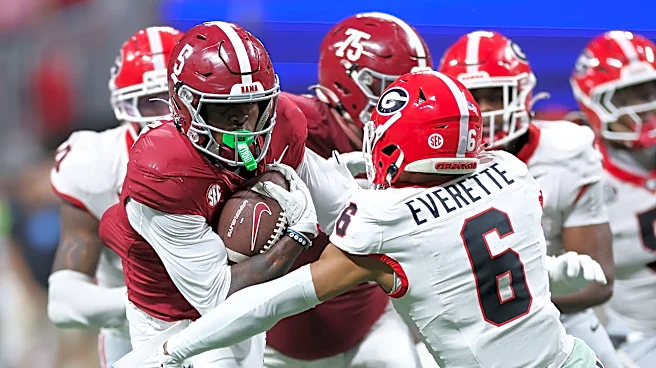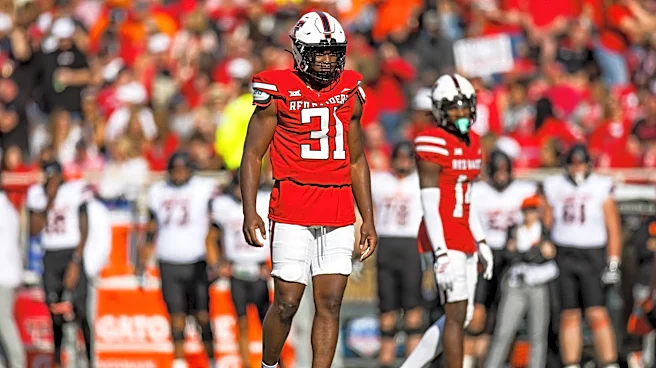




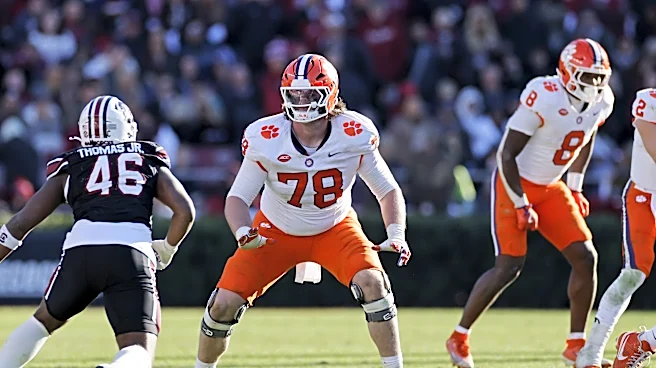
Perich was recruited to Minnesota in the 2024 cycle, rated a mid 4-star (.9673) in the 24/7 composite. He played on offense and special teams in addition to safety, as well as basketball and running track, as a prep in his hometown of Esko, outside of Duluth. Perich was the top rated recruit that Coach Fleck has signed by a wide margin – he tops the second highest (a .9275 prospect) by 1.7 standard deviations of Fleck’s decade of recruiting at Minnesota, and the median (.8644) by four and a half.
As a true freshman in 2024, Perich began the season at the bottom of the five-man group of available players for the two safety spots (there’s no swapping with the nickelback or corner personnel among the Gophers’ secondary). He didn’t play in the opener against North Carolina, and for the next few weeks only saw the field on their 3rd & long dime package, though he had a growing role on special teams as he took over kick and punt returns from a trio of wideouts in addition to being the gunner for coverage.
By week 5 against USC, some injuries put Perich in position to play – one backup who was previously a starter but suffered a late injury in 2023 and was being cautiously re-introduced aggravated the problem and became unavailable for most of 2024, and one of the starters got dinged up in the 1st quarter against the Trojans. Perich and the remaining backup rotated on a drive-by-drive basis until the starter returned to health a couple games later, but shortly thereafter the other starter was injured and the same rotational fill-in started up again. It was immediately clear to this film reviewer — and eventually the staff — that Perich was much more capable than the backup he was rotating with, and by mid-November Perich was getting nearly full-time play.
In 2025, they made it formal: Perich was named starter and essentially never left the field, the rotational backup transferred out (to North Carolina, where I had to watch him recently), and the remaining returners, all former starters, were all bundled together into a single three-man rotation at the other safety spot. Perich continued with his special teams duties, and the team also had him practicing with the offense where he got several touches in the non-con slate, then suspended that until their late November game against Oregon and the bowl against New Mexico.
In early January of this year Perich entered the transfer portal, and commited to Oregon a couple weeks later. He has three years of eligibility to play two remaining.
I’ve reviewed the film of Perich’s entire 2024 and 2025 seasons, as well as the three previous Minnesota seasons for their contextual value, as part of my regular Big Ten charting project. Earlier, I’ve written season previews of the Gophers in the 2024 and 2025 offseasons mentioning Perich’s contributions, as well as an in-season preview of the team prior to Oregon’s matchup last Fall. That game played out almost exactly as predicted, in large part because of the running issue that my friend Max Oelerking of Ski-U-Pod has been discussing with me throughout all of those previews – Minnesota’s extremely aggressive, boom-or-bust defense.
At the end of the 2023 season Minnesota DC Joe Rossi, who had run a very conventional and conservative 4-3 defense for five seasons, left for Michigan State. Fleck hired DC Corey Hetherman to replace him for the 2024 season; Hetherman had come up on the East Coast with Greg Schiano and Joe Harasymiak at Rutgers, and Curt Cignetti and Bryant Haines at James Madison, and I started following his career with interest when I reviewed those programs. Hetherman used a variety of high stakes front pressures and sims that were totally alien to Rossi’s playbook. Miami took notice and hired him away for their 2025 title run.
For the 2025 season, Fleck promoted his longtime defensive backs coach to the job, DC Collins. He’d never been a coordinator before and spent his entire career with Fleck at Minnesota and WMU before that, and I asked Max at the time if he thought Collins would go back to Rossi’s style that he had more experience with, or if he’d adopt Hetherman’s new approach. Max said he hoped it would be the aggressive approach, and this looks like quite a case of “careful what you wish for …”
Collins doubled down by making cover-1 the base defensive scheme — already a high stress man coverage with only a single high safety for support — and much more frequently employed the low safety in the box or even on the line of scrimmage. Collins also heavily increased the amount of safety blitzes while removing the simulated pressures which backed front players out into coverage for balance. The result was a number of spectacular defensive plays that killed opponent drives … but at the same time left them incredibly vulnerable to super explosive plays and easy touchdowns.
Perich was arguably the player affected the most by this aggression – in cover-1, he was usually the high safety and faced with tough choices in coverage support and rescuing broken plays, and he was also the safety most often used close to the line of scrimmage in unorthodox roles … and the absence of his skillset in the backfield was the most painful.
That makes evaluating Perich’s tape and statistical production difficult. In my opinion, much of the way that Minnesota organized their defense in general and used Perich in particular over the last two seasons has been inadviseable, and given how systematically Oregon disassembled that defense last November, it may well be that Perich’s new coaching staff agrees. It’s a challenge deciding how to represent Perich’s film, as some of the best and most valuable tape for his new role may be infrequent or out of structure, while large stretches of it may be minimized or discarded entirely.
The approach in this article is splitting it in two rough parts: first, Perich’s athletic potential and play as a high safety in a fairly traditional role of pass coverage, over-the-top support, and coming down to tackle; second, the non-traditional elements as a box safety, blitzer, close-in rush defense specialist, and the statistical discussion of those effects.
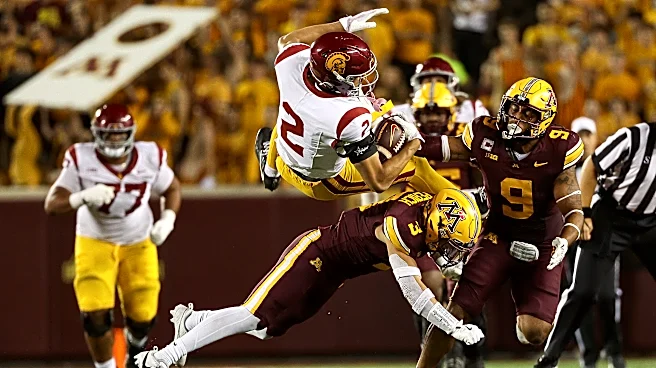
The most immediately notable and celebrated aspect of Perich’s play are his turnovers – on entering the the games against the two LA schools as a true freshman because of injuries to the starters, he immediately generated multiple dramatic turnovers which made it impossible to deny his talent or delay his return to the field:
(Reminder – you can use the button in the right corner to control playback speed)
- :00 – This run is a Coach Riley staple that isolates the LB in the hole, and the RB beats him pretty bad. Perich, in jersey #3 as in all clips in this article, was just put into the game after a starter’s injury and is in zone coverage of the flat with his eyes in the backfield. He spots the draw fake, triggering immediately on the run before the WR can block him. He gets to the back fast enough that when diving for the tackle he gets his helmet on the ball and pops it out.
- :38 – This is a seven-DB configuration at the end of the game as USC is driving to tie it up. The QB has a pretty good shot with a deep drop, no pressure, and a very tall receiver over a shorter safety, but Perich goes over the top of both of them to finish the Trojans off.
- 1:25 – We never get a great angle of the coverage but as I re-construct where all the defenders are, Perich isn’t supporting someone else, the TE (and former Duck) is his coverage responsibility and he deliberately played this off to bait the throw. Perich knew that the QB’s favorite target in a tight spot is this TE and he has the jets to break on the ball for a pick – nasty piece of work here.
- 2:12 – This was pretty much a gift, the OL is getting destroyed and the ball flutters when the QB is hit. Good tracking of the ball, sweet spin move, and nice return through traffic.
- 3:06 – Perich is down in the box and the corner is playing way off, the QB thinks he can zip it through the gap faster than Perich can leap into the lane. My pre-processed all-22 on this is in 119.98hz and I count 87 frames between the start of his windup and when the ball hits Perich’s hands, less than three-quarters of a second. The QB would probably have been right against anybody else.
Perich’s signal athletic quality — on all three sides of the football, on the basketball court and in track & field — is his elite speed. His acceleration and change of direction is smooth and instantaneous, and his flexibility to bend and suddenly burst laterally gives him a wide range to cut off ballcarriers trying to get around him. Other than turnovers, the most game-changing and irreplaceable way that his skillset has shown itself on tape is catching a play from behind:
- :00 – Perich is lined up as a quasi-linebacker on the opposite side of this run, and when the back gets through the line two different safeties bounce off of him. Perich has run diagonally, closed the distance, has to go high because of the traffic, and brings the back down.
- :22 – Minnesota is in a dime package here and bringing a seven-man blitz, including Perich creeping down from depth. This works out badly as usual (more on that later) and the back bursts through two different CBs’ weak tackle attempts. Perich picks himself up and runs down the back before he can cross the endline.
- :52 – I’ve watched every play in Perich’s career and in my opinion this is the most impressive, combining the best of qualities of a football player – understanding the offensive and defensive playcall, recognizing the coverage mistake, the will to help a teammate and courage to break the rules when he has to, and the speed and ability to make the play at the last moment.
- 1:19 – If anybody else had Perich’s ability, that peanut punch would have resulted in another turnover as another Gopher running along might have grabbed it before it went out of bounds. But then, the run probably wouldn’t have broken in the first place if so.
As a true freshman, Perich instantly graded out better than his cohort on my tally sheet from the first time I saw him playing in the dime package and remained developmentally ahead of the curve throughout his first two years at play support – reading the offense in front of him and coming down to make the stop when something had gotten through the front. Here’s a representative sample:
- :00 – This isn’t Perich’s assignment in this zone coverage shell but he’s reading the QB’s eyes and is off immediately. The breakdown is choppy, there’s no need to jump out like this since his help is the other way and it gives the WR the chance to dip around him, but Perich’s quick lashout to grab the WR’s waist and thigh gets him corralled.
- :21 – It’s the 2025 opener, Perich is the starter now and they’ve got a new LB, who bites on the pump fake and runs himself out of the play. Perich is in man coverage on the slot receiver but he spots the QB running, comes off, and upends him before the line to gain. Note the QB’s attempt to dodge out at the last second and Perich’s diving range to effectively strike.
- :40 – About 9% of Perich’s rescue plays were like this one – I gave him credit for the stop because he effectively got to the play before anybody else could and delayed the ballcarrier so that others could clean up before a significant gain, even if strictly speaking he didn’t get the tackle himself.
- 1:06 – The QB was just about to stumble his way through to a 1st down in a shockingly tight bowl game that went to overtime, but Perich put an end to the drive as the only one who could tackle.
What particularly stood out on my tally sheet was Perich’s quick calculation of the correct angle to take when rescuing a broken play to minimize the extra yardage gained. Taking the wrong angle — running at where the ball is, then needing to adjust as the ball has moved — is a problem that can result in giving up dozens of extra yards and defeat the entire purpose of having a safety. The proper intersect angle for this purpose is given by the secant method:

This is a call in every Python build and I scripted it into my charting system years ago to evaluate safeties. In my experience this is instinctual and there’s very little movement over the course of safeties’ careers. Perich graded out with some of the lowest incorrect angle rates for a true freshman or sophomore I’ve ever observed:
- :00 – This is one of Perich’s very first collegiate apperances. He’s on the opposite side of the play, lined up on the hashes at the top of the screen in the dime package. There are two other safeties closer to the play than he is but he beats them both to it, forcing the ballcarrier to cut out to the sideline, re-adjusting his angle, and still smoothly making the hit with no wasted steps.
- :15 – Excellent angle, pause, re-acceleration and wrap-up tackle against an elite receiver here, no escaping Perich into the open field. (I don’t know why the all-22 of this game was filmed with a flip phone, I had to reconstruct this from a couple angles.)
- :51 – This might not look like much at first glance but this instantaneous realization that he needs to go backwards is very advanced stuff. At the instant the CB misses the breakup attempt, the trigonometric intersect is at the 16-yard-line, five yards past the line to gain – if Perich had just run right at the TE trying to stop the conversion he’d have given up a much bigger play.
- 1:04 – This screen is very well set up, and man coverage was a poor choice in this down & distance so everybody’s backs are turned to the play. Perich knifes in between the blockers at the correct angle to get through clean but leave enough cutback space to catche the ballcarrier’s legs and stop the conversion.
Perich also has very high tackling grades, with an important caveat. His arm use when tackling is excellent (indeed his reach and flexibility are so unique that he’s caught ballcarriers by the ankle that I don’t believe anyone else on his team could, more on that below), and his rate of successful tackling when wrapping up at the waist or legs started at 85% when he was inserted midseason as a true freshman and has risen to just over 90% as a sophomore. Some examples:
- :00 – I don’t really get Maryland’s play design here since they don’t eliminate or block any defender, but whatever, Perich doesn’t overthink it, he just makes a great wrap-up tackle with a proper breakdown to keep the back from sliding around him.
- :21 – The backer’s not covering the RPO throwing lane well, Perich gets over though it’d be better if he went all the way over so he could tackle inside out. He has the grip strength on the WR’s legs to spin him down once he’s attached.
- :50 – This one’s going inside out, coming down fast into a good breakdown. The backer who missed is in the way so he can’t get a hold of the outside leg, but he hangs on to the one he’s got with a deadlock.
- 1:12 – Exactly the correct play diagnosis and angle to get underneath the blocker, and perfect form tackle.
However, on between a quarter to a third of his tackles, depending on context (going for running backs clearing the line or if there’s a lot of traffic around the ball increases the number), Perich takes his arms out of the tackle, instead bending over and firing his shoulder low at the ballcarrier. This has been a real mixed bag, sometimes it’s a dramatic end-over-end flip, sometimes the ballcarrier just steps over it, occasionally it’s both at the same time and the ballcarrier flips over for a crazy looking first down. These often draw oohs and aahs from the crowd but the data are very clear that they’re just not as effective as simply wrapping up:
- :00 – Good trigger as soon as he sees the second level has left the lane open. The center of gravity on this receiver is so high that the hit makes for a complete cartwheel.
- :25 – This is the risk with dipping the head and taking eyes off the target, the back can cut inside and the tackler looks silly. It’s why head-up tackling preaches ‘eyes to the sky’. The flag is for holding by the defensive lineman against the center.
- :41 – Perich misses the shoulder hit on this one and takes the contact to his neck. He’s shaken up on it and leaves the game for the next few plays.
- 1:11 – Here Perich is in the box on 1st & 10 and defeats the block from the WR (more on that later) and his low hit results in the RB going flying … but he still gets half the distance and this counts as a successful play for the offense.
In high safety support of pass coverage, I thought Perich faced a challenging structure. With the benefit of the all-22 tape, I went back and re-evaluated where Perich situated himself on each passing rep as well as figuring out what Hetherman vs Collins’ cover-1, cover-2, and cover-3 rules were, and when Perich broke them (for good or ill). By far the single biggest issue was the obvious: in cover-1 if the pass rush wasn’t getting home and multiple man coverage DBs were losing contact with their WRs (which happened … a lot), then Perich was in unresolveable tension since he can’t be in two places at once.
In those cases I mostly think he went with the least bad option, so I focused my evaluation on the rest of the cases when he had some actual ability to affect the play with a good or bad decision. The rest worked out very well, and my expectation is that this is more in line with what his Oregon playing time will look like. Some examples:
- :00 – Everybody else is in man while the nickel is acting like this is zone so I’m guessing the defense of this mesh-sit is a miscommunication by him, Perich spots the disconnect and fires immediately for a big hit.
- :28 – Good cover-2 rep, taking inside leverage to help the corner with the X-receiver at first, then as the route evolves and the CB gets leverage to handle it on his own, Perich deepens to pick up the post route crossing from the other side which the nickel has completely lost. The extra seconds give the pressure time to get home.
- :46 – The QB wants to throw the inside of these double-6 routes, the one that Perich is over, but he reads the QB and steps down on it just in time to deter the throw to the outside. That’s effectively gummed up and the defense gets a PBU.
- 1:08 – It was a little surprising how rare it was to see the a direct challenge in cover-1 even with middle field closed, but maybe Wisconsin figured the conditions would make for treacherous footing. Perich handles it just fine.
The vast majority of pass defense reps in which Perich is personally covering (as opposed to backed out in support of coverage) are man-to-man, usually cover-1 either on a tight end or because motion has caused him to spin down and the other safety to spin up to replace him as the high safety. As I expected to see, Perich’s grades were the highest here – his athleticism made him a match for sticking to targets, he knew when to come off to make plays out of structure, and it was what the team practiced the most. Some examples:
- :00 – Great coverage of the scissors concept, this is designed to rub Perich and open the throw to the TE but the angle, dip, and acceleration out of it avoids getting tripped up while maintaining close contact with the QB’s preferred target.
- :20 – Press-man by the true freshman on the Mackey winning 1st round pick.
- :41 – Ohio State is unbalanced to the field, they’re trying to get the secondary outleveraged and the underneath coveraged confused. Perich figures it out and lets his man go, replacing the underneath defense on the No.2 receiver with a leaping PBU.
- :58 – A lot of teams ran this drag route against Minnesota’s cover-1 with Perich as the high safety, the idea being that the man defender in structure just keeps outside leverage without really keeping up, while the high safety provides inside leverage to sandwich it, and that pins the safety down so that the sideline routes can go deep. This time Perich is the man defender and he’s fast enough to actually keep up on his own.
Zone coverage was much more infrequent and mixed. I noticed indecision at times, although often Perich figured out the correct play and had the speed to make up for a moment’s hesitation which I doubt others could have. Some examples:
- :00 – There were multiple pre-snap motions with this play which messed with the zone assignments as PSU flooded the boundary. Perich and the backer momentarily think they’re in the clear to charge the backfield, then Perich figures out it’s a feint to release he TE behind him. He reverses and attaches to the TE, the QB’s favorite target, which likely saves a touchdown, though the backer is late to figure out the outlet and they give up a 1st down in the flat.
- :23 – The pre-snap communications make me think the Gophers have this misfigured, Perich thinks it’s going to be a wheel to the field from the “H-back” (actually the slot WR and a favorite QB target) and he takes an initial step the wrong way. He thinks the backer is going to pick up the Z-receiver in zone but he has to get that slot man and the Z-receiver is Perich’s, whom he’s late for.
- :42 – The is basic lane defense in zone, Perich just has to do a better job of understanding where the receiver behind him is based on where the QB is looking and get to a better spot to close the lane, in this case much deeper and wider. This late arm swipe five yards away isn’t going to cut it.
- 1:06 – Here’s a zone blitz against an unbalanced formation, Perich is just behind the ump and he takes a step forward. Then Perich realizes the other safety is letting the slot receiver go because he has to stay in place to handle the TE coming into his zone, and Perich needs to reverse out and stay with the slot man.
While we can’t run a cohort analysis within the 2025 season since Perich was on the field on about 99% of meaningful reps, we can perform one for the 2024 season when he was rotating due to the injury situation and then became effectively a starter (but excluding the dime package games at the beginning of the year as those are specialty reps which would skew the data), and we can compare the 2024 and 2025 seasons to see how Hetherman and Collins’ defenses differed. The numbers tell quite a story:

In 2024 under Hetherman, Perich lined up on 75% of his reps as a high safety or at least 12 yards back from the line of scrimmage, and in the box the remaining quarter (with just about 5% being up on the line itself or blitzing). His deployment that year compared to alternatives had huge effects in cutting down on explosive plays allowed — demonstrating his superiority as a high safety — as well as Hetherman’s adroit use of Perich’s athleticism in pressures and coverage for clawing back efficiency plays in the run and pass game.
Collins seemed to have taken all the wrong lessons from the 2024 season. He took Perich out of the high safety spot a majority of the time, down to just 44% of his reps, and increased by 10 percentage points how often Perich played close to the line or blitzed – turning him into more like a linebacker with part-time safety duties. All of the metrics I track from charting suffered significantly for it, not just in comparison to when Perich was on the field the previous season or the overall 2024 numbers, but even when compared to when Perich was on the bench in 2024. The over-aggressive approach and taking Perich from where he was most valuable was demonstrably counterproductive.
What’s difficult to disentangle, and basically impossible to predict, is which aspects of box safety play are natural limitations for Perich that should have been planned around and which are things he could work on to improve. It’s also hard to say where Oregon will calculate its strategic interests lie – using Perich as Hetherman did if they figure they can replicate his effectiveness, backing Perich out entirely to maximize his unique skillset since they don’t need assistance in the front in keeping with the Mint philosophy, or going with the Collins approach because … I don’t know, they’ve decided the Big Ten is too easy and want to make games harder to build character.
There are certainly some merits to Perich’s use against the run, especially outside rushing. Here are some examples of plays he made that I think Minnesota would have been hard pressed to make if a linebacker or different safety were in at his spot:
- :00 – The flexibility to bend under the RT and range to fire across and trip up the RB make this play, I don’t think anybody else has the ability to do exactly this (actually I think the RB flips himself trying to dodge Perich, but it amounts to the same thing).
- :11 – The offense is in 12-pers and Minnesota doesn’t bring in additional linebackers, they stay in their 4-2-5 and bring the nickel and Perich into the box. The DE and LB don’t set the edge, catching the RB is Perich’s responsibility by design. He gets it done with speed, a diving snag of the ankles.
- :22 – The H-back’s motion onto his side of the formation gets the stand-up end to pinch inside and the LB goes wide on the pulling LG, so by design the defense it setting Perich up for this stop. The CB should be jamming the WR to keep the block off of Perich, I don’t know why he thinks to attack the same lineman the LB is, but Perich neatly sidesteps the WR and wraps up the back.
- :35 – These were more rare but I thought more schematically sound – Perich starts out at depth with the option to bail into coverage or pursue to QB if it’s a bootleg, far enough back that it’s trusting the front to do the dirty work of knocking out blocks and opening a hole for Perich to knife through, then he uses his speed and angle-finding to make the kill before the ball crosses the line of scrimmage.
But overall, Perich’s grades on my tally sheet when used as a primary rush defender (that is, when separated from his grades as a safety who’s coming down to rescue a play that’s broken out from the front) are underwater for his career. There’s only a brief and selective window during 2024 when it appeared Hetherman was getting the best use out of him in this; for the rest of the time either for developmental, schematic, overuse, or other reasons rush defense as a general proposition just hasn’t worked out well. Here’s a representative sample:
- :00 – The exact same thing happened on the play before this one and it also gave up a 20-yard run: Perich creeps down to the line, attacks the mesh and forces the handoff, but he can’t effectively threaten the QB and make a good play on the RB at the same time and the RB wriggles free of his awkward grab. With the only competent tackler out of the way, getting to the sideline for a big gain is easy work.
- :27 – Evidently the backside on the reverse is left to the secondary in this scheme since the entire front goes the other way. There’s some target fixation here, the run is already outside the numbers when Perich attacks, he should be going wide of the offensive linemen not inside of them, since he he’s too slight to survive any contact with them.
- :52 – This same play on the last drive went for a big gain, with the same WR coming in to blindside Perich and knock him out of the play entirely. Since he was the front player assigned to set the edge and the corner is never surviving a hit from the TE, it’s guaranteeing a 1st down run on 1st down.
- 1:14 – And here’s the RPO keeper version of the same thing, Minnesota’s defense is actually properly set up to handle each of the options on the play (unlike many Big Ten defenses, including Iowa’s), but the Gophers are counting on the box defender in Perich’s spot be able to shrug off a hit from a slot receiver — that is, actually be a linebacker — to stay on the QB, and he doesn’t, the WR takes him out.
The same pattern holds true for Perich’s use on blitzes and as a quasi-linebacker in the box: there are a number of likely unique plays that only Perich could have made, with a limited and selective use generating havoc above replacement. Some examples:
- :00 – Minnesota is in their 7-DB package here, and the blitz works because the coverage works – nobody’s open and the QB is just left staring at Perich wondering if he’s going to break through the RB’s block. He does, and the defense gets the sack.
- :25 – This looks a lot more like green-dogging, I think Perich is monitoring the running back and would run with him in coverage if he released, but when he stays in to block Perich charges off the edge. The QB fires the pass and Perich uses his head (in more ways than one) to get the deflection with a quick reaction time. I liked this approach better than others because there’s no risk of contact with big linemen or having to go the long way around.
- :41 – This blitz has Perich as part of a three-man stunt to the offense’s right which befuddles the RT, he gives up the backer who threatens the QB into a poor throw which sails out of bounds.
- :57 – Perich is a free rusher here, though only because the RB messes up his blitz pickup and doubles up on the LB whom the RG is already deflecting. Perich uses the free lane to close the distance and get up high to make the knockdown.
I think the best interpretation of the data however, is that these were severely overused and ineffective even before considering opporunity costs – that is, on the majority of these plays, Perich didn’t perform any better, and likely worse, than replacement value, because he has to hit differently, has a much harder time shedding blocks and so has to go the long way, and gives up too many yards on contact. Watching tape, I got the sense that the staff got hooked on some early dramatic plays and kept chasing them without productive returns. Some examples:
- :00 – Perich comes down and engages TE’s block, then the TE disengages to run a crossing route. Perich is behind it because of the contact, but he uses his speed to catches up and make the tackle for only a five yard gain. Good display of athleticism but pointless – the engagement earned nothing towards backfield penetration, removed him from coverage support on anyone else, and made it harder to catch the TE once he released.
- :18 – Here’s a disguised zone blitz, though the creeping is not very subtle. The nickelback on the other side takes away the throw so Raiola pulls the string and runs the other way, Perich successfully reverses out of the blitz and chases him out of bounds to limit him to a 5-yard gain on 1st down. If he’d never moved an inch from his iniial spot till the moment Raiola bolted the play would have gone exactly the same way and he’d have the angle to string him out at a one-yard gain, tops.
- :33 – Look at all the running Perich has to do on this play and still gives up an 8-yard scramble – first he crashes on play-action, the he backs all the way out in zone, then crashes all the way back down again to contain the QB.
- 1:01 – The front all chases the offensive line, the only person they have assigned to stop the fullback dive in short yardage is Perich, who has to do it with speed not power. He upends the ballcarrier in dramatic fashion but he can’t possibly arrest his momentum, that’s basic physics, and he tumbles through the air and across the line to gain.
Because Collins didn’t use Hetherman’s effective simulated pressures, the data are too limited for a quality statistical analysis on exactly the best use of Perich in pressure packages or in the box (I think certain plays offer a few hints and I’ve included a few in this article, but they’re just suggestive, hardy conclusive). However, the data are quite extensive that lining Perich up within five yards of the line of scrimmage and playing him like he’s just another linebacker has not been effective at Minnesota at all – he’s too slightly built for it, 50 lbs lighter and two inches shorter than their starter at the position and at least 30 lbs lighter than the effective box safeties I’ve seen teams like Utah employ. Some examples:
- :00 – The defensive playcall here has the DL going one way and the LBs are meant to flow back the other way, but Perich can’t because he’s knocked out instantly by the LT’s contact.
- :14 – Perich backs out to cover the TE then tries to come back wide around the LT, but he can’t survive the hit at all and goes flying.
- :42 – Purdue’s wildcat QB tore up Minnesota on this play repeatedly, because each of the blockers got a step down in size – the OTs were blocking LBs, the FB blocks a DE, and the RB as lead blocker gets Perich.
- 1:00 – There are two different illegal blindside blocks on this play, on both sides of the formation – Perich gets knocked over and then held down by the WR on the offense’s right, and the nickel gets earholed on the left (he’s clearly disoriented and out of the play). Big Ten officials routinely ignore these things, the only remedy is to employ actual linebackers who can fight off WRs trying these kinds of stunts.
When doing the full opportunity cost analysis — which was of course the first thing I did when writing my in-season preview of Minnesota in last Fall, to predict how the Gophers would actually perform rather than hypotheticals — the madness of taking Perich out of the high safety spot where he was massively and irreplaceably overperforming his cohort, and putting him close to the line where he was easily neutralized for only occasional benefit, was instantly revealed. My preview and ATQ’s review of that game, linked above, are filled with offenses taking advantage of this counterproductive aggression for explosive plays and putting the game out of reach quickly. Since Minnesota provided so many more examples I didn’t get to in that article or this one, here are a few extra: