
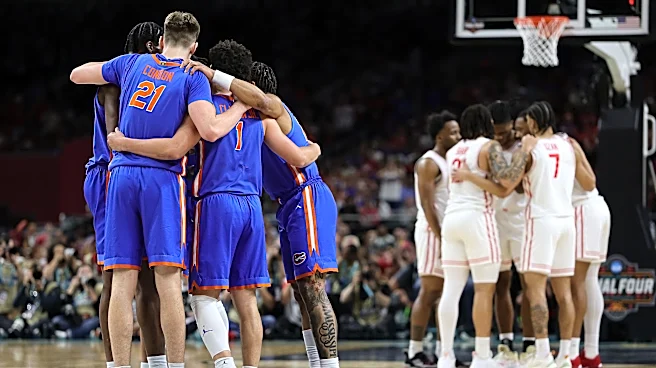
Gonzaga’s season has already been to Las Vegas once. On Nov. 2 the Zags opened against Purdue at T-Mobile Arena and won 78-72, their first win over the Boilermakers in six tries. Three weeks later they head back to the Strip with a 3-1 record, a No. 22 ranking and more questions than answers. The 41-point win over New Mexico State looked like a team clicking early. Then, the Zags built out and promptly coughed up a 13-point lead against LSU to lose 81-80 in Spokane on a day the Zags made only 5 of
17 from deep. The AP poll voters dropped them eight spots. After that, a 12-point home win over Montana State that should have been easy wasn’t. The Zags looked straight up bad in that one and hopefully it left a bad taste in their mouth and some extra motivation to get back on track going into the week off.
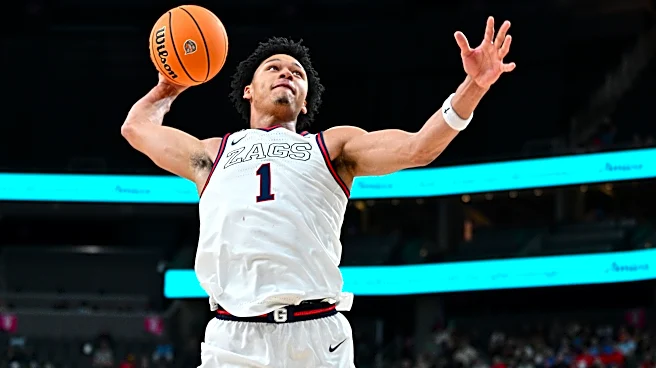
None of the team’s struggles should shock anyone who watched this roster come together, though. Braden Huff is the lone holdover from last year’s starting five, and much of the rotation didn’t arrive until the fall semester was already underway. KenPom puts the team’s minutes continuity at 13.7% which ranks 273rd out of 365 in all of D1. The talent is clearly there; Davis Fogle is averaging 18.8 points, Huff 17.2 and Xaivian Lee 5.8 assists. What’s missing, though, is the sense that these players have any idea as to how to play together for more than ten minutes at a time.
The Players Era 16 is either the cure for that, or it just exposes the problem further. Gonzaga gets at least three games against power-conference opponents in four days, starting with Kansas State, then Alabama or Baylor, and possibly a shot at defending national champion Michigan, the team that embarrassed the Zags in last year’s final. Get through that bracket with wins and the narrative flips: the LSU loss becomes a hiccup, the ranking climbs back toward the teens, and the NCAA résumé gets the kind of neutral-court wins the selection committee rewards.
Stumble, however, and the bill comes due right away. A 1-2 week, or worse, would almost certainly push Gonzaga out of the Top 25, and December is no time to be unranked. After a tune-up with Eastern Oregon, the Zags face No. 7 UCLA in Anaheim on Dec. 5, play at Creighton a week later, and then take on No. 2 Michigan State in Palm Desert on Dec. 19. Walk into that stretch without a ranking or any momentum, in a first Pac-12 season where conference games may not carry much national weight, and the margin for error for a 29th straight NCAA Tournament bid shrinks fast
The Players Era Festival
The Players Era Festival was built around a simple pitch: pay the players. Every participating program gets a guaranteed NIL payout for its roster. USA Today reports all 24 schools this year are guaranteed more than $1 million. Once that kind of money was on the table, the sport’s top programs started passing on Maui and the Bahamas for Las Vegas.
The event has grown every year. The 2024 debut had eight teams, and Oregon edged Alabama 83-81 for the title. In 2025 the field grew to 18, and Michigan beat Gonzaga 101-61 in the final before going on to win the national championship in April. That 2025 edition also drew a lot of grumbling: the championship pairings were set by records and point differential rather than a bracket.
This year’s version fixes that and adds more teams. There are 24 programs, a new home on ESPN, and two separate tournaments held in back-to-back weeks. The Players Era 8 has already finished; Houston won it, beating Kansas in the final.
Gonzaga plays in the Players Era 16, which runs Nov. 24-28. The 16 teams are split into two eight-team brackets, one at T-Mobile Arena and one at Michelob ULTRA Arena. Everyone plays three games, and consolation rounds sort every team from first through eighth in its bracket. The two bracket winners then meet on Saturday, Nov. 28, for the championship and a bigger payday, though exactly how big that bonus is remains unclear. Last year’s champion earned an extra $1 million in NIL money, and several outlets have reported the same figure for 2026. But a Players Era spokesperson told USA Today this week that the guaranteed prize is actually $300,000 for the winner and $200,000 for the runner-up. The event hasn’t released an official payout schedule, and each school negotiated its own contract this year, so the honest answer is that it’s a lot of money, but nobody outside the deals knows exactly how much.
The Tourney So Far
The first week in Las Vegas belonged to Houston. Kelvin Sampson’s Cougars, ranked No. 8, won three games in three days and left town 6-0, with the strongest early-season résumé in the country.
Houston beat Rutgers 85–73 in the opener and then took apart No. 1 Florida 86-76 in a rematch of the April 2025 national title game (Wikipedia). In Thursday’s all-Big 12 final, Houston built a 24-point lead over No. 11 Kansas, watched it shrink to four with under three minutes left, and then held on to win 92-83.
The takeaway for Gonzaga fans is that this event shuffles the rankings. In three days, the No. 1 team in the country lost by double digits and the eighth-ranked team made a case for the top spot. That’s the opportunity in front of the Zags next week, and the risk too.
Gonzaga’s Path to a Championship
This tournament is brutal. To win it, Gonzaga has to play four games in five days, and after Wednesday’s off day the two finalists play on three straight nights. Every opponent is good enough to win the whole thing, and the competition gets tougher as the bodies get more tired. Talent is enough to get through Tuesday. By Saturday the winner will be the team that’s still moving its feet on defense, still hitting shots, and still keeping its composure when a lead slips away. For a roster that hasn’t settled on who it is yet, that’s a hard week, and it could be exactly what this team needs.
Opening round (Tuesday): Kansas State. This is the one Gonzaga can’t lose. Casey Alexander’s first K-State team is 3–2, and both losses came at home to mid-majors. The Wildcats can beat a good team when Brandon Rechsteiner is hot; he made six threes and scored 26 against Creighton. Otherwise they don’t have the size or depth to stay with Gonzaga. The Zags should keep feeding Huff in the post, win the glass, and make every K-State shot a contested one. The 9:30 p.m. PT tip also cuts into recovery time before Thursday.
Round 2 (Thursday): Alabama or Baylor. This is probably where the tournament is decided. Alabama is 5-0 and has already scored 100 or more three times. Baylor is dangerous in a different way. The Bears lost to Texas by three, and Brett Decker Jr. just made 10 threes in one game, which is a bad matchup for a team that has struggled to guard the perimeter. Whoever wins this game has to turn around and play again the next day.
Semifinal (Friday): Michigan, Creighton, Miami or TCU. The Wolverines have a new coach in Mike Boynton Jr. and already have a loss to UConn, but they’re still the champs. No. 17 Miami, whose only loss came against No. 1 Florida, may actually be the tougher opponent. This is the second of three straight nights, and Gonzaga’s depth will be key. Few has rarely had this many reliable players to turn to, but he’s also been known to tighten the rotation even more when the going gets exhausting.
Championship (Saturday): The other bracket’s winner. The likely opponents are No. 9 Texas Tech, No. 13 St. John’s and No. 14 Tennessee. By then both teams will be worn down, and the edge goes to the one that knows what it does well. That’s the bigger point for Gonzaga: if the Zags are still playing Saturday night, they’ve probably figured out what it is they need to do to win against high quality opponents.
The Opener: Kansas State
This K-State team is basically brand new. Casey Alexander came over from Belmont in March after winning 166 games and four conference titles there in seven seasons. The team he took over went 12-20 last year, finished 3-15 in the Big 12, and returned just sophomore Andrej Kostic. Nearly everyone else is new, and the three captains, Rechsteiner, Jaden Schutt and Brock Vice, are all in their first season with the team.
K-State lost his debut to South Dakota State by two. On Friday night, Campbell came into Bramlage Coliseum with a 1-4 record, made 11 of its first 13 shots in the second half, and led by as many as 18. In between, the Wildcats beat Montana by 41.
Forward Isaiah Abraham is the most athletic player on the roster, and Timo Malovec, who was penciled in as a starter in the summer, is still working back from an injury. This may be the most purely unpredictable team in the tournament (aside from the Zags themselves). Gonzaga is favored to win, but if the version of this team that played Montana State last week shows up again in Vegas, the Zags’ hopes for remaining in the top 25 may be dashed before the weekend.
Final Thoughts
Gonzaga doesn’t need to win the Players Era 16 for this to be a good week. It needs to leave Las Vegas looking like a team. That means getting through Tuesday without drama, winning a game on Thursday against an opponent that’s better than them on paper, and showing on Friday that it can take a hit and keep going. Two wins and a competitive third game would get the Zags back into the national conversation and into December with some confidence. Three wins would make the LSU loss look like a fluke.
A bad week, however, would confirm the doubts that have been building since that loss: the point guard question isn’t settled, the best big man isn’t trusted in winning time, and no one has yet emerged as the player who takes over a close game. Mark Few has turned November questions into March answers many times before, but he’s rarely started December this unsettled, and the schedule after Vegas won’t give him much time to sort it out.
Whatever happens, by Friday night we’ll know a lot more about this team than four games against non-Players Era opponents could tell us.