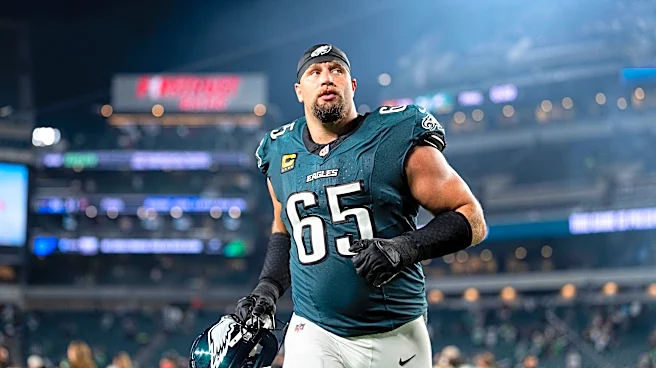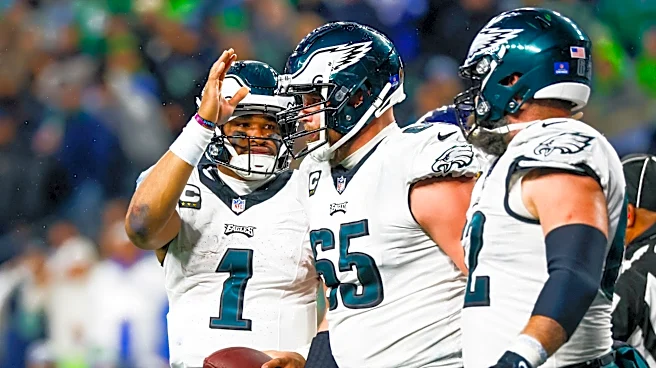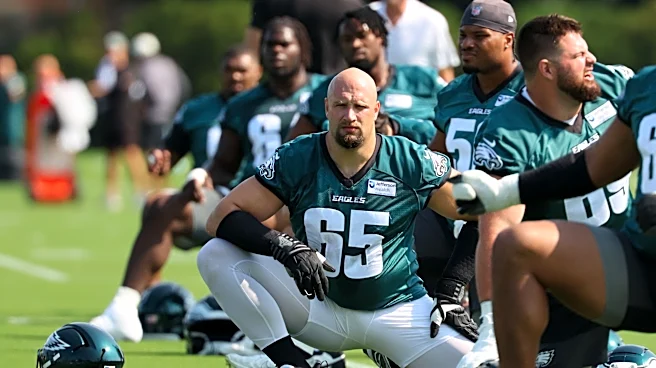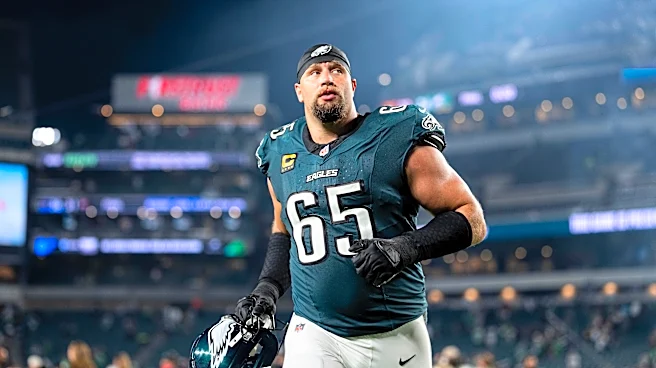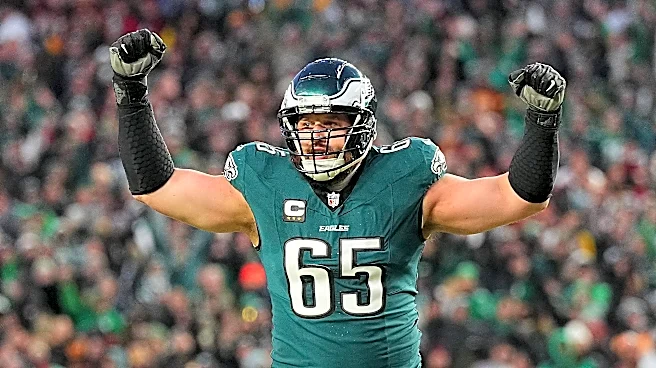



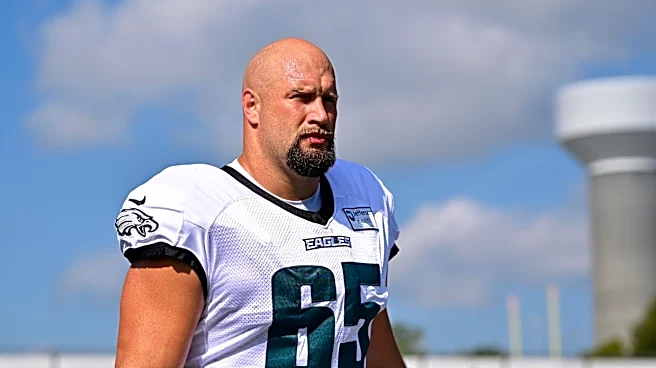
Lane Johnson had a way of making everyone around him feel welcome. He has always been that way. Piled under a mountain of pads, the hulking, 6-foot-6, 335-pound perennial Eagles’ All-Pro right tackle was an anomaly since high school, part superhero, part ballerina with the way his nimble feet were able to move his massive frame and spring out on edge rushers. He had that patented right backfire mule kick that he borrowed from Jason Peters and perfected.
He will no doubt one day be inducted into the
Pro Football Hall of Fame for being a two-time, first-team and three-time second-team All-Pro selection, earning six Pro Bowls, and playing in three NFC championships, and winning two Super Bowls. Five years from now, Canton, Ohio, will be covered in midnight green when Johnson gets inducted, a city paying homage to a true hero on and off the field. The fourth overall pick in the 2013 NFL Draft changed the tenor of this franchise as a parting gift from former Eagles’ coach Chip Kelly.
In his 14 NFL seasons, Johnson was the cornerstone of a team that had only three losing seasons (7-9 in 2015 and 2016, and 4-11-1 in 2020). The Eagles won 66% of the time, going 122-63-1 when he played. They were 18-30 when he didn’t.
It started back in Groveton, Texas.
It seemed odd at the time that this rangy, gangly kid was surrounded by a troupe of bobbing smaller runners coming around the turn of the track. But there he was, Johnson, all feet, and churning arms, and pumping fists, standing head-and-shoulders above everyone else running the 400-meter dash. Then it was off to the field events to throw the shot put.
There really wasn’t anything the tall kid from tiny Groveton High School couldn’t do. Including perfect dead-on voice impersonations.
Johnson could throw the shot 50 feet and run the quarter in 49 seconds. Then go into Frank Caliendo mode and imitate his teammates and coaches.
Everything with Johnson seemed to have come late. He was 17 when he graduated from Groveton, a Class A school at the time located in a rural community. He was 6-foot-6 then, but he weighed 215 pounds with aspirations of playing quarterback at a major Division I level.
“Lane graduated at 17 years old and he really didn’t start growing until he got out of high school,” said Kevin Parker, Groveton’s defensive coordinator who was also Johnson’s high school basketball coach. “It’s crazy what happened. He probably put on 40 pounds between the time he graduated and the fall of the next year. He began growing pretty rapidly from that point on.”
Johnson’s dream was to play quarterback, but his high school coaches projected him as a tight end, if he was going to play major college football. No one was looking at Johnson as a quarterback.
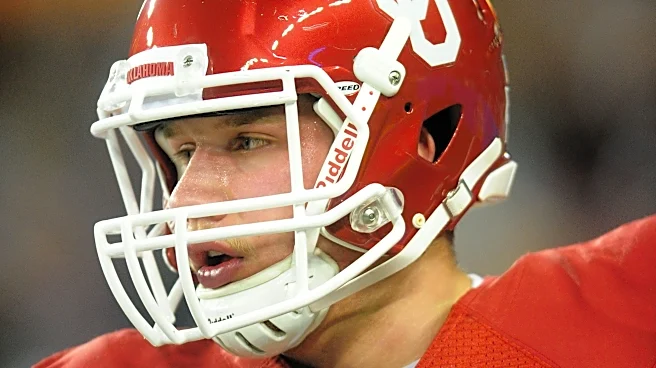
“Of course, Lane outgrew that position, too, once he got to Oklahoma, but he could probably still play tight end, he was phenomenal,” Parker said. “I was his basketball coach at Groveton. Lane was a good basketball player, too. We’re not very good in basketball, but we were a lot better when Lane was here. He really did everything for us, he played inside and outside. He could bring the ball up the floor.
“Lane was so athletic, he used to run the quarter for us—and throw the shot put. That’s a pretty rare combination. I’m not surprised by Lane’s success through the years. There’s a great story with Lane recently. About 15 years ago, we had a linebacker here in Groveton that was a really good player. He was about 235 pounds and can run. He and Lane were really good friends. Lane was working out with him and they were picking at each other one day. The linebacker kid was saying how he could outrun Lane.”
So, Parker brought them out to a track and Johnson raced the smaller—perceived faster—kid. Imagine a mini-locomotive and you have an idea of Johnson coming at you.
“They literally ran five or six 40-yard dashes and the linebacker kid couldn’t touch Lane, I mean can’t even get close to him, that’s when we started to realize Lane could be really, really be something,” Parker recalled. “Lane was probably 285 pounds at that point.”
Anyone around Johnson had to watch themselves though. No one was waterproof to Johnson’s impersonation wrath. One time at Oklahoma, Johnson was taped doing impressions of teammates. He needed a little time, but when he got someone down, he nailed them. His Sooner teammates kept pestering Johnson to mimic then-Sooners’ coach Bob Stoops. Johnson kept saying no.
When he finally relented, he nailed Stoops’ thick Southern draw perfectly—and about that same time Stoops walked into the Oklahoma meeting room greeted by everyone erupting in laughter.
It was typical Johnson.
What was revealed through time, however, was not everything was a continuous riot around Johnson. The smiles and laughter hid something deeper, something he kept away from others, buried in places that only he knew. Five years ago, Johnson went public about his battles with depression and anxiety.
He missed three games during the 2021 season stating it was because of a “personal matter.” He then released a statement on social media explaining why: “I would like to thank everyone for their understanding and support over the last two weeks. I appreciate the positive notes and messages as I’ve worked hard to restore my personal life. Depression and anxiety are things I’ve dealt with for a long time and have kept hidden from my friends and family. If you’re reading this and struggling, please know that you are not alone. I am excited to rejoin my teammates and coaches. I’m grateful for the entire Eagles community and look forward to continuing to play in front of [the] best fans in the world.”
In many ways, it was typical Johnson, thinking about others before himself and how his message may be able to break some of the barriers that still stand when it comes to mental illness.
“There are a lot of former players who are suffering, some who used to play here that I know of,” he said. “I’m not going to give any names, but they’re in pretty damn bad shape. You hate to see your old warriors — they haven’t really had a chance to live life. They’ve been playing football their whole life, and now they get out and they’re suffering. They have bad anxiety or depression. It affects their wives. It affects their children. I think there’s a lot of work that can be done in a good way, but they just need to understand the voices of the past players.”
His current personal matters outweigh anything on a football field, and knowing Johnson, he was going to face them without interference. He retired without regrets from a hardboiled fanbase that came to love and appreciate a one-time gangly kid who used to run around a track to the laughter of anyone who watched.
After 14 years in the NFL, Lane Johnson will pedal his fast feet to the Hall of Fame, when hopefully one day he could sit back and enjoy the good times and indelible memories of winning he provided a championship-starved city.