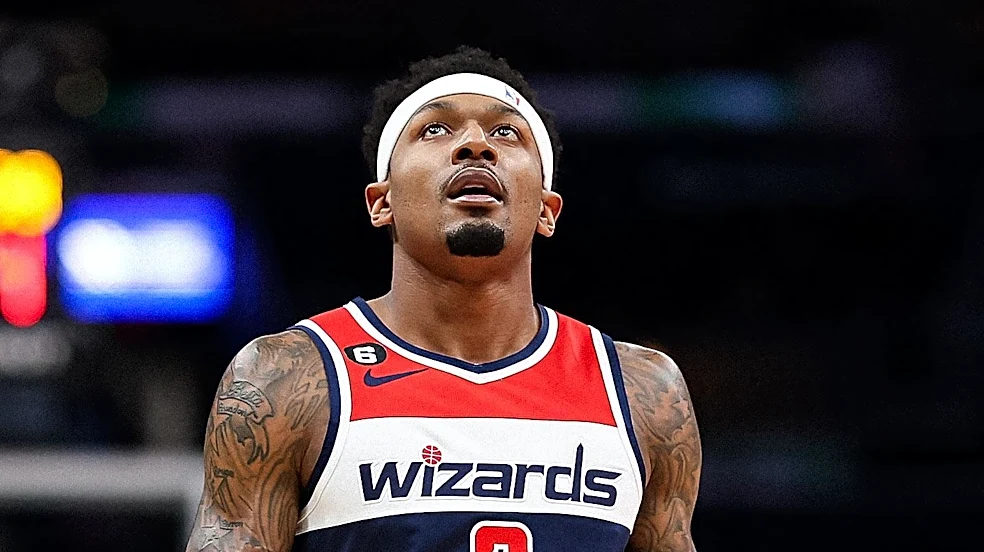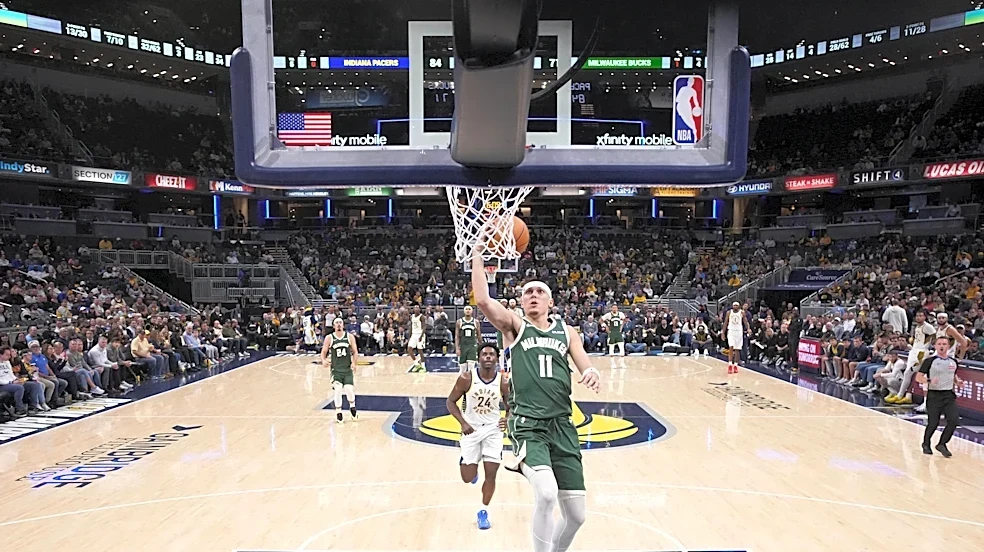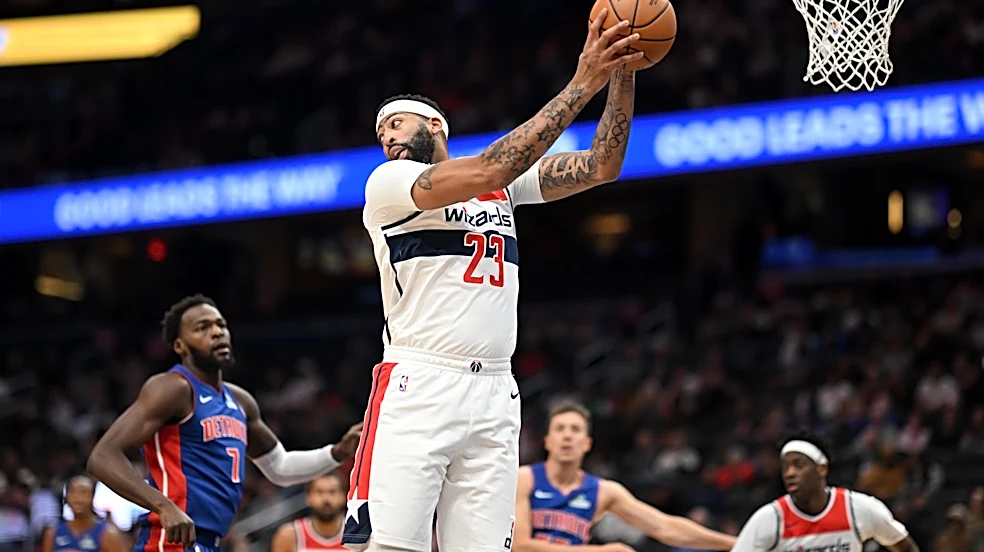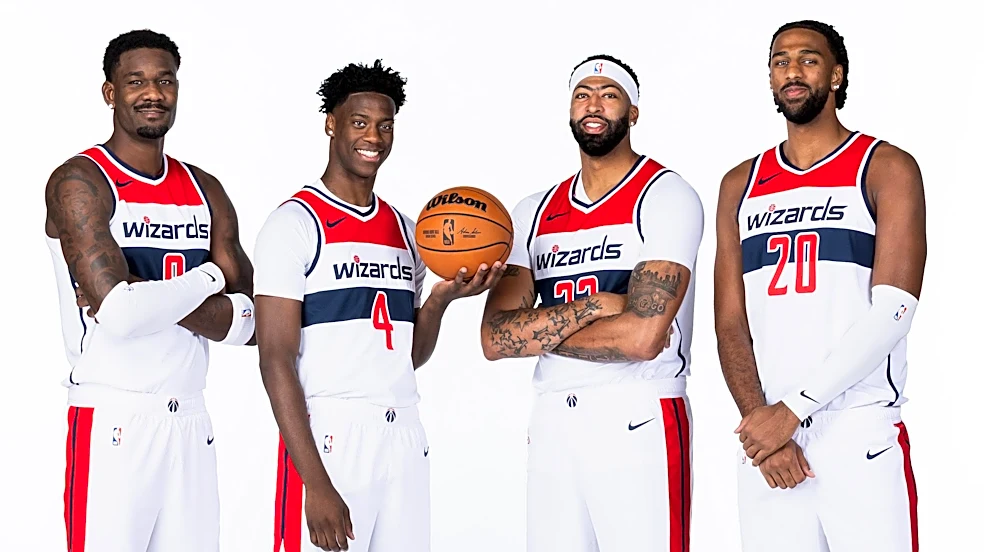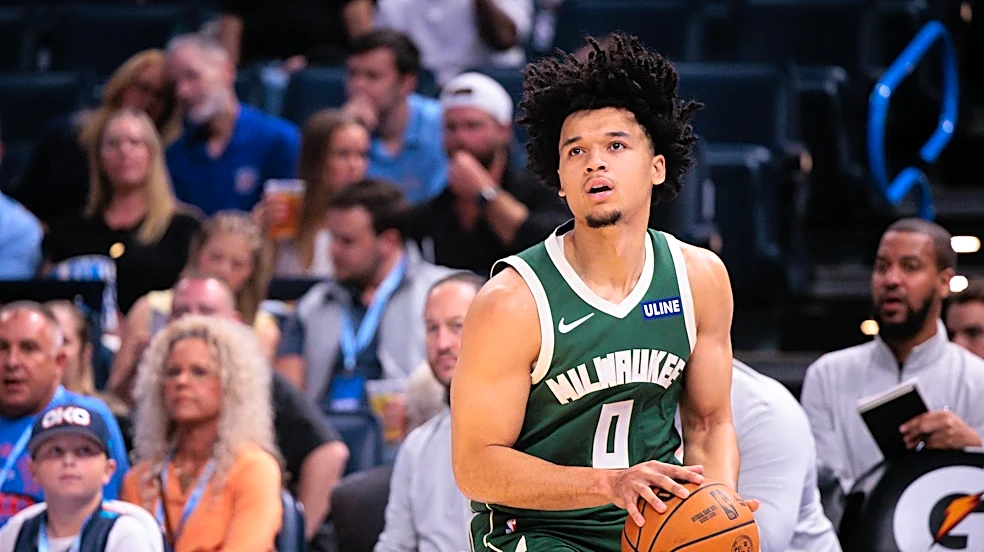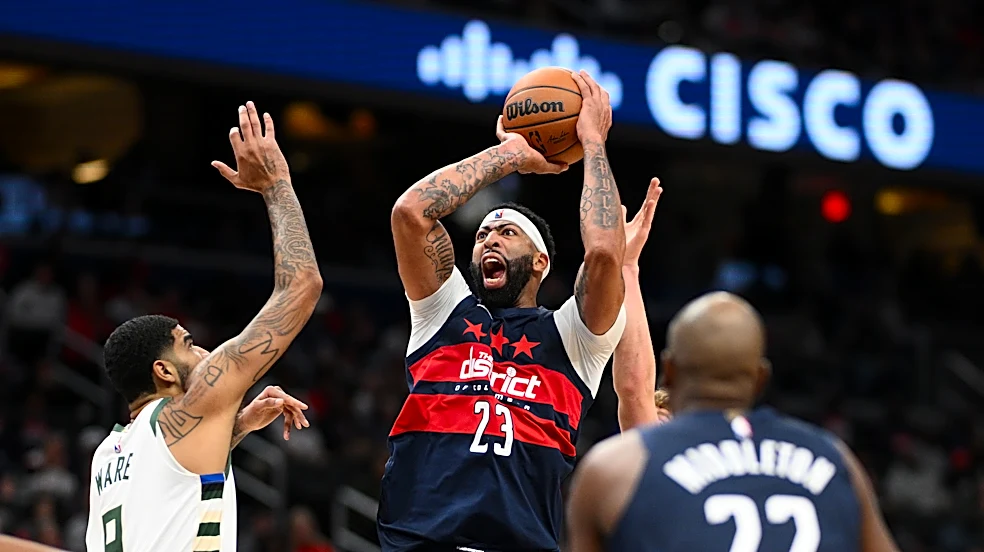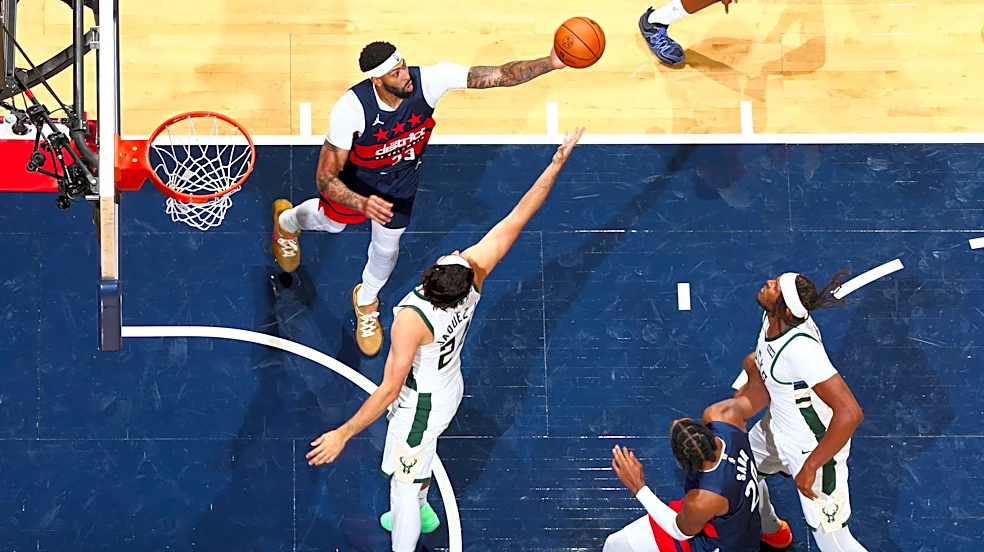


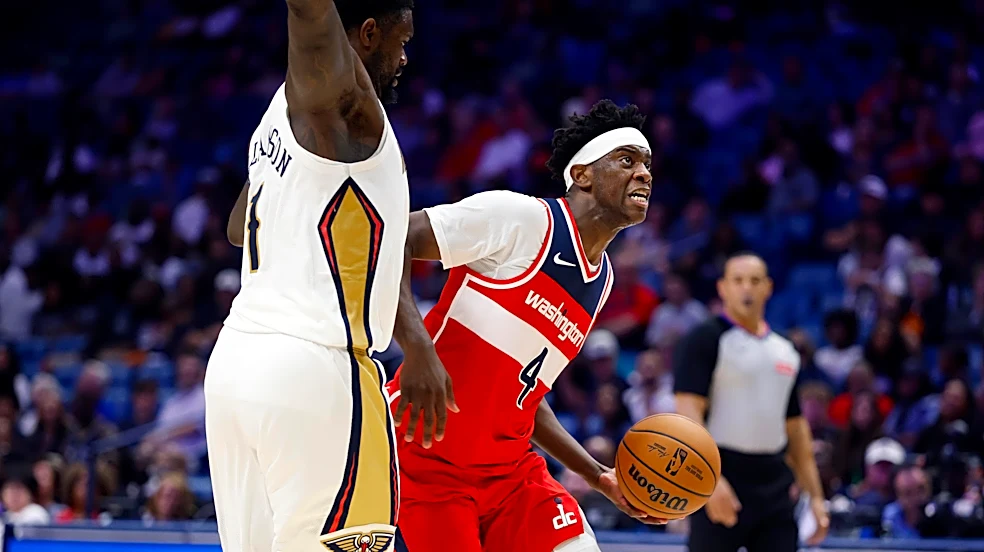
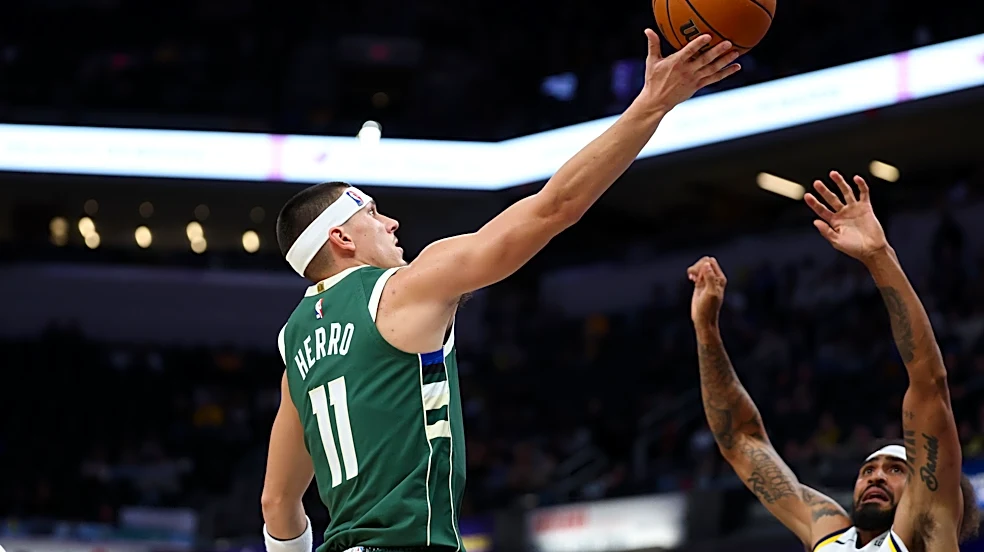
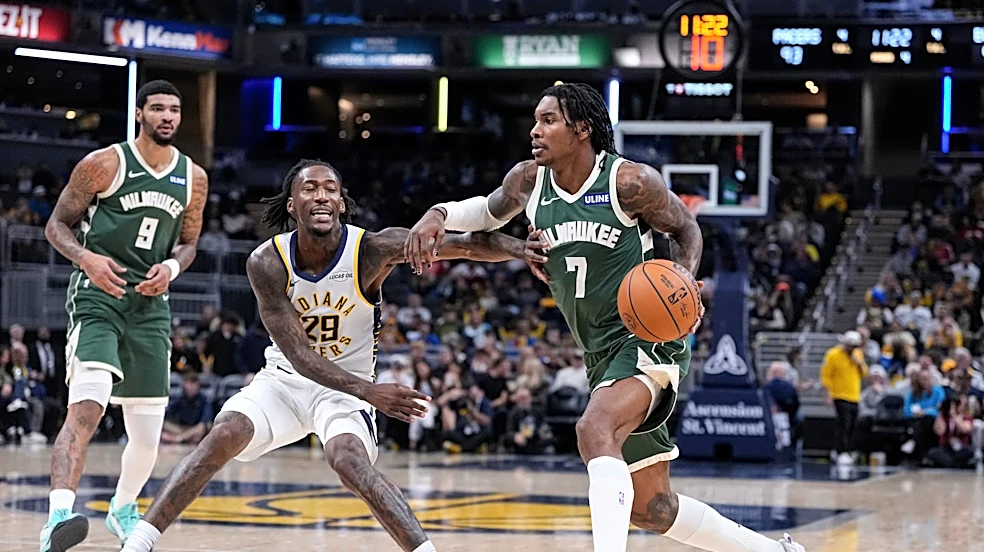

The season opener was between two teams headed in opposite directions. The Washington Wizards want to win, and — led by a whale of game from Anthony Davis, they did. The Milwaukee Bucks — after trading away perennial Most Valuable Player candidate Giannis Antetokounmpo — succumbed.
For the Bucks, a lot of nights will be like this.
For the Wizards…82-0 is on the menu.
More seriously, even without No. 1 overall pick AJ Dybantsa, who was out with an ankle injury suffered in the preseason finale, the Wizards
demonstrated they can be formidable at full (or nearly full health).
It was not a perfect performance by the Wizards. Trae Young generated open and wide-open corner threes, which they bricked. In fairness, they were slinging bricks from deep from the wings and out top — 6-28 from three for the game. Young was the worst offender, shooting 0-6.

The Wizards made up for it by avoiding turnovers, scoring inside, and getting to the free throw line (32-41). The scant turnovers were something of a surprise. Controlling the paint and getting to the free throw line were not. The Wizards used two bigs together most of the night, and a team with Davis and Young are going to make the other team foul.
A few fun things from this one:
- Davis dominated — 34 points, 12 rebounds, 4 assist, 2 steals and a block. He was too much for Milwaukee handle, especially since the twin towers lineups meant he was being guarded by Kyle Kuzma much of the evening.
- Starting in place of Dybantsa, Bilal Coulibaly was a defensive terror. He kept popping up all over the court to deflect the ball, get a steal, or block a shot. On one block of a Tyler Herro attempt, Coulibaly flashed from the low block on the far side to swat Herro’s attempt from above the free throw line. He finished with four steals and two blocks.
- Young had 13 assists, and it could have been more if teammates made a few more open looks. He’s enormously skilled at drawing defensive attention, holding it, and then hitting a teammate left open. I particularly liked a play in the second quarter where he jumped, looked at Justin Champagnie on the wing while in the air long enough for a help defender to leave the paint to start the closeout sprint, and then fire a pass to Ayton, who was open under the basket. It’s been a while since the Wizards had someone who could make that kind of pass. (He was on the broadcast team last night.)
- Speaking of Champagnie, he played a helluva game. My hope is that he stays a significant part of the rotation when Dybantsa is back. He could, for example, take the minutes Khris Middleton played last night (no disrespect to Middleton, who’s had a terrific career — just that Champagnie is better now and has an NBA future).
Thoughts & Observations
- Has Chris Miller always pronounced Chipotle without the T?
- John Wall brought some good moments to the broadcast, which has long needed some help. Two notes: 1) it’d be great if Wall could talk just a little slower, and 2) it’d be great if the production could bring the level of his mic up a touch. That’s it — I loved the stories, observations, and the “technical” basketball talk. His presence brought out some good stuff from Drew Gooden too.
- One grumble about the broadcast and then I’ll shut up about it — Chris Miller sharing the stat about Tre Johnson making 115 threes last season, which he said was the most for a Wizards rookie through 60 games. He said it like viewers should be super impressed. Except, it mainly just highlights that the game has changed. Most teams have a similar stat from the past few years because everyone shoots more threes.
- Okay, one more. Miller had me grinding my teeth when he praised Bub Carrington after Carrington harassed Ryan Rollins full court. It was a start to good defense, which Carrington messed up with a dumb foul. The effort was good. His intent was good. The play was not good defense.
- Speaking of Carrington’s defense, the first half ended with an open three from Milwaukee’s Herro. That open look arose because Carrington inexplicably lunged at the ball, got overextended and off balance, and then had to scramble frantically to try to get back into the play. Good effort, but he needs to play smarter.
- A play at 5:44 of the first quarter made me laugh. Davis got a wide open three because George blocked for him like he was a member of The Hogs. George’s blocking, which should have been called for a foul, kept two defenders away from Davis.
- I jotted the same basic idea (using different wording but the same point) in my notes three different times during the game: Trae Young is a tough cover. The league literally made rules designed to stop some of his more egregious free throw grifting tactics. Last night, he shot 16 free throws.
- I like the idea of Kyshawn George. Last night’s game has me vigilant because it included four turnovers and four fouls. Excessive fouling from over-aggressive play has been an issue throughout his career. Turnovers have been a chronic issue, as well — and the adventurous passing on display last night (attempted a lob to Davis in a crowded paint, tried a bounce pass in traffic in a crowded paint). He can be a good player if he dials back the aggression and focuses on right play instead of highlight play.
Four Factors
Below are the four factors that decide wins and losses in basketball — shooting (efg), rebounding (offensive rebounds), ball handling (turnovers), fouling (free throws made).
The four factors are measured by:
- eFG% (effective field goal percentage, which accounts for the three-point shot)
- OREB% (offensive rebound percentage)
- TOV% (turnover percentage — turnovers divided by possessions)
- FTM/FGA (free throws made divided by field goal attempts)
Note: the LGAVG column is the league average from last season. That will update with averages from this season going forward.
Stats & Metrics
PPA is my overall production metric, which credits players for things they do that help a team win (scoring, rebounding, playmaking, defending) and dings them for things that hurt (missed shots, turnovers, bad defense, fouls).
PPA is a per possession metric designed for larger data sets. In small sample sizes, the numbers can get weird. In PPA, 100 is average, higher is better and replacement level is 45. For a single game, replacement level isn’t much use, and I reiterate the caution about small samples sometimes producing weird results.
POSS is the number of possessions each player was on the floor in this game.
ORTG = offensive rating, which is points produced per individual possessions x 100. League average so far this season is listed in the Four Factors table above. Points produced is not the same as points scored. It includes the value of assists and offensive rebounds, as well as sharing credit when receiving an assist.
USG = offensive usage rate. Average is 20%. Median so far this season is 17.7%.
ORTG and USG are versions of stats created by former Wizards assistant coach Dean Oliver and modified by me. ORTG is an efficiency measure that accounts for the value of shooting, offensive rebounds, assists and turnovers. USG includes shooting from the floor and free throw line, offensive rebounds, assists and turnovers.
+PTS = “Plus Points” is a measure of the points gained or lost by each player based on their efficiency in this game compared to league average efficiency on the same number of possessions. A player with an offensive rating (points produced per possession x 100) of 100 who uses 20 possessions would produce 20 points. If the league average efficiency is 115, the league — on average — would produced 23.0 points in the same 20 possessions. So, the player in this hypothetical would have a +PTS score of -3.0.
Players are sorted by total production in the game.