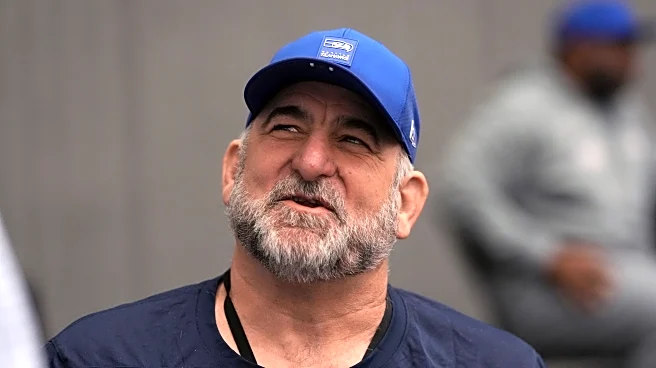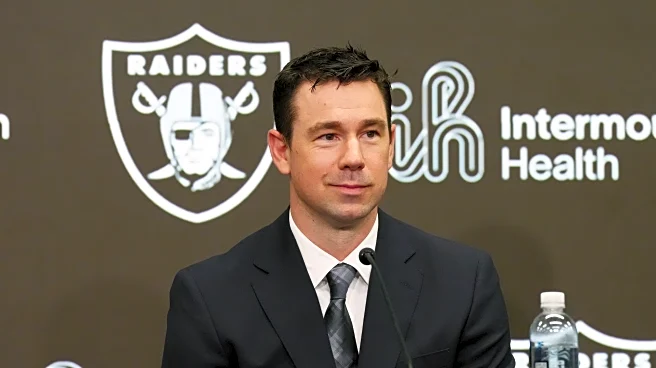

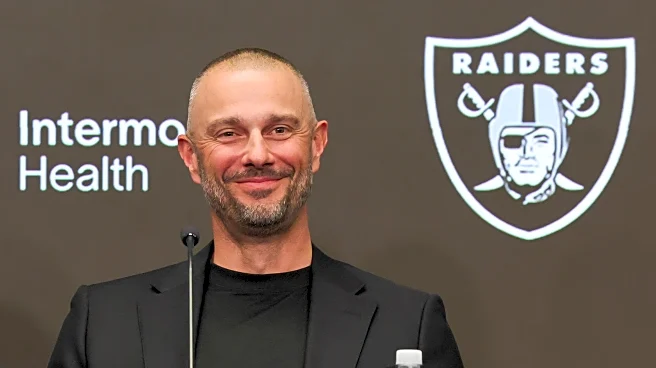
The Las Vegas Raiders officially have a new head coach, hiring former Seattle Seahawks offensive coordinator Klint Kubiak after Super Bowl 60. To get to know Las Vegas’ new coach better, Silver and Black Pride reached out to our friends at Field Gulls, and John Gilbert was kind enough to answer some questions about Kubiak for Raider Nation.
Q: There’s been some chatter about Kubiak not having a big personality and that potentially impacting his ability to be a “leader of men”. What’s your interpretation
of his personality and leadership abilities?
A: Watching him talk in press conferences or do media interviews in general, he doesn’t come across as the forceful leader like a Bill Belichick or Bill Parcells, or the kind of excited energy of a Sean McVay or a Pete Carroll. That led to a lot of speculation among Seahawks fans that Kubiak would be so unimpressive in interviews that there’s no way he would land a head coaching gig.
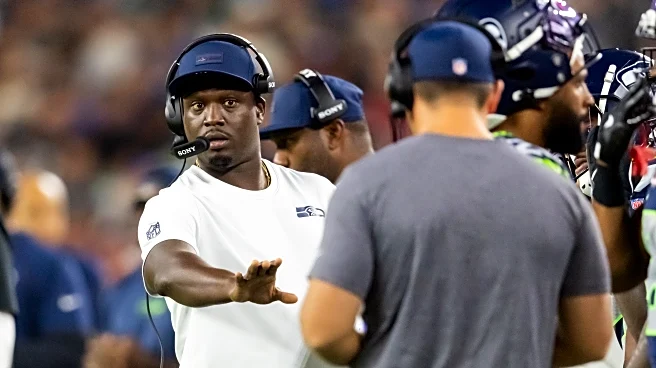
With that said, he obviously knows what he’s doing when it comes to football, and I’d guess he’s likely one of the many people whose personality comes out when they’re doing what they do best. And, as the following clip shows, who he is when talking to the media appears to be different than who he is when he’s in his comfort zone around his players and doing the non-media portion of his job.
Q: Can you give us a brief rundown on Kubiak’s offense and why it was so successful?
A: Kubiak’s offense is nothing special, as it’s not all that dissimilar from the outside zone heavy, west coast passing offenses like many of the offenses across the league that are descended from the Shanahan coaching tree. Where Kubiak excelled and helped differentiate himself from many others is his flexibility and willingness to adapt, both in terms of personnel packages and schematic tendencies.
For examples of the above, the Seahawks used a lot of 12 and 13 personnel. Early in the season, defenses consistently responded by playing base, loading the box and leaving a single deep safety. Kubiak took advantage of this and had the Seahawks near the top of the league in generating explosive plays. When teams started playing much more nickel and presenting two high shells after the acquisition of Rashid Shaheed, Kubiak was content to use the run game to chip away at the light boxes and did not try to force the offense to continue its deep passing success.
Similarly, while many outsiders spent the season trying to understand what exactly Seattle was doing with the running back rotation, the reality is that Kubiak appears to have spent a good portion of the season patiently getting Ken Walker experience running in outside zone.
Walker came into the season with a propensity for lacking patience and a habit of bouncing a lot of runs trying to break everything for a big play. The patience he displayed while earning Super Bowl MVP honors was a night-and-day difference from the beginning of the season, when he was missing reads and not playing within the system.
In particular, after having called zone run concepts on roughly three-quarters of designed runs in his previous stops as an offensive coordinator, he abruptly changed that up with Walker and Charbonnet this season. That gave Walker the time to develop as a zone runner, unleashing the late-season and postseason monster that everyone saw.
Q: What traits does a quarterback need to have to be effective in Kubiak’s system? What did Sam Darnold do this year that made the unit click?

A: The biggest trait that allowed Darnold to flourish is playing within the system, making the necessary reads and getting the ball where it’s designed to go. The system doesn’t need an elite, high-level signal caller under center. For example, the 49ers made—and lost—a pair of Super Bowls with Jimmy Garoppolo and Brock Purdy at quarterback. That’s not to say that Kubiak is another Shanahan, just that the system doesn’t require perfection at the quarterback position to be dangerous.
What Darnold did that made the unit click was mostly just to play within the system. The games where he struggled the most were the games where he was trying to play hero ball and put everything on his back, instead of just taking what the defense gives and letting the rest of the team do their jobs. Certainly, he delivered in key moments as needed, particularly against the Rams in overtime in Week 16 and the Colts in Week 15, and playing within the system is what allowed the team to be in a position for him to deliver in those moments.
Q: Looking at the Raiders’ roster, who do you think will benefit the most from Kubiak’s arrival in Vegas and why?
A: The immediate answer based on the roster of the Raiders as it stands today is Geno Smith. But obviously, that is an answer that seems guaranteed to change with the roster in late April.
Thus, the answer becomes Brock Bowers. Part of Kubiak’s flexibility in making use of the weapons at his disposal was scheming to get advantageous matchups or busted coverages. Whether it was moving JSN all over or creating a play-calling tendency that tricked defenses into misreading A.J. Barner in a high-leverage situation, one of Kubiak’s strengths is playing the long game and not being impatient enough to cash in before it’s necessary.
Q: Are there any assistant coaches in Seattle that you think Kubiak will try to bring with him, especially on the defensive side?
A: John Benton and Rick Dennison were with Kubiak with both the New Orleans Saints in 2024 and the Minnesota Vikings in 2021, and I wouldn’t be surprised if there was at least some attempt to bring them with him to Las Vegas. Whether that actually happens or not, we’ll see, but it would not be surprising.
On the defensive side of the ball, I’m not sure how many he might try to poach, but defensive backs coach and defensive passing game coordinator Karl Scott might be the most likely. He was with the Seahawks for the final two seasons of the Pete Carroll era after having coached for the Minnesota Vikings in 2021, while Kubiak, Benton and Dennison were on staff there and spent three seasons working for Nick Saban at Alabama. He interviewed with the Commanders for their defensive coordinator job in January after interviewing for the same role with Las Vegas last offseason, so his name should not be completely unfamiliar to Raiders fans.
[Editor’s note: NFL Network’s Ian Rapoport reported on Friday that Scott is expected to remain in Seattle.]