


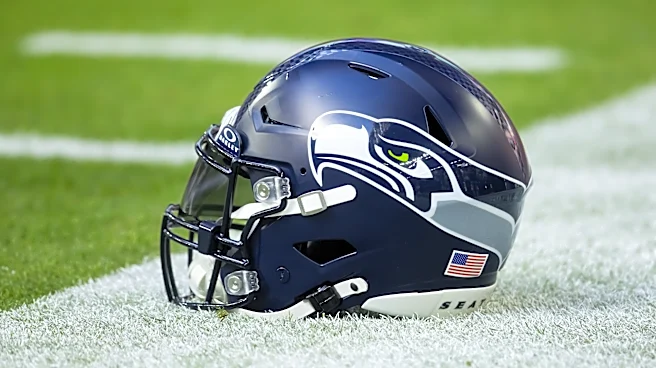
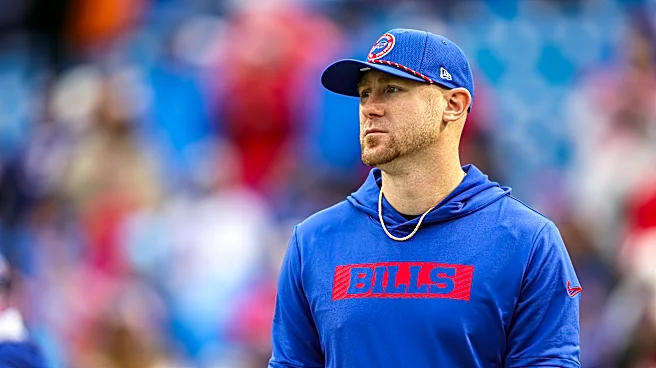
When a Super Bowl-winning franchise trades a draft pick for a player who has never caught a pass in the NFL, the initial reaction is usually confusion.
But moves like this help explain why the Seattle Seahawks climbed to the top of the league in the first place.
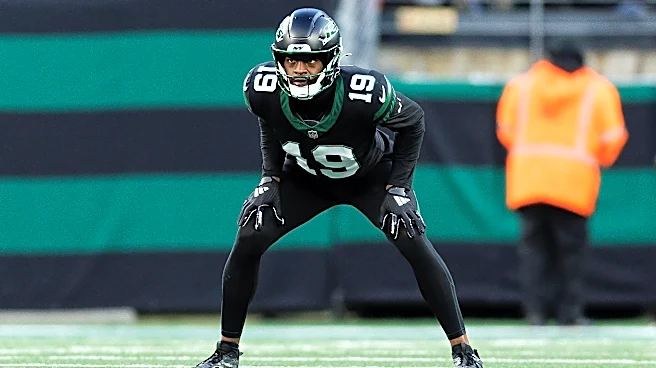
Seattle acquired wide receiver and special teams ace Irv Charles from the New York Jets in exchange for a conditional 2028 seventh-round pick. On the surface, it looks like a roster-fringe transaction. In reality, it serves as another reminder
of how Mike Macdonald, John Schneider, and Jay Harbaugh view football’s often-overlooked third phase.
For anyone looking strictly at offensive production, Charles barely registers.
Across four NFL seasons, he has never recorded a reception. His entire professional career has been built on special teams. More specifically, it has been built as a gunner — one of the most demanding jobs in football, requiring a player to defeat blocks immediately after the snap, sprint downfield under control, and finish tackles in space.
That role is where Charles made his name.
According to PFF, he earned elite special teams grades of 90.3 and 88.6 in 2023 and 2024, placing him among the league’s most effective specialists over that span.
The film backs it up.
On one rep against Seattle — during what was one of the Seahawks’ poorest special teams performances of the season — three different blockers attempt to account for Charles on the coverage unit. It does not matter. He fights through the traffic, stays on his path, and still arrives in position to finish the tackle.
Another example comes against Tennessee. The Titans assign two players to slow him down at the line of scrimmage, but Charles wins immediately off the release. He defeats both blockers within the first few steps, maintains leverage throughout the rep, and takes a clean angle to the returner.
That is what separates high-level gunners from average ones.
The job is not simply about speed. It is about controlling the return lane, forcing the returner back toward the middle of the field, and then finishing the play in the open field. Charles consistently demonstrates the ability to take efficient pursuit angles and arrive under control as a tackler.
His release package is particularly impressive. He shows the ability to attack blockers both inside and outside, preventing opponents from sitting on a single move. Combined with his physicality at the point of contact, it creates a difficult assignment for punt return units.
The versatility shows up throughout his special teams tape as well.
Charles has worked as a gunner, contributed on return-blocking units, and played interior contain responsibilities. Coaches value players who can handle multiple jobs, and Charles has spent years proving he can do exactly that.
The biggest obstacle is health.
Charles suffered a torn ACL late in the 2024 season and missed the entirety of the 2025 campaign. He never appeared in a game last year, which ultimately helped create an opportunity for Seattle to acquire him at a relatively modest cost.
That is where the move becomes truly interesting.
The Seahawks are not acquiring a developmental athlete.
They are not bringing in a long-term project.
They are not searching for offensive snaps.
They are targeting a player who, when healthy, has already established himself as one of the best specialists in the NFL at a highly specific role.
Perhaps the most remarkable part of Charles’ story, however, is the journey that brought him to the league.
Unlike many NFL players, his path was anything but linear.
Charles originally arrived at Penn State as a highly regarded recruit, but disciplinary issues away from football eventually led to his dismissal from the program. For many players, that type of setback effectively ends any realistic NFL aspirations.
Instead, Charles rebuilt his career from the ground up.
Years later, he resurfaced at Indiana University of Pennsylvania, a Division II program far removed from the spotlight of major college football. There, he slowly rebuilt both his reputation and his future in the sport.
The offensive numbers never jumped off the page. Across four collegiate seasons, he produced just over 1,000 receiving yards and only a handful of touchdowns. Nothing about the statistical profile suggested an NFL draft selection.
And when draft weekend arrived, no team called his name.
As an undrafted free agent, Charles needed a different path to survival.
While many receivers attempt to carve out roster spots through offensive upside, Charles fully embraced special teams. Instead of competing to become a fourth or fifth receiver, he transformed himself into one of the most effective gunners in football.
That background helps explain why Seattle remained interested despite the knee injury.
The Seahawks are not simply betting on athletic traits. They are betting on a player who has already rebuilt his career multiple times.
That mentality aligns perfectly with the philosophy Jay Harbaugh has helped establish since arriving in Seattle. During the Seahawks’ Super Bowl run, special teams evolved into a legitimate weapon. The unit consistently created favorable field position, generated explosive plays, and became one of the most effective groups in the NFL.
Rather than treating special teams as a necessity, Seattle invested in it. That is why the Charles trade should not be viewed as a simple depth addition. It should be viewed as an attempt to replace a very specific role.
When Dareke Young departed in free agency, Seattle lost one of its most important special teams contributors. Charles arrives with a skill set that directly addresses that vacancy.
And that brings us to Emmanuel Henderson Jr.
Few players on the roster may have been impacted more by this trade.
When Seattle drafted Henderson, one of the most common projections was that he could eventually fill the role Young left behind. Henderson possesses speed, special teams experience, and the type of athletic profile that made him an obvious candidate to contribute in coverage units while developing offensively.
Now the picture looks different.
The addition of Charles does not remove Henderson from the equation. It would be far too early to suggest that. But it undeniably shrinks his margin for error.
If Seattle were completely convinced Henderson was ready to assume that role immediately, there would have been little reason to spend even a conditional draft pick to acquire a veteran specialist.
The message seems straightforward. The Seahawks want competition. Perhaps more importantly, they do not want to rely entirely on a rookie to fill a role they clearly value within the special teams structure.
The reaction from both Seahawks and Jets fans reflected that interpretation. Many observers quickly noted that Charles occupies the exact niche Henderson was expected to compete for. Some even wondered whether the move hinted at internal concerns regarding Henderson’s development or simply reflected a desire for additional security.
The reality is probably less dramatic.
Seattle just won a Super Bowl because it consistently added depth and competition without becoming attached to draft status or acquisition cost. If John Schneider believes a player can improve the roster at a reasonable price, he has repeatedly shown a willingness to make the move.
That appears to be exactly what happened here.
The conditional pick heading to New York is unlikely to transfer unless Charles earns a place on the final roster. In other words, Seattle assumed very little risk. If he returns to the form he displayed before the ACL injury, the Seahawks acquire one of the NFL’s premier gunners for almost nothing.
If he does not, they move on. For Henderson, however, the equation is different. The challenge becomes even clearer when examining Seattle’s receiver room.
Jaxon Smith-Njigba is untouchable.
Rashid Shaheed arrived through a significant trade and has a clearly defined offensive role.
Cooper Kupp signed a substantial contract and is virtually guaranteed a roster spot.
That accounts for three positions immediately.
Behind them, the competition remains intense.
Jake Bobo continues to hold significant value internally. When the Jaguars previously attempted to lure him away, Seattle chose to match the offer and keep him on the roster. Since then, Bobo has become a trusted contributor thanks to his blocking, reliability, and special teams value.
Then there is Tory Horton.
Assuming he is fully recovered from the injury that ended his rookie season, he projects as one of the most intriguing players in the room. Seattle invested meaningful draft capital in him, and his receiving upside may simply be too valuable to ignore.
At that point, the math becomes difficult.
Most roster spots already have strong candidates attached to them. Even if a sixth receiver position remains available, it will likely be contested by players with NFL experience, special teams value, and familiarity with the system.
Carrying seven receivers would be difficult to justify.
That means Henderson is no longer competing solely against fellow rookies.
He is competing against a proven special teams specialist acquired via trade. He is competing against established veterans. He is competing against recent draft investments. And he is competing against Cody White, who already spent time in the building and understands the expectations.
The Irv Charles trade does not close the door on Henderson.
But it unquestionably makes the opening smaller.
And that may be the most important message Seattle sent with this move.
Potential matters. Upside matters.
But on a roster trying to defend a Super Bowl title, potential alone rarely earns a spot. Henderson will likely need to prove both sides of his value equation. He must continue demonstrating offensive upside while also showing he can replicate the special teams impact that defined his college career. Because when a defending Super Bowl champion trades a draft pick for a 29-year-old special teams specialist, the message is usually clear.
The job is available.
But nobody inside the building believes it already belongs to someone.