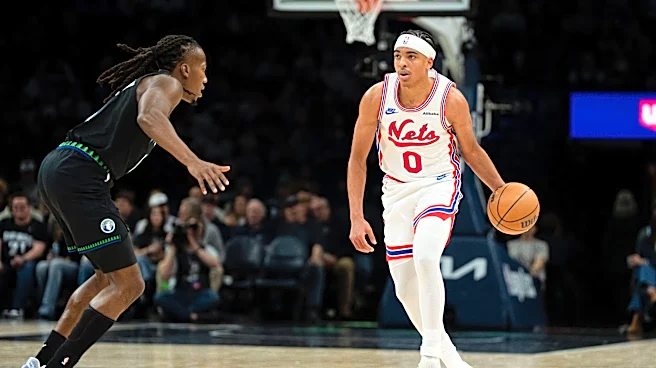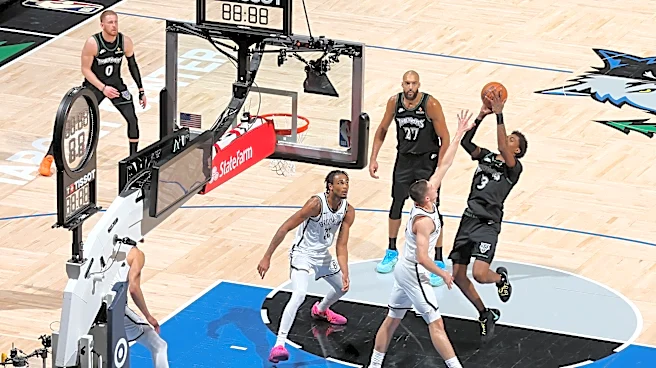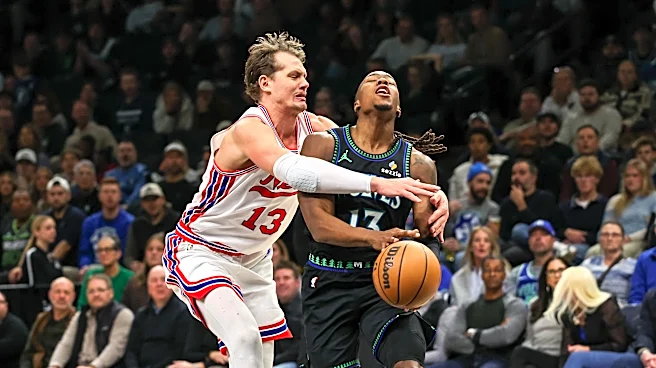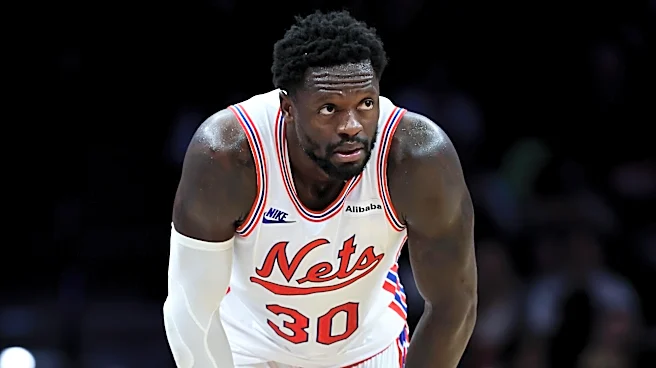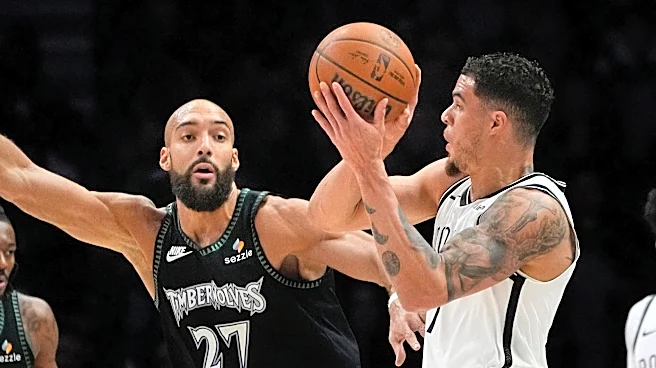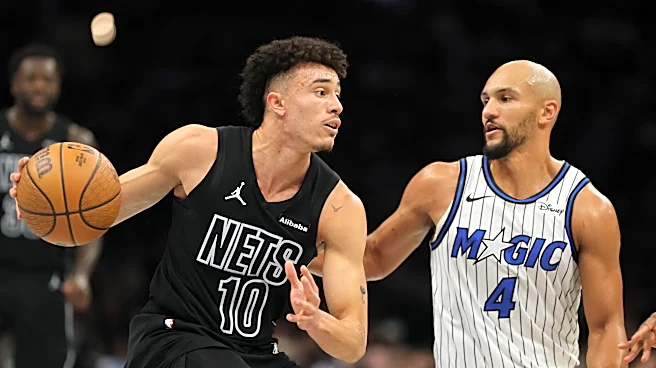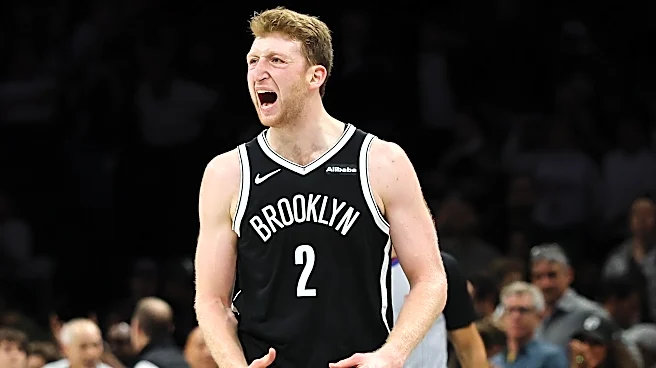

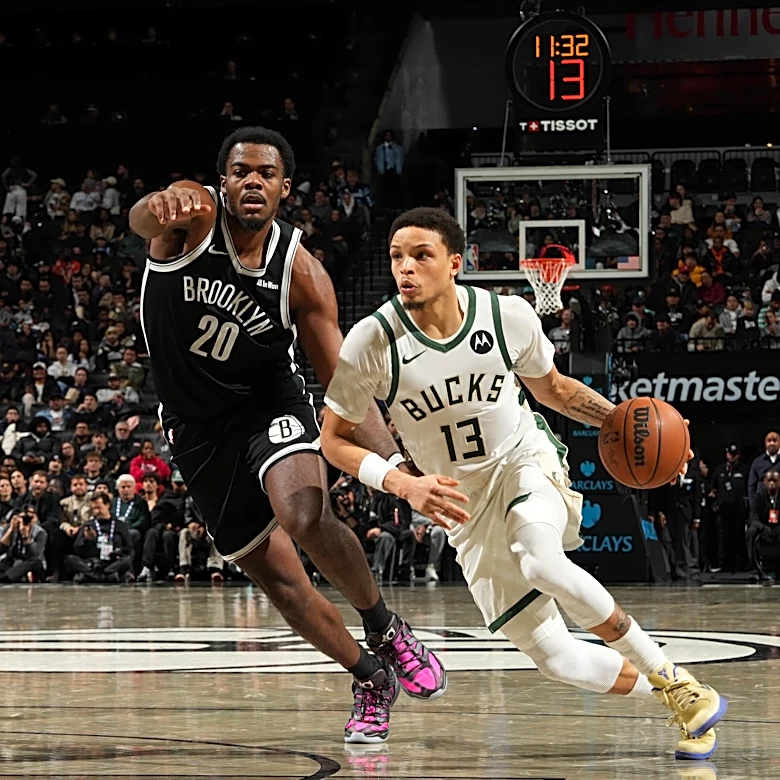

It’s pretty doom and gloom in NetsWorld right now, and that’s justified. Sitting at 3-13 after Monday night’s blowout against the Minnesota Timberwolves, the team has now suffered nine double-digit losses this season.
When a young, rebuilding team isn’t winning, it’s one thing, but getting completely outmatched consistently is another. That’s pretty much what’s been the case for Brooklyn, as nine of their 13 losses have come by 10+ points.
Interestingly, one of the biggest questions entering the season
surrounded Brooklyn’s frontcourt. It wasn’t clear how the rotation would take shape.
Day’Ron Sharpe entered the season as the team’s starting center following Nic Claxton’s departure, while Moe Wagner arrived in free agency. Wagner’s health was in question after he played just 66 games over the previous two seasons, including time missed due to a torn ACL. Danny Wolf was another question mark after an up-and-down rookie campaign.
So far, the frontcourt has produced more offense than expected. Brooklyn’s rim protection remains a work in progress, and its defense has struggled at every level. But offensively, two of the team’s biggest surprises have been Wagner and Wolf.
Offensively, two of Brooklyn’s biggest surprises have been Wagner and Wolf.
Wagner is picking up where he left off.
Wagner has been known for his offensive game since entering the league—most notably his success from beyond the arc and his consistency.
Although injuries have hindered him significantly over the past two years, Wagner is starting to pick up where he left off before the ACL injury forced him out of action for 98 games.
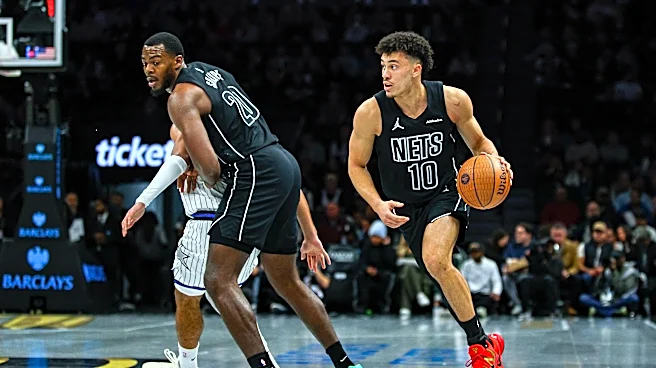
Through 16 games, Wagner owns a 70.7% effective field-goal percentage, ranking in the 98th percentile among bigs, per Cleaning the Glass. A large part of that production comes from his remarkable 62.5% shooting from three-point range. That percentage almost certainly won’t hold over an 82-game season, but it’s an encouraging start to his Brooklyn tenure.
What’s even more encouraging, though, is the success beyond just the 3-point line. For a big like Wagner, who isn’t necessarily touted for rim protection or stout defense, being a multi-faceted offensive contributor is crucial.
Overall, he’s returning to the offense that worked at the peak of his career in Orlando. Last season with the Magic, just 44% of his overall attempts came at the rim, while 25% came from the midrange. This year, those numbers have shifted to 60% and 19%, respectively. That’s much more in line with what we saw from Wagner during his two most efficient seasons (2023-24, 2024-25), with his effective FG percentage finishing north of 60% in both of those campaigns.
Wagner has also improved drastically at creating his own shot. Last season, 88% of his made baskets at the rim were assisted. Meanwhile, that has dropped to 61%, despite a 15-percentage-point increase in his shot usage around the basket.
Obviously, there’s only so much that Wagner could be expected to do. Signed to a two-year, $18.4 million contract this offseason, he was widely viewed as the Nets’ backup big behind Sharpe. So far, that has held. Sharpe has started all 17 of Brooklyn’s games, while averaging 24 minutes per game. Meanwhile, off the bench, Wagner has averaged 17.1 minutes a game.
Entering the season, one of the biggest concerns with the Nets’ roster was where points would come from off the bench. So far, their bench scoring hasn’t been too shabby, ranking 13th in bench points per game (38.7). More impressively, though, their bench ranks 11th in 3-point percentage (35.7%). Wagner is clearly a big reason behind that.
Having a big who can stretch the floor while also generating offense around the basket is a luxury.
Wolf is establishing his offensive identity
The bigger question mark entering the year is what the Nets really had in Wolf. Just like the four Flatbush 5 members behind Egor Dëmin, whose start to the year had been disappointing, the Michigan product had a lot to prove heading into the season.
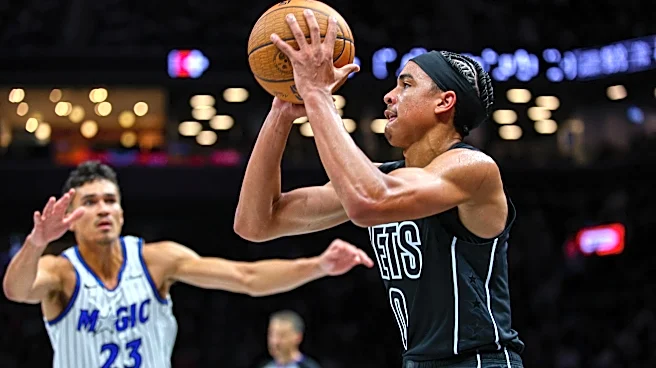
So far, though, that development has been encouraging. Just like Wagner, the 27th overall pick in last June’s draft has emerged as a threat from beyond the arc. After shooting just 32% from deep as a rookie, he is converting at 46.7% this season, ranking in the 95th percentile among bigs.
Worth noting, though, he only played four minutes in Wednesday’s win over the Milwaukee Bucks after exiting with left knee soreness.
There has also been an uptick in volume: 54% of his overall shot attempts have come from the 3-point range, up from 44% a season ago. His mark this year ranks in the 88th percentile among bigs. Beyond that, 35% of his overall attempts have come from non-corner 3s, which ranks in the 91st percentile.
Wolf’s output has also had a large impact on Brooklyn as a whole. Last season, the Nets scored 5.1 fewer points per 100 possessions with him on the floor than with him on the bench. This season, they’re scoring 5.4 more points per 100 possessions with him out there, ranking in the 83rd percentile among all players.
Additionally, the Nets’ effective field-goal percentage improves by 3.2 percentage points with him on the floor, while the offensive rebounding percentage also rises by 8.3 percentage points. The latter ranks in the 96th percentile among players who have logged a minute this season. For context, he has only played 244 minutes this season, but those numbers are still fascinating.
Even more interesting is how he’s been used. After opening the season outside of Jordi Fernández’s rotation, Wolf has worked his way into the lineup, but in an odd spot: as the Nets’ starting shooting guard. How many people had that on their bingo card entering the season?
In fact, six of his seven starts this season have come at the 2.
Against the Magic on Friday night, Fernández inserted Wolf into the starting five for Dëmin, and Wolf responded with a 20-point outing. In his second straight start, against the Minnesota Timberwolves on Monday, he finished with 11 points, four assists, and five rebounds on 4-of-7 shooting, including 3-of-5 from deep.
As our own Anthony Puccio noted earlier this month, Wolf played every second of his initial breakout performance against the Charlotte Hornets alongside either Sharpe or Wagner. That trend has held mostly true since then, letting him work away from the basket and avoid many traditional big responsibilities.
Is he truly a 5 in the NBA? There need to be more reps to make the case for or against it, but he doesn’t ideally fit as a shooting guard. At 6’11”, it’s just not a natural fit, and it is easy for him to get exposed guarding shifty playmaking guards at the top of the key. Even though he was a ball handler at Michigan, being a guard in college versus the NBA are two completely different responsibilities. Nonetheless, the versatility is highly encouraging.
Regardless of where Wolf ultimately settles in the long term, he and Wagner have given the Nets more offensively than anyone could have asked for before the season.