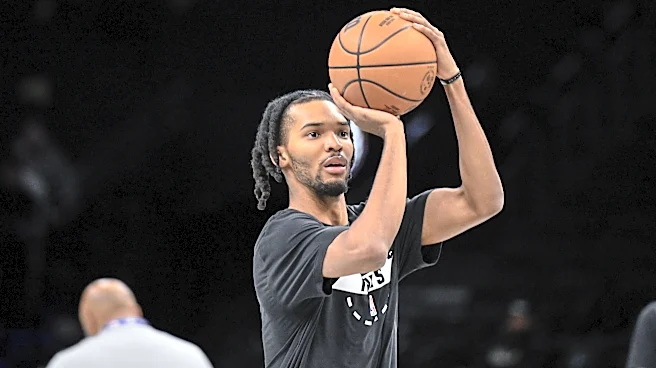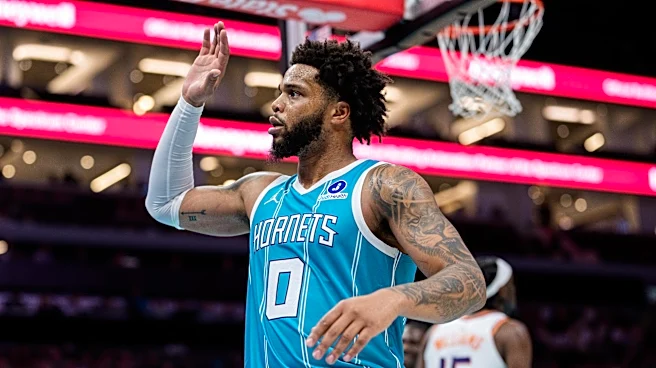




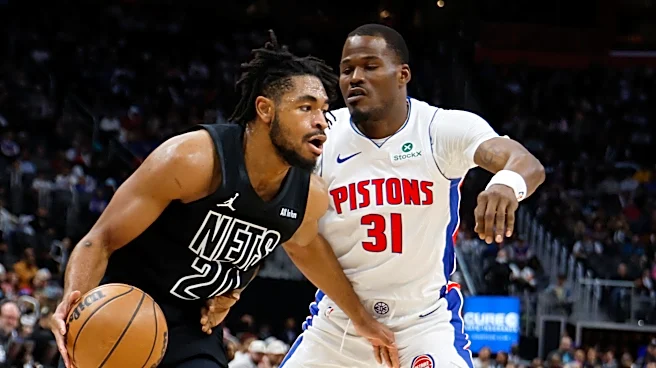
Where will the Suns’ journey with Miles Bridges lead? The controversial signing was the team’s most visible move of the offseason. As we start inching toward training camp at the end of this month, questions of #22’s integration and Phoenix’s future rank highly on this season’s storylines. He has a lot of talent, is theoretically in the peak period of his career, and perhaps a hunger to show what he can do with a fresh start on a deeper team. He presents risks, including on-court and off-court dynamics,
as well as the risk of future financial commitment.
John Voita wrote an article earlier this week about challenges Jordan Ott faces in year two.
Let’s add integrating Bridges as a significant priority as well. Will his use affect the shot mix of teammates? Can that be an advantage if it means more fast break slams and cutting ability in the half-court? Will Ott find the right combinations and motivations to make this happen? It’s also important that Ott and team leaders foster an environment where be buys in to team staples such as defensive hustle and crashing the offensive glass.
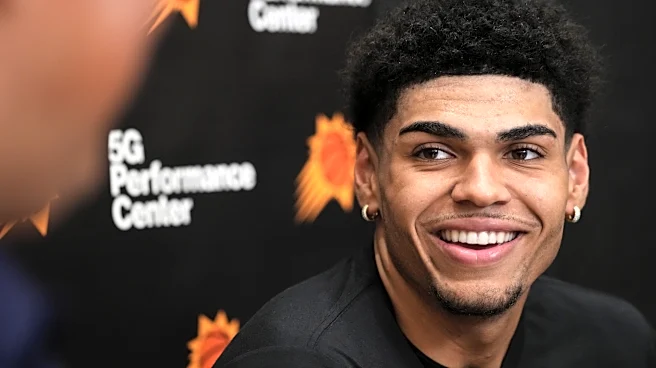
During his introductory press conference, Miles stated, “He (Ott) focuses on defense and rebounding, and that’s something where I think I could take the next step in, and that’s something that I’ve committed to taking the next step in.” Will we see this with our eyes and on the stat sheet?
Another aspect of the integration involves who he is playing with and at what position. Much of Phoenix’s youth are at the four and five positions. Does Ott find a way to involve Bridges more at the three position? Basketball Reference estimates the % of minutes spent in each role from point guard (one) to center (five). Last season,Bridges saw declines in various metrics and was estimated to play 95% of his minutes at the four. In the 2023-24 season, while playing 61% of his minutes at the three, he put up a career-best 21.0 points and a near career-best 7.3 rebounds per game. Effective minutes at the three give the Suns more size and enable more development time for the likes of Rasheer Fleming and Ryan Dunn, with some minutes for Oso Ighodaro at the four, and more opportunity for Khaman Maluach in the Center rotation.
Off the court, by all accounts, he is a hooper and gets along well with players. Personal character is the dimension under a spotlight. I asked ChatGPT to provide examples of NBA players who had off-court violence transgressions that went on to be recognized with good character AND strong on-court performance. The top two names generated were Zach Randolph and the artist formerly known as Ron Artest. Randolph went on to two All-Star selections and multiple NBA Cares recognitions for acts such as paying off utility bills for thousands of lower-income families. Artest went on to become a key piece of LA’s 2010 championship, hitting the winning shot in Game 7, and then earning the J. Walter Kennedy Citizenship Award for his advocacy in mental health awareness. Both of those success stories started with substantial work with therapists. Can Miles add his name to that list?
If the chemistry and character questions are answered with a checkmark, and the on-court performance comes, where will that lead? According to John Gambadoro, aka @Gambo987, Phoenix was viewing him as an extension at the time of his signing:
I am not sure this will be the best move, unless we really see something special on the court this year. DARKO, a respected analytics site, has a tool that predicts the probability an NBA player will be on any roster for each upcoming season of their career. This suggests that by his age 32 season, there is only a 30% chance he’ll still be in the league. We do not want future cap space wasted; been down that road before (and still on it).
In the short term, as fans, let’s enjoy the excitement of seeing how the new piece fits and what it can do positively for other players. Then we’ll see about big contracts and redemption stories, with a very cautious eye.