





Sunderland are a proper club.
It’s a phrase football supporters hear all the time. Sheffield Wednesday are a proper club. Nottingham Forest are a proper club. Aston Villa are a proper club. The term is rolled out so frequently that it has almost become meaningless – a catch-all description for clubs that somehow feel bigger than their league position or trophy haul would suggest.
Yet despite its regular use, nobody ever seems to stop and explain what a “proper club” actually is.
Sunderland certainly
fit the description in the eyes of many. This is a club that has gone decades without lifting a major trophy, endured relegations, ownership turmoil and a prolonged stint in League One, yet the label has stubbornly remained attached. Whether the club are fighting for promotion, battling relegation or preparing for European football, Sunderland continue to be spoken about in the same way.
More interestingly, it isn’t just supporters saying it. Roy Keane famously described Sunderland as a “proper club”, whilst figures such as Sam Allardyce and Jermain Defoe have repeatedly spoken about the unique connection between the club, the city and its supporters.
So, what exactly do they mean? What is it that makes Sunderland a “proper club”, and why does that description seem to survive no matter what division the team happens to be playing in?
The answer probably starts with the city itself.

Sunderland is not a club that simply plays in a city. It is woven into the fabric of it. For generations, shipyards and collieries shaped the identity of the people who lived here. Hard work, resilience and community were not just values; they were necessities. The football club became an extension of those things, a source of pride that represented Wearside far beyond its boundaries.
Supporters are rarely more than one generation removed from someone who stood on the Roker End, travelled the country in the old Second Division or passed down stories of cup finals and promotion campaigns. Supporting Sunderland often feels less like a choice and more like an inheritance. Not always the good kind, either – more a mountain of debt and a punch in the face than a life-changing windfall.
Perhaps that is why the club has remained such an important part of life on Wearside during difficult times. Through economic struggles, relegations and countless disappointments on the pitch, Sunderland has continued to provide an escape, a release and a sense of belonging. Football cannot solve life’s problems, but for many people it offers ninety minutes where they can be shared with thousands of others.
I remember clearly the sense of warmth and belonging I felt returning to the Stadium of Light for the first time after the Covid-19 pandemic. It’s difficult to describe, but it’s a powerful feeling.
Then there is the support itself.
For all the jokes directed at Sunderland over the years, one thing has been impossible to ignore – the crowd never left.
Relegation from the Premier League could have emptied seats. Consecutive seasons of decline could have eroded interest. Four years in League One should have seen apathy set in.
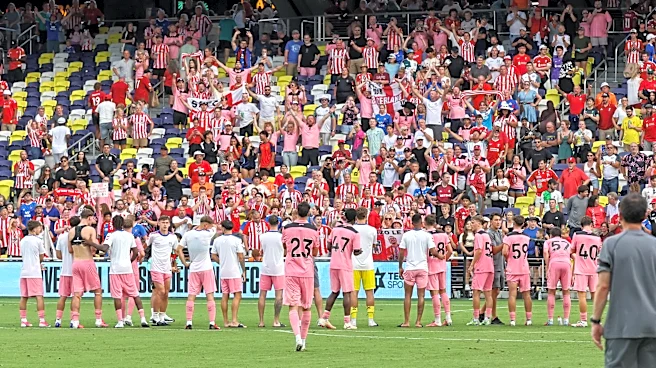
To go from Niall Quinn and magic carpets to wondering if the club were selling the carpet tested the resolve of even the most ardent supporters. But instead, supporters continued to fill the Stadium of Light, dominate away ends and descend on Wembley in numbers that frankly had no business being attached to a League One football club.
Whether it was taking over London for a Cup Final, packing out away allocations at places that many never imagined Sunderland would visit, or simply turning up week after week through some of the darkest periods in the club’s history, the support endured.
I’ll never forget the wall of noise that greeted me as I exited the Tube near Covent Garden. Londoners didn’t know whether to stare or run.
That is because Sunderland supporters often feel like stewards rather than customers.
We do not simply consume the football club. We protect it, preserve it and carry it forward until better days arrive. Every generation inherits Sunderland and passes it on to the next. The relationship is built as much on shared suffering as shared success.
You tend to bond when watching Patrick Bauer score a last-minute winner to condemn us to another season in League One, or seeing so many defenders sidelined that the club’s medical staff deserved play-off medals of their own.
Which brings us to an interesting question.
For years, Sunderland seemed to be described as a proper club largely because things were going wrong.
Whenever a big club struggles, the phrase inevitably appears. Sheffield Wednesday languishing in the lower leagues? Proper club – they don’t deserve this. Nottingham Forest before their revival? Proper club – should be higher. Sunderland in League One? Proper club – enormous support, deserves better.

The suggestion is often that a proper club is one that has fallen on hard times.
But what happens when things start going right?
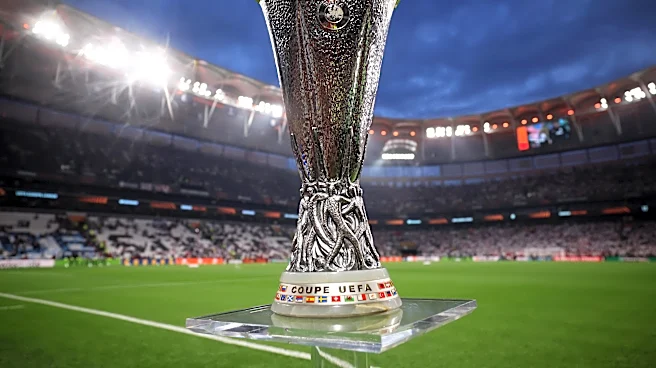
In recent years Sunderland have returned to the Premier League. They followed that up with a seventh-place finish and qualification for European competition. Suddenly, conversations have shifted from survival and recovery to ambition and progression. It’s giving less Papa John’s and more Mackem in Milan these days, but the club itself feels remarkably similar.
The Stadium of Light remains packed with expectation. Away ends remain stacked. Victories still transform the mood of a city and defeats still dominate conversations for days afterwards. The emotional connection between club and community remains exactly the same.
If anything, success has strengthened the argument.
Promotion, a top-seven finish and European qualification have not changed Sunderland’s identity. They have simply given Sunderland a bigger stage on which to be Sunderland.
Perhaps that is the real meaning behind the phrase.
A proper club is not defined by trophies. Nor is it defined by suffering.
It is defined by significance.
By a city that cares. By generations of supporters who refuse to drift away. By memories, traditions and connections that survive regardless of results.
Sunderland were a proper club when they were fighting their way out of League One.
We are a proper club now we are preparing for European football.
The division has changed. The status has changed.
Everything else has stayed exactly the same.
By the rivers where we used to build the boats, there is still a football club making us proud.