


It happened again.
No, not the fact the Portland Trail Blazers blew a double-digit second-half lead for the second time in less than 48 hours this weekend in the NBA Playoffs against the San Antonio Spurs. I’m talking about an issue that has plagued this team game after game this season like Groundhog Day. An issue that may be the deep-seeded cause behind this team’s bad habit of blowing large leads:
The Trail Blazers went ice-cold from beyond the 3-point arc.
A lot has been made about the more physical
team winning each game in this series. But the difference in 3-point shooting between the heavily favored Spurs and underdog Blazers might be the biggest reason why the Blazers find themselves down 3-1 heading back to San Antonio for Game 5.
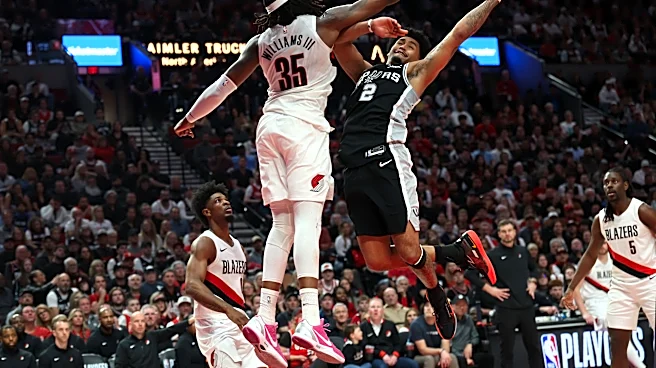
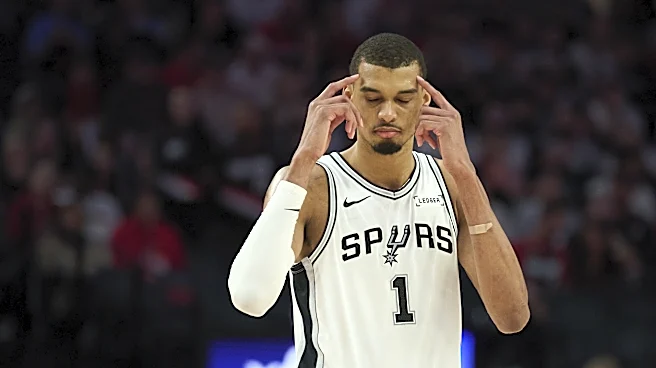
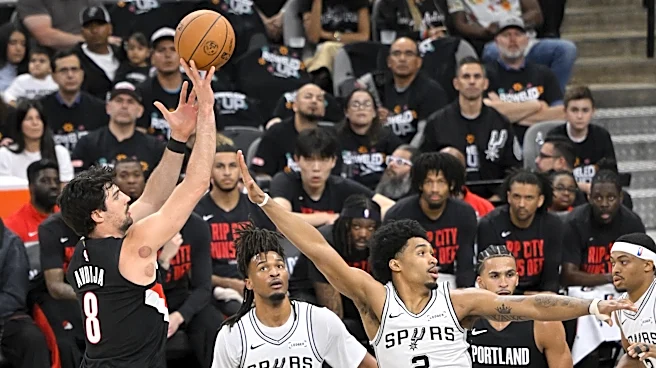
No matter how much physicality, defense and heart the Blazers show. No matter the All-Star-like play from Deni Avdija, the ferocity of Robert Williams III or the veteran steadiness of Jrue Holiday is. No matter how many buttons Blazers acting head coach Tiago Splitter mashes on the sideline. It’ll be tough for the Blazers to upset the Spurs and MVP finalist Victor Wembanyama when Portland shoots 32.3% (10-31) from deep and San Antonio shoots 42.4% (14-33).
“It doesn’t matter if you’re physical or not, you’ve gotta make shots, right?” Splitter said. “In the first half, I think we were 7 for 16 [on 3s]. And then the second half, we were 3 for 15. So that’s a big change there. You’ve got to make shots to win basketball games, especially when they have [Wembanyama] down at the rim. … [The 3-point shooting] is a big factor.”
The 3-point shot is arguably the biggest weapon in the modern NBA. It can hit the opposition in bunches to build up backbreaking runs. It can also provide a stabilizer when momentum is tilting hard the other way. One of the loudest crowd pops from the Moda Center on Sunday came when Jerami Grant and Toumani Camara cashed back-to-back 3s in the second quarter. The sequence was part of a big Blazers run that put them up double-digits for the first time and helped them roll into the second half with a 58-41 lead.
In the second half, the Spurs stormed back and seized control behind eight 3-point makes and the interior dominance of Wembanyama. Meanwhile, the Blazers shot groan-inducing miss after groan-inducing miss as the air got sucked out of the arena. Then the turnovers poured in. The Blazers couldn’t counter with their own run. They couldn’t even stop the bleeding.
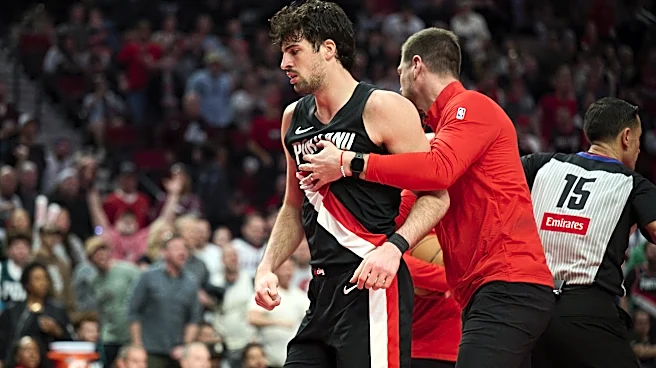
“We knew they were going to come out and be more aggressive,” Avdija said. “We expected it. I just think coming out the half, we didn’t make shots, and they went on a run. Suddenly, you look up at the scoreboard, and it’s a closer game.”
“In the second half, I thought we mentally kind of broke down,” Splitter added. “We couldn’t get over the fact that we were up.”
Blazers guard Scoot Henderson crashed back to earth in Game 4, going 0-7 from the floor and 0-3 from deep for zero points. Center Donovan Clingan continued to struggle, shooting 2-10 from the floor and 1-6 on 3s. Forward Toumani Camara went 2-6 from deep, Jerami Grant 1-3. Shaedon Sharpe shot a solid 1-2 from deep, but his defense didn’t earn him extended minutes from Splitter (plus, Sharpe shot a below-average 33.7% on 3s for the season, so it’s not like Portland left its best shooter on the bench).
Avdija delivered with 26 points on decent efficiency and shot 2-3 from 3, but his superpower is driving to the rack, not volume 3-point shooting. And Holiday provided a few desperately needed buckets in the second half on his way to a 3-6 mark from long distance, but it was nowhere near enough.
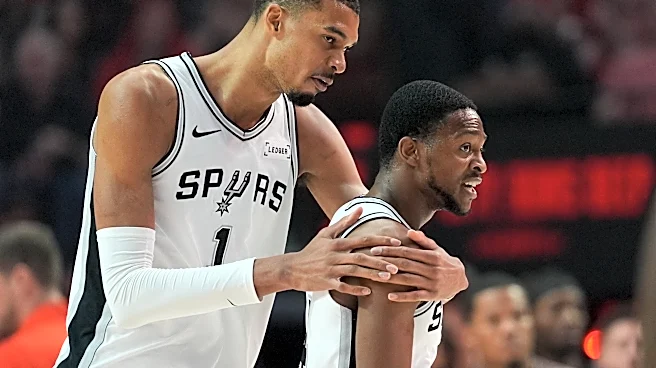
The Blazers couldn’t cut it from the outside. They were ensnared by Wembanyama’s web when they attacked inside. Add it all up: San Antonio dominated 73-35 over the final two quarters.
“They’re just clogging the paint. Nothing easy,” Splitter said. “Deni couldn’t get in there. Nobody could get to the paint easy, and you gotta make shots at the end of the day. We gotta put our players in positions to make shots.”
“I think it’s a little bit of both,” Grant added about whether Portland’s poor shooting has been the result of missed open looks or the pressure of the Spurs’ No. 3 defense. “We’re not shooting it well, but also I think that’s their game plan. They’re running everybody off the line, not really helping off shooters. They’re trying to force you into the paint where they can contest shots at the rim.”
In all three of Portland’s losses in this series, the Spurs have outshot them from beyond the arc. In Game 1, the Spurs shot 45% while Portland shot 26%. In Game 3, it was 48% versus 37%. Even in Game 2 when the Blazers shot better than San Antonio and won, they only reached 34%.
This should come as no surprise. The Blazers are the third-worst 3-point shooting team in the NBA this season. They are prone to these painful, extended cold spells where they are at the mercy of their opponent because they can’t manufacture enough points. Even in Portland’s inspiring victories in Game 2 and the Play-In Tournament, they had to overcome scoring droughts that almost doomed them. Looking even bigger-picture, this has been a consistent weakness during the past three years of the rebuild as the roster-building has primarily focused on acquiring defensive-oriented personnel and athleticism while hoping to develop or piece together enough shooting. Sometimes, the Blazers do collectively find their shooting stroke for 48 minutes, and it’s almost euphoric. The combination of size, length, driving and shooting is hard to stop for any team. That hasn’t happened yet in this series.
Looking ahead to Game 5 in San Antonio, Avdija said he doesn’t think they have to make any big adjustments.
“I don’t think we need to change so much,” Avdija said. “I think we had a great lead two games in a row. We just gotta be better at sustaining it. … I think when we’re physical and we’re playing our game, we’re great. But we can’t let them punch us back.”
He’s right. The most impactful adjustment Portland can make at this point isn’t schematic. It’s more simple than that:
Shoot better.