



Part 2: Any minute now
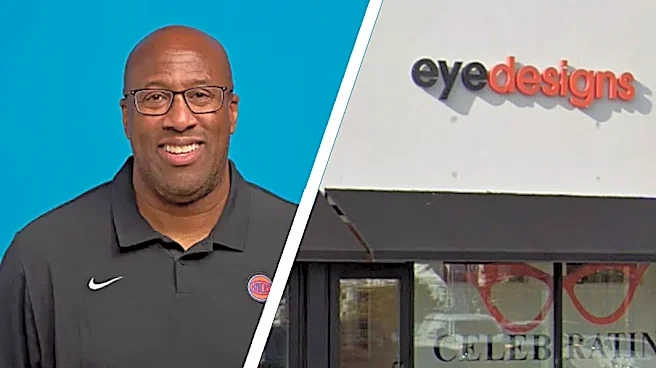
Outside of Eye Designs of Westchester, I squint like Clint Eastwood through the sun at the VW Beetle. Unlike Clint, I’m not cool. I’ve got a bladder full of Gatorade and nerves. Never have I interviewed a sports professional in person. A line of fanboy questions waits in my head as my trembling thumb opens my iPhone’s Voice Memos app, ready to record my exchange with Mike Brown, skipper of the World Champion New York Knicks.
To my disappointment, and admittedly relief, the driver
emerging from the car is not Coach Brown. Unless his disguise is a blonde wig and a stuffed blouse. The woman smiles as she enters Eye Designs and nods at my shirt, saying, “Yeah, Knicks!”
Yeah, whatever. Everybody is a fan these days. Not long ago, that wasn’t the case. The last of the worst was the 2019-20 season, when the best the team could attract was not Kyrie Irving or Kevin Durant but players like Julius Randle, Bobby Portis, and Reggie Bullock. After two decades of mediocrity—and worse—fans were more interested in watching the gyrations of the Knicks City Dancers than the ball-handling of Elfrid Payton.

In the 2019 draft, team president Steve Mills chose RJ Barrett with the third pick, missing out on Zion Williamson and Ja Morant. (In retrospect, two bullets dodged.) Sophomore coach David Fizdale went 4-18 before receiving the ax, and interim coach Mike “Really Likable” Miller finished out the season. The team’s 21-45 record put them in 12th place.
Owner James Dolan dropped Mills on February 4, 2020, and hired his replacement, Leon Rose (of CAA), on March 2, 2020. That summer, Rose rescued Tom Thibodeau from the coaching pile and drafted Obi Toppin and Immanuel Quickley. We couldn’t yet see the vision but were thrilled when Thibs led his ragtag roster to a postseason appearance and won Coach of the Year. For the first time in what felt like forever, the Knicks’ leadership seemed competent.

In the next draft, New York selected Quentin Grimes, Miles McBride, and Jericho Sims. Rose rolled the dice on Kemba Walker and found his knees were toast. The roster became a mess, as evidenced by the 23 names listed at Basketball-Reference.com. It’s no surprise they finished 37-45, and the ice beneath Thibs was thinning faster than his hair.
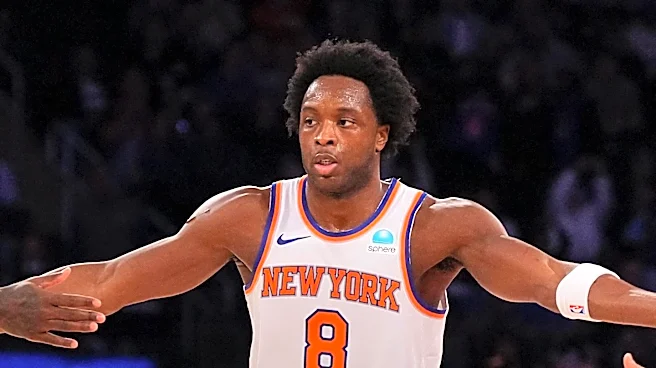
Then the vision came into focus. Rose signed Jalen Brunson and Isaiah Hartenstein in the offseason and flipped Cam Reddish for Josh Hart at the in-season deadline. With improved talent at his disposal (especially with the additions of Karl-Anthony Towns, OG Anunoby, and Mikal Bridges), Thibs marched his troops into three straight playoff appearances. The mood of the fanbase went from We Here to We Believe.
The run reached the 2025 Eastern Conference Finals, when the Indiana Pacers stole Game One and then the series, 4-2. Fans were mixed after losing to the lesser team: should Thibs keep his parking spot after finally bringing the team back to the ECF, or were his predictable tendencies the last obstacle to reaching the Finals?
Leon Rose settled on the latter. Three days after the team’s last loss, Thibs was canned. The search for a new coach commenced.
Veteran coach Mike Brown was not their first interview. They requested access to several sitting head coaches (including Ime Udoka, Jason Kidd, and Billy Donovan) but were denied. For a brief moment, the ghosts of LOLKnicks rattled their chains. Did Leon and Wes really fire Thibs without a successor in place? What an unforced boner!
The brass pivoted toward available options like Taylor Jenkins (formerly of Memphis) and Brown, who had interviewed multiple times and had strong ties within the organization, including with executive William Wesley. These options seemed more like lateral moves from Thibs, though. Some fans began to wonder if there was any point in the change after all.
Following many meetings with the front office and Dolan, the Knicks hired Brown on July 7, 2025.

It wasn’t a bad gig to walk into. Brown inherited a roster that Thibodeau had helped transform into a contender, built around some of the NBA’s best talent. Mike’s challenge was not to build a culture from scratch but to elevate an already successful team.
Back in Scarsdale, noon has passed and this face needs food. I walk over to Sal’s Market and order a meatball sub. The guy behind the counter, presumably Sal, points his pen at my chest.
“Your shirt has Mike Brown on it, and meatball subs are what he always orders.”
Ahhh! I knew it! I knew it!! I always knew that if Mike and I ever met, we would find ourselves totally simpatico.
“What a great coach,” Sal continues, now scratching behind his ear with the pen. “Did you know that one of his first priorities as coach of the Knicks was relationship-building?”
Yes, I had heard that. Sal goes on: “Mike says that leadership must eventually come from within the locker room.” He casts a quick glance at his staff members working behind him. “I run a tight ship here, just like Mike. Everybody in lockstep.”
I smile and back away from the counter, hoping to indicate that the conversation is over and Sal should get cracking on my sangweech. Taking a Diet Coke to the front table, which has a view of the Eye Designs parking lot, I wait and reflect on Mike’s coaching style.

Brown sought out conversations with Brunson and the team’s leaders, laying a foundation of trust before implementing changes. He wanted to modernize the offense by increasing ball movement, player movement, and three-point volume while preserving the physical identity established under Thibs.
He also adjusted the way the Knicks approached the regular season. Unlike his predecessor, who demanded maximum effort for 48 minutes of every game, Brown emphasized preserving players for the postseason. “The biggest thing is trying to make sure you watch everybody’s minutes instead of trying to chase games,” Brown said. “There might be some games where maybe you throw in the towel early . . . we don’t want anybody worn out by the end.”
More important than the tactical changes was Brown’s leadership style. He established an open-door culture in which players, assistants, executives, and support staff all had a voice. Brown regularly sought input from players on schemes, rotations, and play calls. Reportedly, he shared rotation plans with Leon Rose before games, thereby keeping the leadership aligned from the top down.
He empowered assistants to diagram plays during timeouts. When his staff unanimously disagreed with him, Brown often reconsidered his own position rather than relying solely on authority. One of his ideas, to relegate Josh Hart to the bench unit, proved detrimental to winning, and when his staff challenged it, Brown acquiesced.

Sal brings my sub to me, and I dive in. I’m surprised by how hungry waiting in the sun has made me. For a few minutes, I forget about my assignment and focus on rapidly putting this delicious food into my belly. There’s so much red sauce on my face that I look like Diane Ladd in the lipstick scene from Wild at Heart. I don’t care that I’m a horror show, and neither would Mike, because his defining trait is humility.
Brown openly admitted mistakes, publicly held himself accountable, and encouraged disagreement. He believes that people commit more fully when they help shape the process. Mike restored elements of Thibodeau’s defensive system when players and coaches believed it would help. The savage Mikal Bridges, who reportedly was not especially disappointed by Thibodeau’s ouster, noted that Brown willingly discarded ideas that did not fit the roster, and Josh Hart praised Brown’s openness to player-led adjustments during games. The club won the In-Season NBA Cup tournament and finished the regular season with a 53-29 record, their best in 13 years.
Flexibility became critical during the 2026 playoffs. After falling behind 1-2 to the underclassed Atlanta Hawks, Mike remained calm despite criticism. He reimagined the offense around Karl-Anthony Towns’ passing ability, moved Towns into more of a facilitating role, redistributed playmaking responsibilities, and made key defensive matchup adjustments. The Knicks responded by going on a historic 13-1 run to win their first championship in 53 years.
Brown’s confidence never wavered, even when the opponent was the franchise where he had won his first championship as an assistant. Before facing San Antonio in the Finals, Brown joked, “They definitely want to beat me, and I want to kick their ass. I love them, and you can always love them before and after.”
By defeating the Spurs, Brown became only the second coach in Knicks history, alongside Red Holzman, to lead the franchise to an NBA championship. Not bad company.

In the immediate aftermath of the championship, Brown laughed when asked how he felt. “I am so tired,” he said. “I mean, I’m gassed. You know, this stuff is harder than what you think.”
No kidding, Mike. Covering the season for Posting & Toasting was a bear, too—but to finally be able to call our Knicks World Champions was worth it. For delivering the title, Mike Brown deserves to be adored by the fanbase forever. I’m feeling enthusiastic about telling him as much when we meet, nerves be damned.
With my meatball sub conquered, I dispose of my trash, wave goodbye to Sal, and head over to Eye Designs. To my alarm, I see a car—a red Mini Cooper!—turning out of the parking lot and into traffic. Frantically, I charge into Eye Designs.
“You again,” groans the receptionist.
“Did I just miss–? Was that–?” I can’t get out the words and can only point at Mike Brown’s face on my t-shirt. The woman gives me a cold smirk and merely shrugs.
In a stunned stupor, I trudge outside. The sun looks angry through the trees. I feel dizzy and dumbfounded on the sidewalk. After a moment, I consider what Mike would tell me right now. The wise sensei would say: Every experience teaches you something. He would ask: What are you gonna do next?
For Mike Brown, the championship was about more than the final outcome. It represented the culmination of nearly three decades of growth, setbacks, reinvention, and perseverance. He had coached alongside or worked with Tim Duncan, David Robinson, Reggie Miller, Shaquille O’Neal, Kobe Bryant, Pau Gasol, LeBron James, Kyrie Irving, Steph Curry, Klay Thompson, Draymond Green, Kevin Durant, Jalen Brunson, and Karl-Anthony Towns. All Hall-of-Famers in my book, and all different personalities, from dawgs to divas. He had won two Coach of the Year awards, endured multiple firings, reinvented his philosophy, and adapted to every stage of the modern NBA. Mike is humble. Mike evolves. Indeed, this is a Mike we should all be like.
What I’m doing next is plucking up my spirits, heading to my car, and driving back to Binghamton. The lesson of today’s adventure has yet to reveal itself, but maybe I can ask Mike about it when he returns for his next six-month checkup.
Go Knicks.