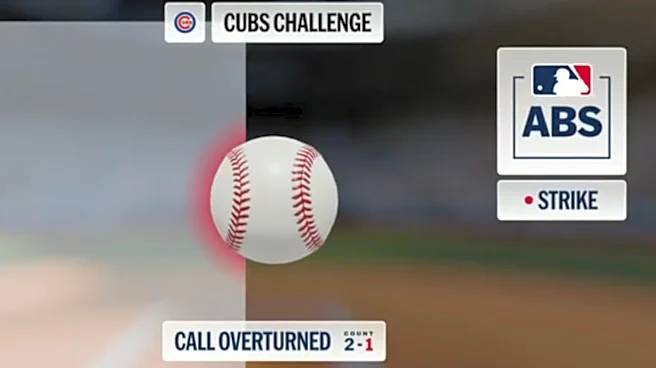


One full season of ABS challenges by batters, catchers and pitchers is in the books, so I thought it would be interesting to have a look at the results. Of course, the system continues through the postseason — and we already have had a postseason game end on an ABS challenge! — but we have quite a bit of data after one season.
There were 714,483 pitches made during the 2026 regular season. Of those, 2,172 were thrown by position players (not including Shohei Ohtani, who’s considered a pitcher for
the sake of this argument). By rule, ABS challenges cannot be made on pitches thrown by position players, so that reduces the challengeable total to 712,311. Of those, 10,557 pitches were challenged.
Thus, about 1.5 percent of all challengeable pitches were actually challenged. Of those, 5,685, or 53.9 percent, were overturned. That’s about eight-tenths of one percent of all challengeable pitches.
So the general lesson learned here is: Umpires are pretty good at making ball-and-strike calls. Of course, there were some challengeable pitches not challenged for a number of reasons:
- In general, players were discouraged from challenging in early innings
- Some potentially challengeable pitches were let go because they were deemed situationally unimportant by players who could have challenged them, and
- Teams were out of challenges on certain pitches they could have challenged
In general, then, I think the system worked well and as the season went on, players did appear to get better at figuring out situational challenging and getting them right.
In addition, though pitchers are allowed to challenge pitches, early in the season it became clear that they were not very good at it and many teams discouraged pitchers from challenging or even flat out told them not to do it. Of the 10,557 challenges, only 182 (1.7 percent) were made by pitchers and of those, only 72 were overturned (39.6 percent of the 182). Hitters made 4,766 challenges and were correct 2,328 times, or 48.8 percent, and catchers turned out to be best at this, making 5,609 challenges and getting 3,285 overturned, or 58.6 percent.
Now let’s take a look at how the Cubs did.
The Cubs ranked 17th among MLB teams with 338 total challenges (the Twins were first with 450). Of the 338, 162 were made by Cubs hitters and those were 51.9 percent correct. Cubs catchers made 174 challenges and were correct 66.9 percent of the time, which was third-best of any team’s catchers (behind the Phillies at 72.7 percent and Reds at 68 percent). Just two Cubs pitchers challenged pitches this year and only one of those was correct.
Matthew Boyd was responsible for that incorrect pitcher challenge and it could have had an effect on where the Cubs finished this year — no kidding. Here’s that challenge, made April 27 against the Padres [VIDEO].
There’s an early season example of 1) why pitchers shouldn’t challenge and 2) why you shouldn’t challenge in the first inning. More on what happened there from Jordan Bastian at MLB.com:
The first domino was the errant first-inning challenge by Boyd. The pitch in question was a 2-1 heater that was shown to be 0.7 inches off the edge of the zone, per the Automated Ball-Strike (ABS) Challenge System. Boyd then missed with another fastball to issue a leadoff walk to [Ramon] Laureano.
“You never know how it’s going to shake out,” Boyd said. “But it’s putting our hitters and our team in a hole when you do something like that in that situation, so early in the game. It was not a smart move on my part. I regretted it. I’ll do my best to not make that mistake again.”
Two batters later, Boyd surrendered a run-scoring single to Jackson Merrill. The lefty later walked Miguel Andujar before giving up a two-run double to Ty France that capped off a three-run push for the Padres in that opening frame.
So who knows? Maybe that mistake rattled Boyd. The Cubs lost that game 9-7 and if they had won it, the Wild Card Series would have been at Wrigley Field. Maybe that wouldn’t have made a difference, but who knows?
The only other Cubs pitcher to challenge a pitch all year was Edward Cabrera. Here’s that challenge, April 11 vs. the Pirates [VIDEO].
As you can see, Oneil Cruz stole second and took third on an error. The pitch was overturned to make the count 2-2 instead of 3-1, but Cabrera walked Brandon Lowe anyway. The Pirates didn’t score in the inning and the Cubs eventually lost the game 4-3 in 11 innings.
After the Boyd mishap, it seems clear the Cubs told their pitchers to leave defensive challenges to their catchers.
And Cubs catchers were very, very good at ABS challenges.
Carson Kelly made 93 challenges and was correct on 68.8 percent of them, quite a bit better than the 58.6 percent league average for catchers. Kelly’s correct percentage was third-best among all catchers who made more than 50 challenges, behind J.T. Realmuto (86 challenges, 81.4 percent) and Salvador Perez (65 challenges, 70.8 percent).
Miguel Amaya made 76 challenges and was correct on 64.5 percent, which ranked ninth among catchers with more than 50 challenges.
The rest of the Cubs catcher challenges were made, before he was traded to the Angels, by Moisés Ballesteros, who made five and got two correct. Ballesteros caught quite a bit with the Angels and made 32 challenges there, getting 20 correct (62.5 percent).
Cubs hitters ranked eighth among all MLB teams in overturn percentage, 51.2 percent. If that doesn’t sound like much, the Diamondbacks were first at 56.9 percent and the Mariners and Braves tied for last at 41.7 percent. It seems clear that catchers are far better than hitters at ABS challenges.
Alex Bregman made the most ABS challenges of any Cubs hitter, 29, and he was just above the team average at 51.7 percent. The best Cubs hitter (15 challenges or more) was Seiya Suzuki, who made 17 and got 12 correct (70.6 percent). The worst (again, 15 challenges or more) was Michael Busch, who made 20 and got only seven correct (35 percent).
Overall, this system has to be regarded as a success. It’s corrected some of the most egregiously bad ball-and-strike calls, and as players got better at it, even some pitches that were closer calls were overturned. I know some here would like MLB to go to full ABS, but as I wrote here earlier this year, MLB likes the current system for a number of reasons. So do I, as it gets fans involved at the ballparks, cheering when their team is successful in a challenge. I like that. The only thing I might change is to give teams a third challenge. That might open things up to have some more challenges made in the early innings, although per this chart, there seems to be a fairly even balance on challenges made per inning.
All the data in this article is from baseball-reference.com, though you can also find detailed ABS data at Baseball Savant.