





Now that the 2026 NFL Draft is done, it’s time for some film rooms on the Philadelphia Eagles’ rookie class. Over the coming weeks, I’ll be publishing individual film breakdowns on the Eagles’ 2026 draft class here at Bleeding Green Nation. My pre-draft rankings and position previews are still up if you want to cross-reference. A quick note on the film: I can’t share All-22 footage here without risking content strikes, so I’ll use clips from other accounts below. However, I’ll have full All-22 breakdowns available
on my Patreon, which you can check out and support if you want to see full games of All-22. Let’s go!
PREVIOUSLY IN THIS SERIES: Makai Lemon | Eli Stowers | Markel Bell | Cole Payton | Micah Morris
Most of us thought that heading into the draft, the Eagles needed a starting-caliber safety. Many expected one earlier in this draft. Instead, the Eagles waited until pick No. 244 to take their first safety of the draft. I feel a little bad for Cole Wisniewski because of that, because he has some expectations that late-round picks don’t always have.
Cole Wisniewski was an NFL Combine snub and was not invited to Indianapolis despite production and a profile that warranted a closer look, which I believe suppressed his draft stock unfairly and pushed him into Day 3 territory. I’m not saying he’s going to start and play well, because he’s a 7th-round pick, but I do think he fits a very specific mould that the Eagles have had success with in recent years. So, I do think he’s an interesting pick.
Strengths
Run Defense and Tackling
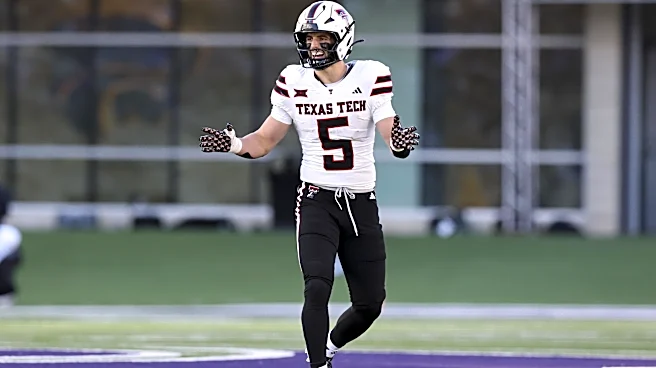
Wisniewski is a decisive downhill player who takes efficient pursuit angles, sheds blocks from tight ends with his size and strength, and almost never misses in the open field. He is a big, physical, highly competitive, and aggressive football player with outstanding size and length at 6’3″ and 219 pounds. If you like a safety that can come downhill in run support and hit, this is your guy. His tackling mechanics are sound and physical, and they stand out on film. He squares up and wraps through the tackle rather than relying on arm tackles that bigger ball carriers break. For a team building a defense that asks its safeties to contribute actively in run support from depth, Wisniewski does that part of the job well right now. He is excellent coming downhill.
He doesn’t have elite speed, but his timing of when to come downhill is really good. This is something that both Reed Blankenship and Marcus Epps are good at. That anticipation allows a player without elite closing speed to remain effective as a downhill safety.
Processing and Football Intelligence
Wisniewski was a three-year starting quarterback in high school, and I always love it when a player has a background as a quarterback. Interestingly enough, the Eagles have made a habit of adding former quarterbacks (Eli Stowers was one!) this year. Wisniewski reads route concepts well, diagnoses play-action and misdirection quickly, and identifies blocking assignments with the kind of snap-to-snap recognition that you usually associate with much more experienced defenders. He looks like he does his homework off the field.
In 2023, he had eight interceptions and 239 interception return yards. In every other year, he has had zero. Which is quite funny. However, I don’t think that having eight interceptions is a total fluke, and it suggests a lot of coverage instinct. His ball production dropped significantly in 2025 at Texas Tech, and he dropped a few catchable interceptions that will frustrate him, but the underlying instincts that produced those 2023 numbers are still visible on film.
Size and Physical Profile
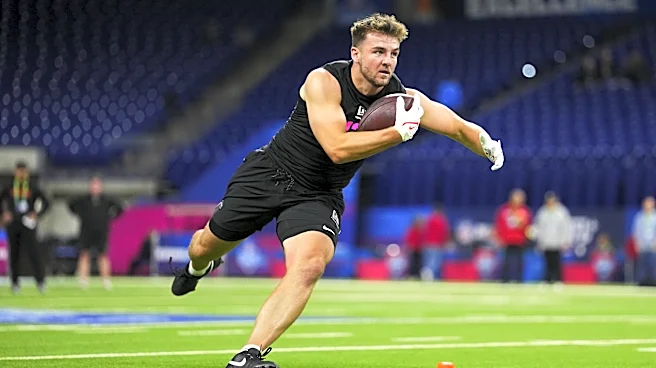
At roughly 6’3″ and 219 pounds, Wisniewski has the frame for the big safety archetype. He’s a player who can match up against tight ends in coverage, contribute as an extra run-stopping body near the box, and play a hybrid linebacker/safety role in certain packages. His 36.5-inch vertical jump is the best athletic number on his testing profile and reflects lower-body explosiveness.
Size, reliable tackling, and physical effort in coverage units are the formula for a high-level special teams contributor, and Wisniewski checks every box. I think his special teams value alone could justify the roster spot while his coverage game develops.
Weaknesses
Coverage Limitations
Wisniewski’s coverage ability is the central question, and it is a big one. He struggles in man coverage, getting flat-footed from depth and stacked vertically by receivers with genuine speed. When beaten, he gets grabby. This is a classic physical instinct that generates holding and pass-interference flags in coverage. He lacks the lateral explosiveness and recovery speed to close the gap when a faster receiver gets a step, and those limitations are structural. His backpedal is clunky, his transitions are narrow and upright, and he loses track of slot receivers in space. His limitations in coverage may prevent him from ever being more than a rotational option who can support on early downs.
Playing a single-high deep safety role at the NFL level seems beyond his current profile. He was not regularly asked to do it at Texas Tech, and there is usually a reason for that. He fits a two-high or box safety role far more naturally, which means the Eagles will likely have to use him in a specific, limited way rather than as a true every-down starting safety.
Injury History
Wisniewski tore his Achilles tendon during offseason workouts and missed the first seven games of 2022. He then suffered a broken left foot late in 2023 that required surgery in April 2024, had a recovery setback requiring a second surgery in August 2024, and missed the entire 2024 season. That is three significant lower-body injuries across his college career. His 2025 testing numbers suggest a good recovery, and he held up through a full FBS season without significant setbacks, but for a player whose value is built on physical downhill play and the explosiveness to arrive at the point of attack with timing, long-term durability in that role is a legitimate concern rather than a routine flag. I mentioned this as a big concern in my report on Andrew Mukuba last year, and he also got hurt!
Athletic Limitations
The fluidity to turn, run, and change direction is my biggest concern. It creates a relatively well-defined ceiling. He also only has two full seasons at safety having spent his early college career at linebacker. The experience base is thin against elite competition, and NFL offenses will test the coverage weaknesses early.
The Film
Overall Assessment and Fit With the Eagles
Cole Wisniewski is exactly what he looks like, and I say that without any negative connotation. He is a big, smart, physical safety with real run-defense ability, elite instincts, and coverage limitations. I do like the draft pick, and I’m a sucker for an old-school physical safety.
I think he is a player who has a legitimate chance of contributing, despite being drafted late. The Blankenship comparison is sort of interesting. Nobody expected Blankenship to become a starter when the Eagles took him, and the Eagles developed him precisely because they understood the archetype and how to use it. Wisniewski, as a special-teams starter and as an early-down box presence, gives the Eagles a useful player at the very least. Maybe, over time, he could become more than this. Instincts at the safety position are more valuable than straight-up athleticism. Maybe Wisniewski is good enough to contribute one day, but don’t expect a late-round pick to contribute this season in a big way.
Thank you for reading! I’d love to hear your thoughts, so feel free to comment below and ask any questions. If you enjoyed this piece, you can find more of my work and podcast here. If you would like to support me further, please check out my Patreon here!