

At Coors Field, innings can become dangerous in a hurry.
A walk. A hit. A bloop. Suddenly, the inning is fraught with peril.
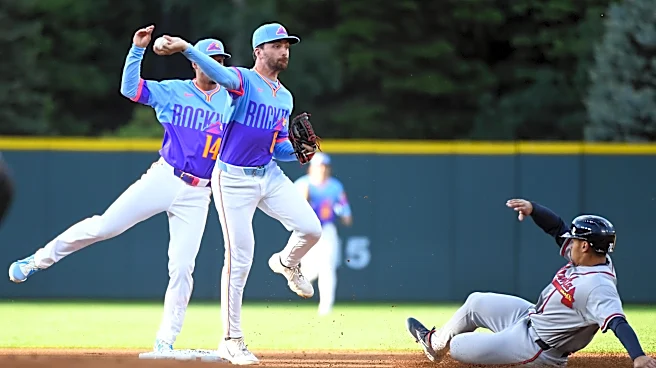
That is why a clean double play can feel like an escape hatch: one ground ball, two outs, crisis averted.
I love double plays.
Double plays have their own little language. 6-4-3. 4-6-3. 5-4-3. To the uninitiated, they just look like more numbers. To the converted, they are something closer to cheat codes. Every number is a position. Every dash is a throw.
The first number tells
you where the trouble began. The last tells you where it ended.
The classic 6-4-3 is not the same as a 4-6-3. The 3-6-1 asks the pitcher to finish the job. The 1-2-3 is panic turned into process. The 7-6-3 is basically a practical joke.
The double play is not one play, really. It is a family of escape routes. And for years, the Rockies used them more than almost anyone.
A Rockies habit starts to wobble

So where did the double plays go?
The Rockies still have the main ingredient: ground balls. As of May 9th, they ranked 12th in MLB in ground-ball rate at 42.3%.
But grounders need the right setup. A ground ball with nobody on is just an out.
The easy explanation is actually good news: the Rockies are walking fewer hitters. Fewer walks can mean fewer double-play chances — a trade I would make every day.
That explains part of the drop. But not all of it.
The pivot stat
To be clear, the total double-play number includes more than the common infield turns. A strike-’em-out, throw-’em-out counts. So does a weird outfield double play.
rGDP is narrower. It is the pivot stat, aimed at shortstops and second basemen. It does not just count double plays; it asks whether a middle infielder completed the turn more or less often than an average fielder would, given the runner, batter, and batted ball.
For years, Colorado was good at this. Earlier this season, the Rockies dipped to -2 rGDP, which stood out against their recent history. They have since climbed back to league average, so the usual small-sample warnings apply. Still, that early dip suggested the issue was not only fewer opportunities. For a stretch, there was some efficiency wobble in the turn itself.
The counting stats help frame the question, too. FanGraphs splits double-play involvement into starts, turns, and finishes, and those buckets show how different the second-base profiles can be. Edouard Julien has started 10 double plays at second, but has been credited with only one turn. Willi Castro, in fewer innings at second, has been credited with four turns.
This is not a playing-time argument. Castro has been good at second, and he will still get reps there, but his value comes from moving around the infield. Julien is the bigger second-base question because the Rockies are giving him regular time there.
The second-base question
Julien’s bat explains his opportunity in the field. Through 113 plate appearances, he has a .363 OBP and a .741 OPS, and the underlying profile backs it up: strong expected production, hard contact, good swing decisions.
The glove is the question.
His defensive numbers at second have been uneven, including -2 Defensive Runs Saved (DRS) in a small sample, and a few recent plays show why. Communication, the challenge of truly learning the position, and trouble on the turn have all worked against Julien — and against the double play.
One recent example against Atlanta stuck with me because the Rockies still got two outs. Julien fielded a grounder near second, started to take the bag himself, then hesitated as Ezequiel Tovar arrived expecting a feed. The throw to first was close enough for Atlanta to challenge, but the call stood. In the box score, it is just a 4-3 double play. The miscommunication does not show up.
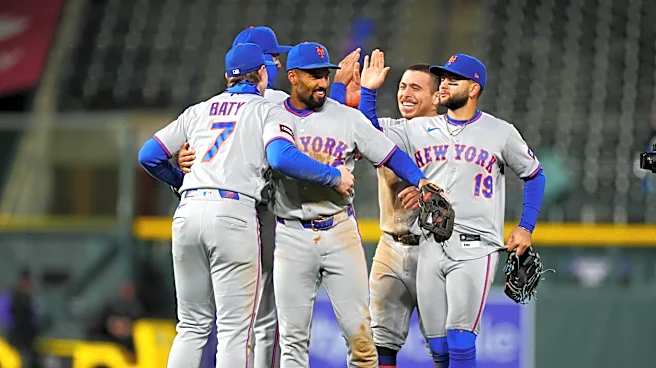
These Mets clips show the other side of that coin: plays where not getting two outs becomes the story.
The first Mets clip shows the position-learning side of it. Julien fields the ball near second with Tovar moving to the bag, but instead of flipping to start the double play, he elects to chase the runner.
Maybe that was the read he trusted. Maybe the timing made the choice harder than it looked. Either way, it shows how much decision-making lives inside a play that seems simple.
The second Mets clip shows the turn itself. Tovar starts the play, but Julien loses his footwork on the pivot and spikes the throw well in front of T.J. Rumfield at first.
That is the margin: An unclear exchange, a forced rundown, a throw in the dirt, and the double play can break.
The turn can still come
While Julien is clearly still learning on the job in Colorado, that does not mean he is new to the position. Some of this is also physical — arm strength won’t drastically improve with more reps.
But the communication, timing, footwork on the pivot, and flow with Tovar can.
That is the part worth watching as the season moves along.
The Rockies still have ground balls. They still have Tovar. And Julien is getting real time at second. If the reps continue, if the rhythm sharpens, the double plays may return.
I hope they do. At Coors, this team could use more escape hatches. More clean turns. More innings that end before they become something worse.
Just don’t bring the walks back.
So, is this just an early-season wobble, or has one of the Rockies’ strangest little strengths actually changed?
On the Farm
Triple-A: Albuquerque Isotopes 2, Sugar Land Space Cowboys 1
Albuquerque improved to 22-15 with a 2-1 win over Sugar Land, which fell to 17-20. Keegan Thompson gave the Isotopes a strong but short start, throwing 3 2/3 scoreless innings with three hits allowed and one strikeout. Cole Carrigg (No. 4 PuRP) used his speed to score the first run in the sixth, coming home from third on a soft groundout by Sterlin Thompson (No. 13 PuRP). Vimael Machín added what would prove to be the deciding run with his third home run of the season in the top of the ninth. The Isotopes managed only six hits, but the pitching staff held Sugar Land to 1-for-7 with runners in scoring position. Overall, Thompson went 1-for-3 with an RBI, a walk, and his seventh stolen base, pushing his OPS to .984, and Carrigg finished 1-for-4 with a walk and a run scored and is now hitting .366 with a .948 OPS.
Double-A: Hartford Yard Goats 4, Binghamton Rumble Ponies 2
Roc Riggio (No. 14 PuRP) got the offense started late and turned a quiet night into a Hartford win. The Yard Goats beat Binghamton 4-2, moving to 14-16 while the Rumble Ponies dropped to 11-20. Riggio supplied most of the offense himself, hitting a solo homer in the seventh before adding a two-run shot in the eighth to put Hartford ahead for good. He finished 2-for-4 with two home runs and three RBI, raising his OPS to .823. Jose Torres added the final run with his fourth homer of the season in the ninth and also finished 2-for-4. Jake Brooks was solid in a no-decision, allowing two runs on three hits over 6 1/3 innings with four strikeouts.
High-A: Spokane Indians 3, Tri-City Dust Devils 0
Spokane rode its pitching to a clean 3-0 win over Tri-City, moving to 12-19 while the Dust Devils fell to 17-14. Brody Brecht (No. 3 PuRP) set the tone with four scoreless innings, allowing two hits and two walks while striking out six. Stu Flesland III did plenty of the heavy lifting from there, adding four scoreless innings with three hits allowed, one walk, and four strikeouts before Jack Mann finished the shutout. Alan Espinal supplied the big swing, hitting a three-run homer in the sixth to break a scoreless tie. Ethan Hedges (No. 29 PuRP) and Robert Calaz (No. 6 PuRP) each added two hits as Spokane finished with eight hits and no errors.
Single-A: San Jose Giants 4, Fresno Grizzlies 3
Fresno fought back, but San Jose had the final answer in a 4-3 Grizzlies loss. Fresno dropped to 17-14, while the Giants improved to 19-12. Riley Kelly gave the Grizzlies a strong start, allowing one run on three hits over 3 2/3 innings with six strikeouts and no walks. Fresno trailed 3-0 before getting RBI singles from Derek Bernard and Matt Klein in the sixth. Cameron Nelson then tied it in the seventh with a bunt single that scored Luis Mendez, helped along by a throwing error. San Jose retook the lead in the bottom half on Isaiah Barkett’s RBI triple off Jhon Medina, who took the loss.
Why Rockies Face Early-Season Road Trip Test After Disappointing Homestand | SI.com
Scott Roche frames the Rockies’ Pennsylvania road trip as a useful early measuring stick after a rough 1-5 homestand. The Rockies are still trying to prove this start has some staying power, and six games against the Phillies and Pirates should give everyone a better read. For a team trying to move from “interesting” to “actually improving,” this is the kind of week that matters.
How the Schaeffers turned MLB life into a family adventure | MLB.com
Thomas Harding takes a softer turn with a look at Warren Schaeffer, his wife Callie, and the family life built around baseball. The piece makes clear that Schaeffer is more than happy to honor her, not just on Mother’s Day, as Callie has helped make the season work as a full-family adventure. It’s a sweet read about road trips, homeschooling, ballparks, and the people who keep things steady behind the scenes.
Antonio Senzatela Succeeding in New Full-Time Role for Rockies | SI.com
Tyler Miller checks in on Antonio Senzatela’s move into a full-time bulk relief role, where the early returns have been much better than last year’s rotation work. Senzatela picked up the save against the Mets with two strong innings and has a 1.11 ERA over 24 1/3 innings. For a Rockies pitching staff still trying to find functional roles, this is one of the cleaner success stories so far.
Join the conversation!
Sign up for a user account and get:
- Fewer ads
- Create community posts
- Comment on articles, community posts
- Rec comments, community posts
- New, improved notifications system!
Please keep in mind our Purple Row Community Guidelines when you’re commenting. Thanks!