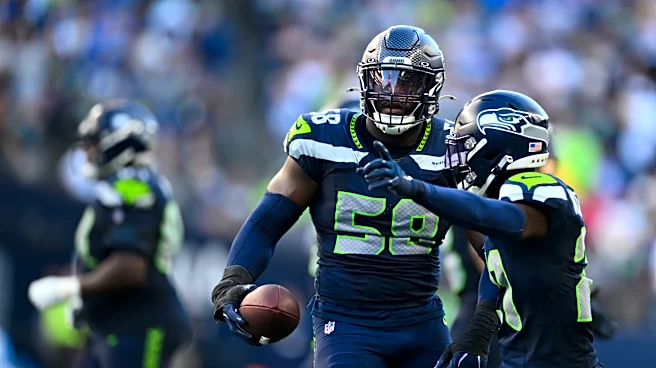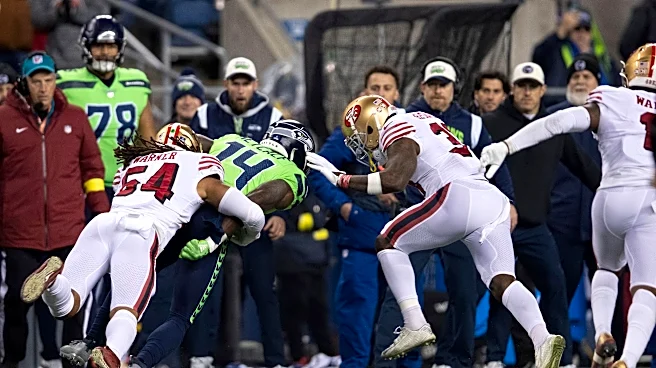

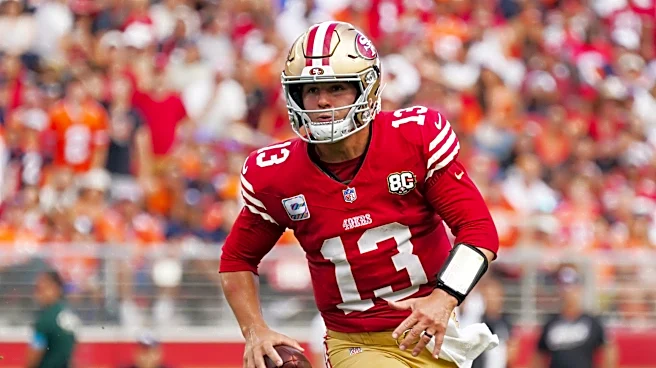
The 3-1 Seattle Seahawks head into Sunday looking to hand the 4-0 San Francisco 49ers their first loss of the season. San Francisco has looked like one of the league’s best teams through the first month, while Seattle has started to establish an identity built around an aggressive defense and an offense that has shown flashes of efficiency.
This is an important game for Seattle beyond the standings. A win would prevent the 49ers from creating early separation in the division, give the Seahawks a head-to-head
advantage and provide a significant boost heading into a more difficult portion of the schedule. Seattle has already beaten the Patriots and Cardinals, lost to Washington and handled an 0-4 Chargers team in Week 4. Beating San Francisco would be a different kind of statement.
Close the cracks in the run defense
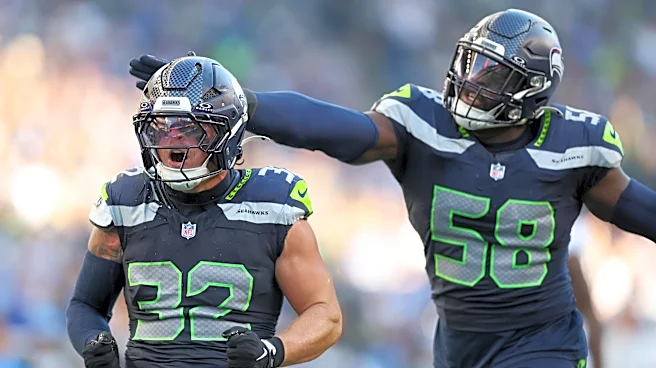
Seattle’s run defense remains one of the biggest areas to watch, and the tape shows a potential weakness opponents can attack: the space between the interior defensive linemen and the edges.
That is exactly the kind of space Kyle Shanahan wants to create.
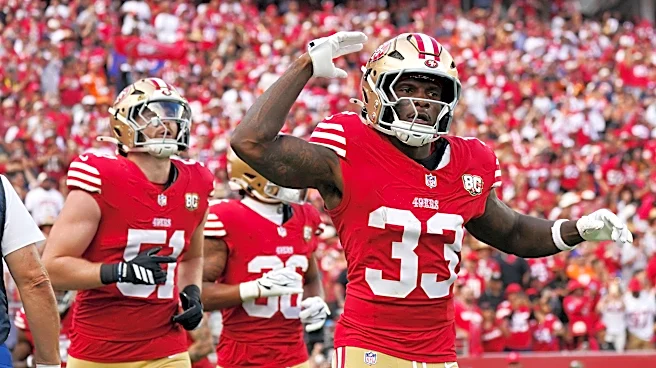
Outside zone remains the foundation of San Francisco’s rushing attack, and Christian McCaffrey is playing at an extremely high level. Through four games, McCaffrey has carried the ball 50 times for 218 yards and four touchdowns while adding 16 catches for 122 yards.
The important part for Seattle isn’t simply stopping McCaffrey at the line of scrimmage. It is preventing him from turning small creases into five-, eight- or 15-yard gains.
When the 49ers can consistently run the football, Shanahan gets to open up the entire playbook. Motion becomes more dangerous. Play-action becomes more convincing. The defense has to hesitate before attacking the quarterback.
And that is where San Francisco can really hurt Seattle.
Shanahan will also have to adjust without Kyle Juszczyk, whose injury removes one of the most versatile pieces of the 49ers’ formation and motion game. Juszczyk isn’t just a traditional fullback. San Francisco frequently uses him in pre-snap motion to create leverage and manipulate defensive assignments before the snap.
The concept is simple but difficult to defend: Juszczyk can move across the formation before the snap, forcing the defense to communicate and adjust, then enter the play with momentum as a blocker. Instead of identifying where the defense is lined up, the motion can create a better blocking angle and put an extra body into the run fit.
Shanahan has been doing this for years, so losing Juszczyk won’t suddenly make the concept disappear. The 49ers will find other ways to recreate it.
Seattle has to make those adjustments matter.
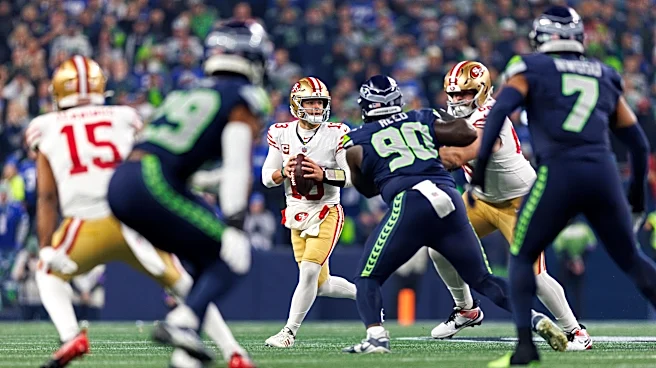
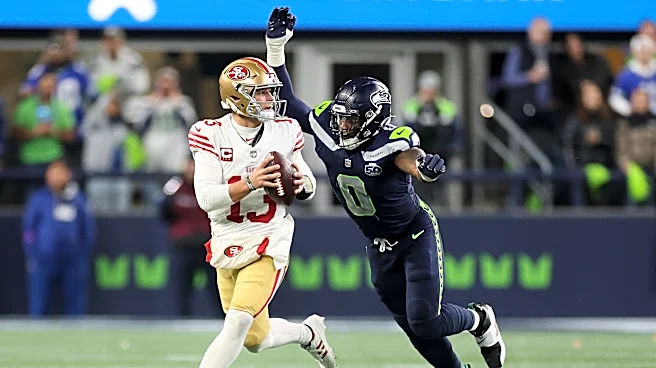
Pressure Brock Purdy and finish the play
One of the biggest lessons from Seattle’s previous games is that pressure alone isn’t enough.
Marcus Mariota showed how quickly a quarterback can neutralize the pass rush when he consistently gets the ball out on time. Washington’s quick passing game limited Seattle’s opportunities to get home, even though the Seahawks were able to generate pressure.
San Francisco can use the same blueprint.
Brock Purdy is also much more dangerous once a play breaks down. He has the ability to escape the pocket, extend plays and pick up yards with his legs. Through four games, Purdy has already rushed 20 times for 122 yards and a touchdown.
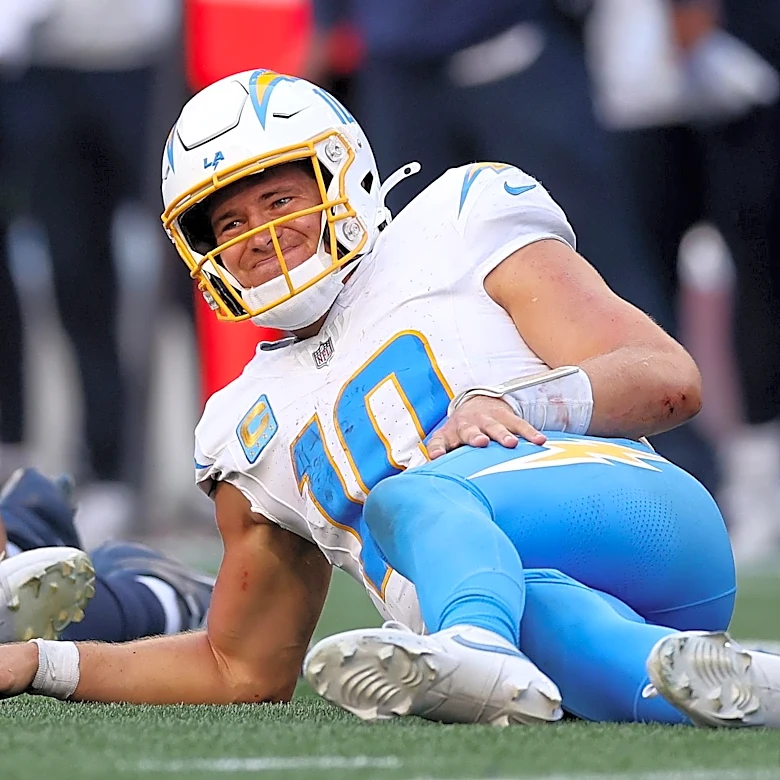
Seattle has already seen quarterbacks hurt its defense with their legs this season. Drake Maye rushed seven times for 47 yards in Week 1, while Justin Herbert ran six times for 40 yards in Week 4.
The Seahawks cannot allow Purdy to turn third-and-long into a scramble drill. More importantly, pressure has to become sacks.
Hits are nice. Hurries are useful. But against an offense as efficient as San Francisco’s, allowing Purdy to escape pressure and still complete the play is almost as damaging as not pressuring him at all.
Seattle needs to collapse the pocket, maintain rush-lane discipline and finish.
The challenge is tough once 49ers dit not allow a sack yet.
Don’t let Mike Evans, Deebo Samuel, and George Kittle dictate the game
San Francisco’s receiving corps has added another dimension with Mike Evans.
Evans gives Purdy a legitimate back-shoulder and contested-catch option, particularly in situations where the quarterback needs a reliable safety valve outside the numbers. Through four games, Evans has 17 receptions for 213 yards and two touchdowns.
That creates an interesting matchup for Seattle’s secondary, especially if Evans is consistently targeted against smaller defensive backs. Josh Jobe could see some of those snaps, and the size difference is something San Francisco can attempt to exploit. Maybe Trevon Diggs can be elevated again, especially as Nehemiah Pritchett seems to be dealing with an injury.
Then there is Deebo Samuel.
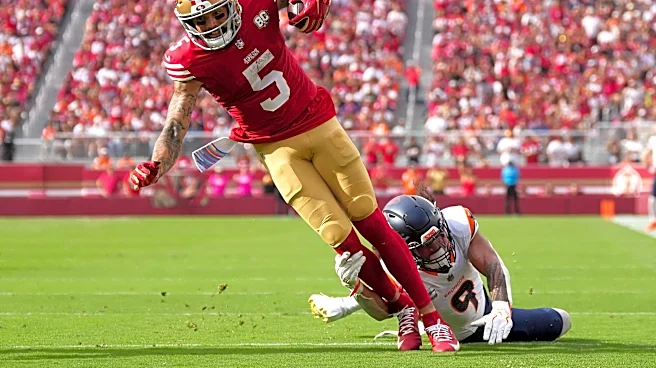
This version of Deebo looks much closer to the player San Francisco originally fell in love with than the version we have seen at times in recent seasons. Through four games, Samuel has 14 receptions for 185 yards and three touchdowns while also rushing seven times for 74 yards.
That versatility changes the math for the defense.
Deebo can line up outside, move into the slot, take a handoff, catch a screen and turn a routine touch into a chunk play. Seattle’s tackling discipline will be critical because the first defender often isn’t the one who ends the play.
And then there is George Kittle. Fresh off an Achilles injury, Kittle has 16 catches for 244 yards and four touchdowns through four games, averaging more than 15 yards per reception.
His impact isn’t limited to the passing game. Kittle’s ability as a blocker gives Shanahan another way to manipulate the front, especially when Seattle is trying to defend outside-zone concepts.
Seattle cannot allow Kittle to become both a sixth offensive lineman and a vertical receiving threat on the same afternoon.
There is no room for mistakes
If there is one thing Seattle cannot repeat from the Chargers game, it is the penalty problem.
Seattle committed 14 penalties for 150 yards against Los Angeles, and the Chargers committed 16 penalties for 130 yards. What should have been a comfortable Seattle victory became a game that remained alive until the final drive.
That cannot happen against San Francisco. The 49ers are too efficient, and their offense is too good at turning extended drives into points. Giving Shanahan free first downs or putting the defense in disadvantageous situations is an invitation to disaster.
Turnovers are another obvious concern. Seattle has already seen how costly they can be after the loss to Washington. Sam Darnold also struggled against the Chargers, throwing for 168 yards with two touchdowns and an interception.
Against the 49ers, a three-turnover game probably isn’t survivable.
Seattle doesn’t need Darnold to throw for 350 yards. It needs him to protect the football, take the throws that are there and avoid giving San Francisco short fields. The margin for error is going to be small.
Brian Fleury needs to make the run game show up
This might be the most important offensive question for Seattle.
Brian Fleury has done a good job getting the passing game moving, but the Seahawks still haven’t found that consistent rhythm on the ground that can make the entire offense more difficult to defend.
Through four games, Seattle has rushed for 441 yards at 3.9 yards per carry.
The 49ers, meanwhile, have already shown that their defense can be vulnerable to teams willing to run directly at them and attack the edges.
That is the good news.
The bad news is that Seattle’s offensive line has struggled to consistently create movement at the line of scrimmage on physical runs. That’s where the game plan has to matter.
Duo runs and concepts that attack the edges could give Seattle opportunities, but the Seahawks cannot simply call the plays and hope the blocks develop. The offensive line has to win its individual matchups, the backs have to hit the correct gaps and the play design has to give them a chance.
Seattle cannot win this game asking Darnold to carry the offense with his arm. The Seahawks need a credible rushing threat, even if that means grinding out four yards at a time.
If Fleury can get the run game moving, everything else becomes easier. Play-action becomes more effective. Protection improves. Darnold gets cleaner reads. And San Francisco’s defense has to respect more than just the passing game.
That is the version of Seattle’s offense that has the best chance of keeping pace.
Third down is where this game could be decided
One trend worth watching is how aggressively defenses have attacked Seattle on third down.
The Seahawks’ offensive line has been inconsistent at times, and some of Seattle’s concepts take too long to develop against pressure. When opponents blitz, the answer can’t always be a route combination that requires Darnold to hold the ball and wait for something to open.
The Seahawks need answers built into the play call.
Quick-game concepts, hot routes and throws designed to punish pressure can force San Francisco to think twice before sending extra rushers. But those answers only work if Seattle is consistently creating manageable third downs.
That brings the entire game plan back to the run game. If Seattle can stay ahead of the sticks, Fleury has a much larger menu of options. If the Seahawks are constantly facing third-and-8 or third-and-10, San Francisco can unleash its pressure packages and dictate the terms.
That’s exactly what Seattle has to avoid.
Final thoughts
This game will be decided by the details, but those details are connected. If San Francisco is consistently running the ball, Shanahan can use motion and play-action to create hesitation. If Purdy gets clean escape lanes, the pass rush loses some of its value. If Evans, Deebo and Kittle are winning consistently, the 49ers can force Seattle’s defense into uncomfortable personnel and coverage decisions. And if the Seahawks commit penalties or turn the ball over, San Francisco is good enough to turn those mistakes into points.
But Seattle has a path to making this game uncomfortable for the 49ers, too. Close the gaps in the run defense, force Purdy to operate from a collapsing pocket and finish pressures with sacks. On offense, find a way to generate enough movement in the run game to keep San Francisco honest, protect Darnold and punish the blitz. The Seahawks don’t need a flawless performance. They need a disciplined one. If they can eliminate the self-inflicted mistakes and make San Francisco win every inch, Seattle has a legitimate chance to hand the 49ers their first loss of the season — and send a much louder message about where this Seahawks team belongs in the NFC West.