



Note: I have full scouting reports on every player mentioned in this piece over at Bleeding Green Nation, so rather than repeating them all here, I’ll focus on the draft strategy and how each player fits the Eagles specifically. Just click on my profile page to see them all. This article is sort of a summary of all the work I’ve done. It’s a last minute cram session before the test. Enjoy!
I’ve used consensus rankings a lot in this article. They are taken from the amazing work over at Wide Left. I trust
Arif’s consensus board more than anything else online.
Lastly, covering the Draft takes forever, so I appreciate all the comments I’ve had on the rankings. If you want to support the work I do and view a video version of this article (and get my full 2026 Big Board with all tiers and rankings), please check out my Patreon.
Background
The three headline needs are offensive tackle, safety, and edge rusher. Lane Johnson is entering what is almost certainly his final season, leaving a long-term right tackle vacancy that needs planning for now. The safety room, Andrew Mukuba, alongside Marcus Epps, is functional but not good enough, with nothing credible behind it. And after losing Jaelan Phillips in free agency, the edge rusher group of Nolan Smith, Jalyx Hunt, and Arnold Ebiketie has promise, but nowhere near enough proven production at the top.
Offensive tackle depth falls off a cliff after the first 35 picks or so. The top athletic options, players with the movement skills and upside to develop into franchise starters, are almost entirely clustered in Round 1. Edge rusher, by contrast, has extraordinary depth on Day 2. Safety has legitimate starting options available well into Round 3. Keep that in mind when looking at rankings and draft options. If the Eagles want an athletic right tackle who can sit behind Lane Johnson, absorb everything he has to teach, and then take over the job, they almost certainly have to get him in Round 1. That window does not really stay open into Round 2. However, that doesn’t mean you should reach on just anyone!
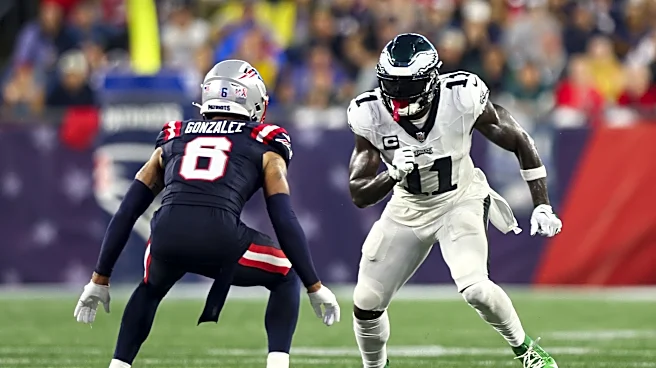
Beyond those three, there are secondary needs worth addressing. I think a long-term tight end is also a big need. The wide receiver situation hinges entirely on AJ Brown, whose future in Philadelphia is uncertain. If Brown stays, the Eagles need complementary depth. If he goes, the need becomes a lot more urgent.
What makes all of this more complicated is that this is a pretty weak draft class overall. I expect other teams will draft aggressively on scheme fit and positional scarcity rather than pure talent, which means players could go well above their consensus rank once we get out of the top 10. The Eagles need to be fluid. They should have a trade-up number and a trade-back number prepared before Thursday night, and they should not be passive in either direction.
Pick 23 — Round 1
Obviously, everything I outline below depends on the board and who is available.
The Case for Offensive Tackle
My personal preference is that the Eagles should use pick 23 on an offensive tackle. Right tackle is the only position in this draft where the Eagles face a legitimate scarcity problem across all three days. If they do not address it in Round 1, they are looking at developmental gambles and depth pieces rather than a true long-term starter. The edge and safety markets are deep enough that quality options exist on Day 2. That is not true of OT.
Monroe Freeling (Georgia, consensus #17) is the dream. He is long, explosive, legitimately nasty, and improved significantly as Georgia’s 2025 season went on. He has not started at right tackle recently, but he has experience there, and the vision of him spending a year learning from Lane Johnson before inheriting the job is exactly the kind of succession planning that franchise-building looks like. His combination of length, athleticism, and drive gives him a ceiling that nobody else in this OT class can match.
Blake Miller (Clemson, consensus #33) is my best guess for what the Eagles actually do. He ticks an enormous number of boxes with 54 consecutive starts at Clemson without missing a single practice. He does not have Freeling’s upside. There are legitimate questions about whether he can anchor against elite power rushers, and his playing style has some exposure to inside counter moves. But he might be the safest tackle in this class.
Spencer Fano (Utah, consensus #11) will almost certainly be gone. His movement skills and athleticism are the kind that offensive line coaches put on highlight reels. If there is a run on skill positions early and Fano somehow falls close to 23, he would be an interesting trade-up candidate.
Kadyn Proctor (Alabama, consensus #18) is the wild card that I find difficult to land on. He is an enormous human being with rare size, but he is deceptively smooth for a player carrying that much weight, and capable of genuine dominance in the run game when fully engaged. However, he has an exclusively left tackle background and potential problems in an outside zone system. I could see the scouts falling in love with him. I would understand the pick. I would also have some anxiety about it.
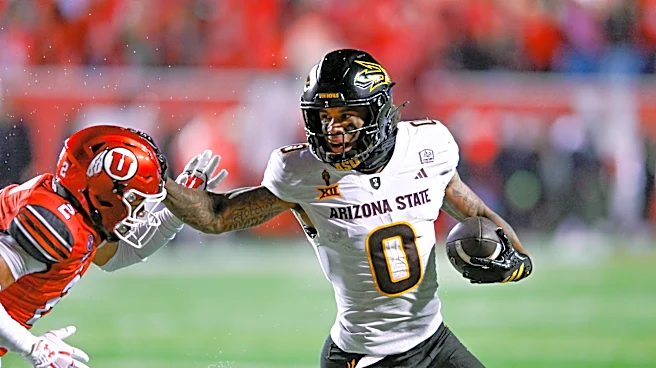
Max Iheanachor (Arizona State, consensus #34) is the rawest option in this range. A player who only started playing football in 2021 was born in Nigeria and whose film does not come close to matching his extraordinary athletic profile. The traits are the kind you simply cannot coach. The experience gap is significant. He is probably going late in Round 1 to a team willing to bet on the upside, and the Eagles may well be that team.
The Case for Safety
If the top tackle options are gone, Dillon Thieneman (Oregon, consensus #20) is the pick I would make without much hesitation. He fits the Fangio defense like a glove as a true centerfield safety with a 41-inch vertical, elite football IQ, and the kind of communication skills and leadership profile you want from the player anchoring your back end. If he is there, he solves a major problem.
The Case for Edge and Why I Would Wait
The honest truth about the edge rusher options at 23 is that most of the ones I want for the Eagles will potentially be available later. Malachi Lawrence (UCF, consensus #42) is the name I keep coming back to. He lit up the combine with the best overall athletic testing of any edge defender, and his pass-rush plan is more developed than you might expect from his background. At consensus #42, he should theoretically be available at 23, but he is rising fast, and I would not be shocked if he goes in the late teens. If he is still there at 23 and the OT and safety targets are gone, this is a completely defensible pick.
Cashius Howell (Texas A&M, consensus #30) is the purest pass rusher in the class with the fastest first step, elite production in the SEC, and a feel for rushing the passer that some players never develop. The concerns are well-documented already. I like Howell as a late Round 1 or early Round 2 target. At 23, it is probably too early, but I would not hate it.
R Mason Thomas (Oklahoma, consensus #52) is almost certainly available at 23 but is better value at 54. The same is broadly true of Akheem Mesidor (Miami, consensus #21), whose age, injury history, and medical concerns will push him down boards, but whose pure pass-rush ability is arguably the best in the class. If the medicals come back clean and he is there at 23, the Eagles have a significant decision to make.
I know I am lower on options like Keldric Faulk (Auburn, consensus #19) here, but I just think you can get run-stuffing edge defenders later in the draft. It’s always the pass rushers who go earlier. I wouldn’t hate the pick.
Other Round 1 Considerations
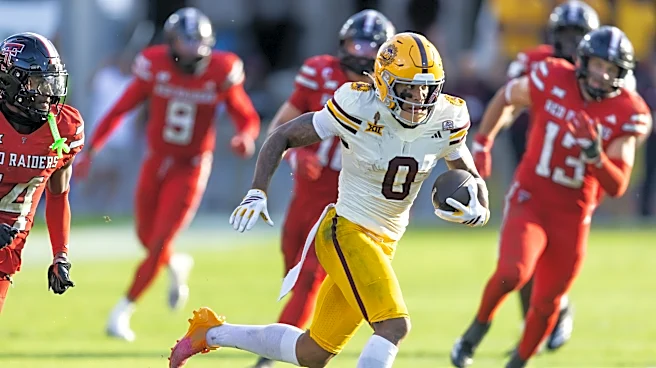
It would be remiss not to mention the wide receiver question, because the AJ Brown situation makes this incredibly annoying and complicated. If Brown is still a Philadelphia Eagle next year, the Eagles do not need a wide receiver in Round 1. However, I expect him to be traded later this year. Makai Lemon (USC, consensus #13) is outstanding and almost certainly gone, but Jordyn Tyson (Arizona State, consensus #15) and KC Concepcion (Texas A&M, consensus #26) are both names that, depending on medicals and board fall, could be in range at 23. I would not prioritize either over tackle, safety, or edge, but the AJ Brown situation means no position can be entirely dismissed. Outside of those, I don’t think there is a receiver worth taking at 23.
Trade Up / Trade Down
If Freeling or Fanu starts sliding toward the late teens and the Eagles are confident in their evaluation, trading up a handful of spots is absolutely worth exploring. The cost of moving from 23 to somewhere in the 18-20 range should not be prohibitive, and in a weak class, the difference between the right player and a consolation prize could be significant.
If the board falls badly with Freeling, Miller, and Thieneman gone, trading back into the late first or early second to stockpile picks is equally sensible.
Pick 54 — Round 2
Safety
If Thieneman is gone and the Eagles did not take a safety at 23, this is the most important need to address. Emmanuel McNeil-Warren (Toledo, consensus #25) is the big upside option, but at consensus #25, he may well be gone before 54. If he falls to the top of the 2nd, I would support a trade up. AJ Haulcy (LSU, consensus #62) should be available. He is a zone-heavy split safety with 10 career interceptions, outstanding processing, and controlled, intelligent run defense. He fits precisely how Fangio builds his secondaries. His man coverage limitations and lack of elite burst keep him out of Round 1, but at 54, he is a legitimate starting-caliber player. Treydan Stukes (Arizona State, consensus #66) is the chess piece I find most intriguing. He is a safety/nickel hybrid who absolutely demolished the combine. The Eagles could deploy him alongside Cooper DeJean and create genuine interchangeability based on the matchup. He does not have a defined positional home, which is a real risk, but Vic Fangio’s system is built for exactly this kind of versatile defensive back.
Edge
The depth at edge in Round 2 is real. Zion Young (Missouri, consensus #32) could fall, and he is a physical run-defending edge with developing pass-rush upside and a legitimately high floor. TJ Parker (Clemson, consensus #39) had a disappointing 2025 season after two strong years, which has depressed his stock. Keldric Faulk (Auburn, consensus #19) is the strongest pure run defender in the class and will probably be gone before 54, but is worth monitoring if he does fall down. It is worth noting that Peter Schrager did not have Faulk going in the 1st round of his most recent mock, which suggests teams may feel similarly to me about not drafting a run-stuffing edge too early.
There are also options that I would be interested in if the Eagles moved down. Joshua Josephs (Tennessee, consensus #91) is a name I rate significantly above consensus, as he is explosive off the line, can drop into coverage, and will thrive in the Eagles’ stunt-and-twist packages. Taking him at 54 would feel above the market price, but the scheme fit is exceptional. Romello Height (Texas Tech, consensus #92) is a chaos merchant. A pure pass-rush specialist with a 39-inch vertical and a genuinely unique movement style. He is a sub-rusher only, but an interesting name to keep an eye on. Jaishawn Barham (Michigan, consensus #83) is the hybrid I keep coming back to. He’s an EDGE/linebacker who can rush, cover, and play in multiple alignments. The Eagles love this profile, and he would be an asset for this defense.
There are more names I could discuss here! This is a very deep edge class.
Offensive Line
If the Eagles did not take a tackle at 23, the second round gets complicated. Caleb Lomu (Utah, consensus #27) will be gone. He is an athletic tackle who needs physical development and is raw in the run game, but whose pass protection profile is exceptionally clean. He lacks snaps at right tackle, and the power questions are real for a run-first offense, which is why I wouldn’t consider him at 23. Keylan Rutledge (Georgia Tech, consensus #57) is a mauler. A physically dominant interior lineman who would add a nasty streak to the Eagles’ run game, even if he excels in gap scheme more than zone. Chase Bisontis (Texas A&M, consensus #45) is an outstanding zone blocker who would be a perfect Eagles fit if they were willing to spend a second on a guard.
Wide Receiver
The AJ Brown situation forces at least a mention here. If the Eagles are operating without Brown next year, they almost certainly need to address the position. Germie Bernard (Alabama, consensus #43), Chris Bell (Louisville, consensus #68), and Chris Brazzell II (Tennessee, consensus #59) are all realistic second-round options. Bernard is the high-floor complementary piece who just looks like a good football player every time you watch him, and his run blocking fits this offense perfectly. Bell has rare size/speed and is an interesting second-round option if his ACL medicals check out. Brazzell’s 4.37 at 6’4″ is the kind of number that gets teams excited, even if the film trails the testing.
Tight End
Eli Stowers (Vanderbilt, consensus #53) sits right at the 54 number and is worth a serious look. I have told myself I do not want a tight end who cannot hold up inline and then I watch him play. You need a plan for his blocking limitations, but he would add a real receiving dimension to this offense. The second round is probably right for him, but I’d like pass.
Pick 68 — Round 3
Let’s just get into some names I like. Remember, when we get to round 3, I’m less worried about consensus. Just get me good players.
Sam Roush (Stanford, consensus #87) is my personal favorite target for this team in the tight end class, and I would be delighted to see him here. He is the heaviest tight end at the combine and a proper old-school inline blocker who can develop as a receiver. Oscar Delp (Georgia, outside top 100) and Max Klare (Ohio State , consensus #68) are options I really like, too. I think Delp is massively underrated and his profile reminds me of Dallas Goedert.
Sam Hecht (Kansas State, consensus #84) is an excellent wide-zone center who would provide real competition for Cam Jurgens. There are some other options at center if the Eagles want someone to compete with Jurgens.
Domonique Orange (Mississippi State, consensus #75), aka”Big Citrus,” is the run-stuffing DT4 the Eagles need if Ty Robinson cannot establish himself. He is enormous, carries his weight well, and plays with the effort and leverage the position demands. Dani Dennis-Sutton (Penn State, consensus #67) sits almost exactly at this pick. He’s a combine star whose film has real inconsistencies, but whose size and athleticism make him a worthwhile edge gamble. Kamari Ramsey (USC, consensus #97) offers starting safety upside at good value and would be worth considering if the Eagles have not addressed the position yet.
On the corner front, Keith Abney II (Arizona State, consensus #71) excels in off-man coverage, fits the Fangio scheme, and could develop behind Tariq Woolen before stepping into a starting role. Keionte Scott (Miami, consensus #50) is the versatile defensive back who could play nickel or safety. I think this pick is too early for an outside corner, and I would only consider a hybrid nickel/safety type.
If the Eagles are preparing for life after AJ Brown, Zachariah Branch (Georgia, consensus #58) is the gadget player I always end up too high on. He’s electric in manufactured touches, limited as a full-time receiver, but the kind of change-of-pace weapon the Eagles have lacked for years. Ted Hurst (Georgia State, consensus #82) is a big-bodied boundary receiver with outstanding film against lower competition. He’s a personal favorite of mine. The talent is real. Elijah Sarratt (Indiana, consensus #79) is the possession receiver who kept growing on me the more I watched him.
Pick 98 — Round 3 (Compensatory)
Bud Clark (TCU, consensus #73) is a ball-hawking safety with 15 career interceptions and genuine range. The size concern next to Mukuba is an issue but the production and instincts are hard to dismiss in Round 3. Malik Muhammad (Texas, consensus #78) is a developmental corner who fits the Fangio scheme and could develop behind Woolen. Keyron Crawford (Auburn, consensus #69) brings the motor, versatility, and effort level the Eagles will love at edge. Chris McClellan (Missouri, outside top 100) has enormous hands, elite arm length, and positional versatility across the defensive line. He strikes me as a useful DT4 who can fill multiple roles and is outstanding value this late.
Jake Golday (Cincinnati, outside top 100) is the EDGE/linebacker hybrid who fits the profile the Eagles love. He processes slowly and has a lot of work to do, but as a developmental chess piece in Round 3, he makes a lot of sense. Anthony Hill Jr. (Texas, consensus #41) is a fascinating player who can rush off the edge as well as play off-ball. It’s unlikely, but if he is there in the third round, his versatility is hard to ignore.
On the offensive side of the ball, Caleb Tiernan (Northwestern, consensus #77) has experience at right tackle despite playing left tackle in recent years, and could contribute as a swing tackle and depth piece. Jake Slaughter (Florida, consensus #89) is a pro-ready wide-zone center and a legitimate Jurgens competition piece if Hecht is already gone at 68.
For wide receiver, Skyler Bell (consensus #81), Antonio Williams (Clemson, consensus #66), and Malachi Fields (Notre Dame, consensus #60) are all in this range for me. Fields is the contested-catch specialist who fits what Jalen Hurts likes to throw, and his blocking is outstanding for the position.
Day 3
At this stage, the consensus top-100 is largely exhausted, and the Eagles are looking for players they rate significantly above the market. I watched 133 prospects, so I’m taking some throws of the dart when it comes to Day 3. Unless I give a number, just assume these players did not make the top 100 consensus boards.
The Eagles aren’t going to land a starting tackle here, but if they couldn’t get one earlier, Jude Bowry (Boston College) is an explosive developmental tackle project. Markel Bell (Miami) is the kind of generational freak you roll the dice on late. He is a three-year project at minimum, but the frame alone justifies the gamble.
There should still be some interesting names at receiver and tight end here. Deion Burks (Oklahoma, consensus #95) is a combine riser whose 4.30 speed and 42.5-inch vertical have pushed him up boards. Bryce Lance (NDSU) is the most fascinating Day 3 wide receiver in the class. Ja’Kobi Lane (USC) played behind Makai Lemon at USC, which naturally suppressed his numbers but his contested-catch ability and size project well at the next level.
Justin Joly (NC State) is a big receiving tight end with a good catch radius and the frame to develop as a blocker. Michael Trigg (Baylor) plays more like a wide receiver than a tight end, which is a problem for the inline stuff, but the catch radius is absurd and the receiving talent is real. Jack Endries (Texas) is a reliable receiving tight end with the willingness to develop as a blocker.
Demond Claiborne (Wake Forest) is the late-round running back with the explosive third-down profile the Eagles should be targeting.
On defense, Kaleb Proctor (Southeastern Louisiana) has arguably the most explosive athleticism of any DT in the class at any level. I am all in on him and I would supporting drafting him earlier than this. Darrell Jackson Jr. (Florida State) has a freakish frame, is technically raw, and will need significant coaching. Both are boom-or-bust but worth the gamble late. If the Eagles failed to land an edge earlier on, LT Overton (Alabama) is a physically imposing edge/DL hybrid with genuine run-setting ability and the largest hands of any edge defender in the class. He is not a pass rusher, and there is not a lot else in the profile, but he sets the edge, he is physical, and he fills a gap in the rotation.
At corner, Julian Neal (Arkansas) is a physical zone corner who reminds me of Tariq Woolen. He is the perfect target for this defense. Davison Igbinosun (Ohio State) has the size and length to develop, but needs significant work on discipline. Neal is the dream target for me.
If the Eagles were unable to get a safety early, VJ Payne (Kansas State) is a freakish athlete with some issues and Genesis Smith (Arizona) can run but does not want to tackle. Both are late gambles.
The Big Picture
As I’ve already said, my personal preference is to address tackle in Round 1. Then use the Day 2 depth to address edge and safety, with one of those picks potentially going toward a tight end or wide receiver, depending on how the AJ Brown situation resolves.
But the most important thing is flexibility. In a weak draft, scheme fit elevates players above their market price. The Eagles should be willing to trade up for the right player and willing to trade down if the board goes wrong. They can’t afford to be passive with this draft class.
Hey, let’s end up with a realistic mock draft of what I think might happen this year. Because, why not? Who doesn’t love a pointless mock…
A Mock Draft
I used the simulator over at Stick to the Model, which I find the most realistic this year. This makes it tough to have a great draft!
Round 1, Pick 23
Blake Miller OT (32 – Consensus Rank)
If I had to put money on one pick the Eagles would make based on my board, this would be it. I kept coming back to Miller. Not because he’s a perfect prospect, but because he fits exactly what the Eagles tend to prioritize up front. He’s athletic, he’s versatile, and he projects into multiple roles along the line.
Round 2, Pick 54
A. J. Haulcy S (56 – Consensus Rank)
I like the player. I think he fits what the Eagles want to do defensively, and the board and the value line up. This is just about taking a good player in the right spot and addressing a big need.
Round 3, Pick 68
Derrick Moore EDGE (60 – Consensus Rank)
I didn’t want to force edge early in this draft unless my dream targets fell to me or I could get them in the late 1st. There are years where it makes sense, but on this board, I didn’t see the right player at 23. Instead, I was happy to wait and see what came back around and Derrick Moore is exactly the type of player I was targeting.
He’s not someone I’d push into the first round, but I do think he fits what the Eagles look for in their defensive line rotation. He doesn’t need to come in and be the guy straight away. He just needs to contribute.
Round 3, Pick 98
Oscar Delp TE (108 – Consensus Rank)
I’ve liked Delp throughout the process, but I’ve never seen him as an early-round target. The blocking isn’t where it needs to be yet, and he’s not a complete tight end. But the receiving upside is real, and in the right system, that’s something worth developing. At 98, I’m very comfortable taking him.
Round 4, Pick 114
Julian Neal CB (100 – Consensus Rank)
This would be the dream scenario. There’s development needed, but there are also traits there to work with. He doesn’t need to start straight away, but should be ready to go by 2027.
Round 4, Pick 137
Chris McClellan DT (114 – Consensus Rank)
I’m always going to lean toward the defensive line on Day 3, as there isn’t a big enough need for it early.
McClellan isn’t a headline name, but he fits the mould of the kind of player the Eagles have consistently targeted. He is someone who can come in, contribute in a rotational capacity, and develop within a strong group.
Round 5, Pick 178
Demond Claiborne RB (143 – Consensus Rank)
Claiborne gives you a bit of versatility, can contribute in the passing game, and doesn’t need to carry the load. That’s the type of back I’m looking for in this range.
Also, I didn’t know many other names here. So, you know. I like picking players I’ve watched!
Round 6, Pick 197
Taylen Green QB (154 – Consensus Rank)
Despite what I just said above, I haven’t watched Green! But seeing as we run a QB factory, I had to get one in there…
Thank you for reading! I’d love to hear your thoughts, so feel free to comment below and ask any questions. If you enjoyed this piece, you can find more of my work and podcast here. If you would like to support me further, please check out my Patreon here!