
The Seattle Seahawks are heading to Arizona for their first road game of the 2026 season, and if history is any indication, we probably shouldn’t expect a normal afternoon.
State Farm Stadium has been the setting for some particularly memorable moments in Seahawks history. It was where Quandre Diggs suffered a gruesome leg injury in Seattle’s 2021 season finale, a game that also turned out to be Russell Wilson’s final game in a Seahawks uniform.
It was also the site of Super Bowl XLIX, one of the most
painful games in franchise history. More recently, last year’s meeting in Glendale followed the same general script: Seattle appeared to have control before Arizona made things unnecessarily interesting. The Seahawks led 20-6 in the fourth quarter, only to watch the Cardinals tie the game before Jason Myers hit a 52-yard field goal with 28 seconds remaining.
And even that doesn’t tell the whole story. In that 2025 game, Seattle cornerback Coby Bryant intercepted Kyler Murray, only to fumble the ball and have Arizona recover it.
So, yeah.
Nothing normal.
Before the season began, this looked like a game Seattle should win comfortably. The Seahawks are the defending Super Bowl champions, Arizona went 3-14 last season, and Seattle appeared to have the more talented roster.
Then Week 1 happened.
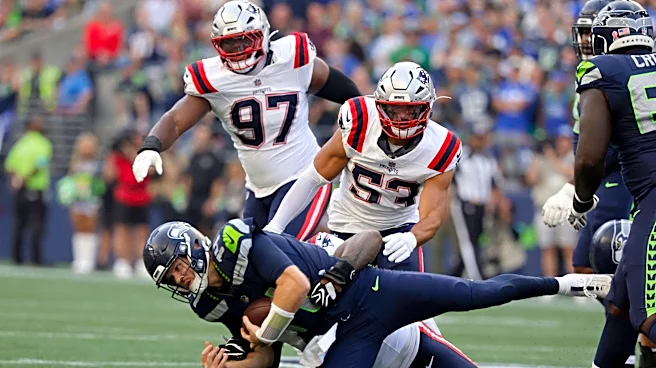
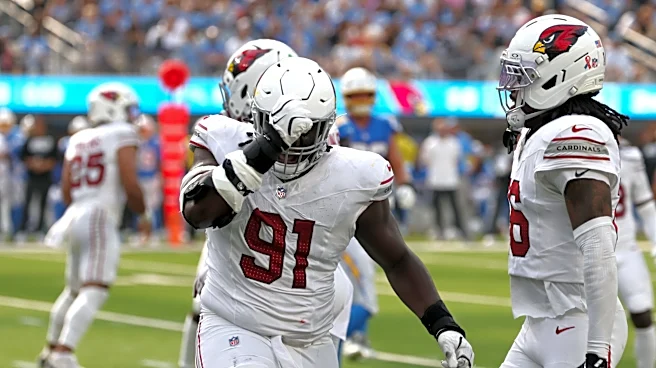
Seattle lost Sam Darnold on the fifth play of the season before rallying behind Drew Lock and its defense to beat New England 13-10. Arizona, meanwhile, walked into SoFi Stadium and upset the Chargers 26-14.
Suddenly, this doesn’t look quite so straightforward.
What can Drew Lock show with a full week as the starter?
Drew Lock is no longer being thrown into the game with almost no preparation.
That’s the biggest difference between Week 1 and Week 2.
Against New England, Lock entered after Darnold was injured and initially looked understandably uncomfortable. The offense struggled to find much rhythm, and Seattle remained scoreless until late in the third quarter. But as the game progressed, Lock settled down and helped lead two fourth-quarter scoring drives.
He finished 16-of-22 for 187 yards and a touchdown, with no interceptions, while also adding 13 rushing yards.
The numbers are encouraging, but the more interesting question is what happens when Arizona takes away the first read.
That’s where Lock’s performance against man coverage becomes particularly important.
Arizona will have to decide how aggressively it wants to play Seattle’s receivers. With Jaxon Smith-Njigba coming off an eight-catch, 122-yard performance against New England, the Cardinals can’t just sit in soft zone and allow Lock to take easy completions underneath.
That should create opportunities for man coverage, especially on third downs and in the red zone.
This is where Lock has to show that the Week 1 comeback wasn’t a product of the defense giving him favorable circumstances. Can he identify leverage before the snap? Can he recognize when the Cardinals are playing true man versus a zone structure that initially looks like man? And, most importantly, can he deliver the ball on time when the receiver wins immediately?
He’ll have a full week of starting reps to answer those questions.
That’s a very different situation from what he faced against New England.
The Seahawks cannot afford to beat themselves
If there was one obvious problem in Seattle’s season opener, it wasn’t the offense or Drew Lock.
It was discipline. The Seahawks were flagged 10 times for 98 yards against the Patriots. But the raw number doesn’t fully explain the problem. Seattle effectively gifted New England all 10 of its points through two separate penalties.
The first came when Josh Jobe was flagged for defensive pass interference on an underthrown ball at the goal line, putting the Patriots in position to score a touchdown. Later, a roughing-the-punter penalty on fourth down revived another New England drive that should have ended with Seattle getting the ball back.
Those are exactly the kinds of mistakes a team cannot afford on the road, particularly when playing without its starting quarterback.
Seattle was already making life difficult for itself offensively. Adding free yards and extra possessions to the equation is asking the defense to do too much.
And this becomes even more important in the red zone.
The Seahawks committed several penalties in situations where they had forced New England into difficult spots. Against the Patriots, the defense was good enough to overcome those mistakes.
Discipline also extends beyond penalties. Seattle has to maintain discipline in its pass rush. One thing that showed up at times last season was the defense getting too aggressive trying to hunt the quarterback. The result was an occasional loss of rush-lane integrity, allowing mobile quarterbacks to step through the pocket or escape through an open edge. Drake Maye rushed for 47 yards against Seattle in Week 1, including several scrambles created when the pocket broke down.
Jacoby Brissett is not the same type of athlete, but he’s also not a statue. He showed against the Chargers that he can make plays with his legs when necessary, and Arizona’s offense doesn’t need him to become a dual-threat quarterback to make those plays matter.
Seattle’s pass rush needs to collapse the pocket without creating escape lanes.
The goal isn’t to get pressure; it’s to get pressure while keeping the quarterback contained.
Can Seattle find answers for Trey McBride?
This might be the most interesting matchup on the other side of the ball.
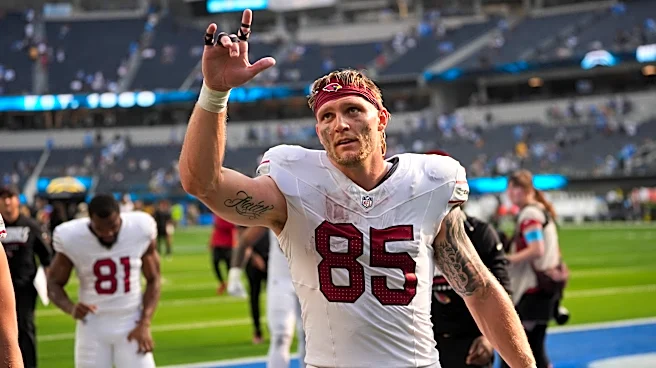
Trey McBride just finished Arizona’s opener with nine receptions for 95 yards and a touchdown. That wasn’t particularly surprising for anyone who has watched him against Seattle.
McBride has consistently been a problem for the Seahawks. In eight career games against the Seahawks, he has totaled 36 catches for 579 yards and two touchdowns, averaging 72.4 yards per game. His production has also increased significantly in recent meetings. In 2024, he caught 12 passes for 133 yards in Seattle’s 16-6 win in November, setting a career high in receptions at the time, before following it up with seven catches for 70 yards in the rematch later that season.
Then, in the most recent meeting between the teams, McBride caught nine of 13 targets for 127 yards and a touchdown despite Arizona losing 44-22. That’s three games of at least 70 receiving yards in a four-game span against Seattle, including two 100-yard performances. The earlier meetings were much quieter — he had three catches for 29 yards in 2023, three for 34 yards and a touchdown in the 2023 finale, and no catches in either of his two meetings with Seattle as a rookie in 2022. Still, the recent trend is clear enough to make McBride a major problem for a Seattle defense that will have to put significant pressure on its linebackers and a reshuffled safety group to consistently account for him.
So this isn’t a theoretical matchup.
Seattle has already seen McBride put up big numbers against this defense. And that puts pressure on the linebackers and safeties.
The Seahawks’ safety room has undergone significant changes heading into this season, and those depth concerns became even more important when Ty Okada missed the opener with a hamstring injury and Nick Emmanwori was also inactive. With Bud Clark already lost for the season, Seattle entered Week 1 without three players who could have been important pieces in the back end.
That matters against a player like McBride because the defense can’t simply assign one player to follow him around the field.
Arizona can move McBride around the formation, create matchups against linebackers and use motion to force the defense to communicate after the snap. If Seattle plays two-high safety structures, the linebackers have to be disciplined enough to carry routes vertically and pass them off at the right moment.
If they don’t, McBride will find the space.
And we’ve already seen what happens when Seattle gives him room.
The challenge is even greater because Arizona’s passing game doesn’t need Brissett to make difficult throws into tight coverage. If Seattle gives him an underneath completion to McBride, he’ll gladly take it and let his tight end create the yards after the catch.
The Seahawks need to make those throws uncomfortable. That means tighter underneath coverage, better communication between the linebackers and safeties, and fewer opportunities for McBride to find the soft spots between the second and third levels.
The Cardinals don’t necessarily need explosive plays from McBride. They just need him to keep winning.
Final Thoughts
Every team has to grow through adversity.
Seattle already had to do that in Week 1.
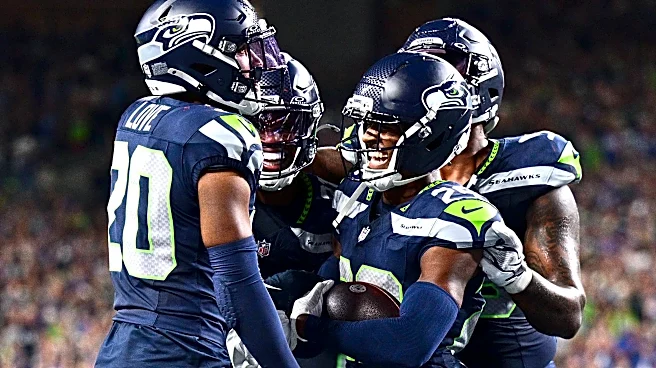
The Seahawks entered the season opener with questions in the secondary, lost Sam Darnold on the fifth play of the game and still found a way to overcome a 10-point deficit and win. Drew Lock and Brian Fleury had to adjust on the fly, while the defense eventually took over the game with three fourth-quarter interceptions.
I don’t expect Week 2 to be any different.
Darnold will miss the Cardinals game, meaning Lock will get the full week of preparation as Seattle’s starter. That’s a much better setup than what he had in Week 1, but it doesn’t change the importance of the matchup.
This is one of those games the Seahawks simply need to win. Not because Arizona is a bad team. The Cardinals just proved the opposite by beating a Chargers team that was heavily favored to win. But because the next few weeks get considerably more complicated. After Arizona, Seattle faces the Commanders and Chargers before a brutal three-game stretch against the 49ers, Broncos and Chiefs. Those first three games are not necessarily easy, but they are games Seattle should be capable of winning.
If Darnold misses multiple games, Seattle cannot afford to give away one of them while he recovers. The defense is good enough to keep this team competitive. The question is whether the offense, with Drew Lock under center, can do enough without putting the defense in impossible situations.
And if history has taught us anything about Seattle playing in Glendale, we probably shouldn’t expect the answer to come easily.