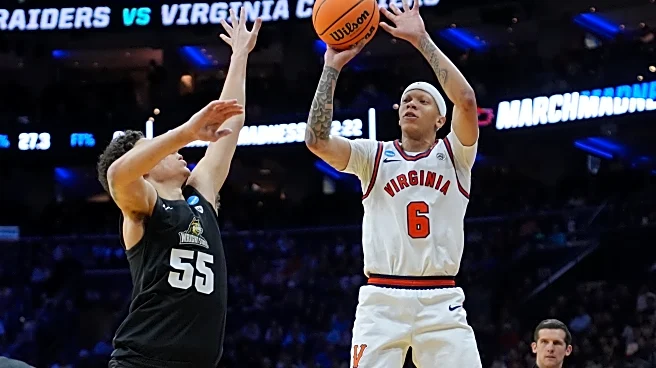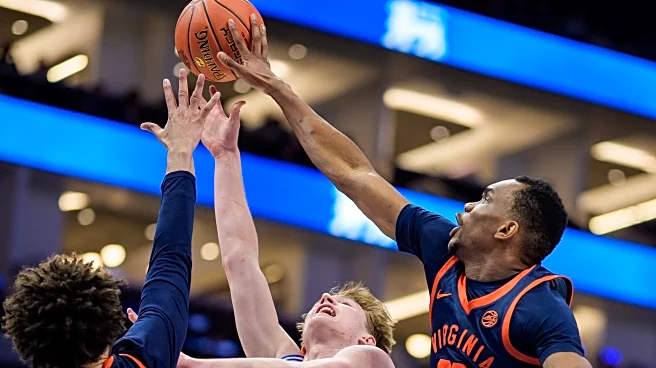

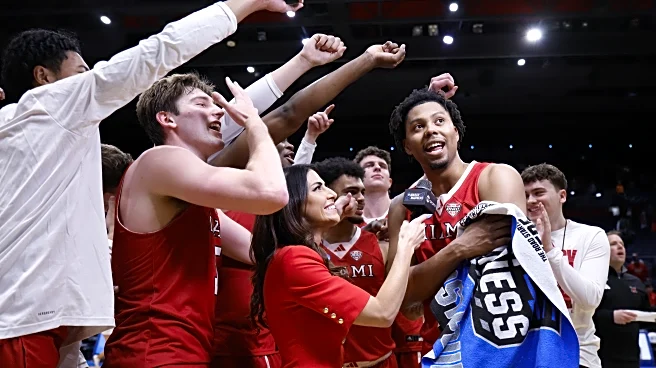
The Virginia Cavaliers took care of business on Friday, surviving 14-seeded Wright State behind a late surge, and now they will be faced with a much larger test to advance to the second weekend — 6-seeded Tennessee. The Volunteers are coming off of an impressive Round of 64 victory themselves, dominating 11-seeded Miami Ohio by a score of 78-56.
As a Vegas consensus, the Wahoos are slight underdogs, with some books offering virtually a pick-em. Sunday’s tip-off is scheduled for 6:10 pm ET.
What to know about Tennessee
Tennessee
is not your average six seed, sitting at 15th in overall KenPom efficiency, and 13th defensively. They are 23-11, having finished fifth in the SEC at 11-7, with wins over Houston, Vanderbilt, Alabama, and others on their resume. Despite having entered the dance coming off of four losses in their previous six, the Miami win silenced any sort of doubt, as the Vols held the RedHawks to 7-of-29 (24.1%) from behind the line, while shooting 9-of-20 (45.0%) themselves.
Tennessee’s biggest strength, though, is their front court. Head coach Rick Barnes regularly plays three bigs who are listed in the 6-f00t-10 to 6-foot-11 range. At the top of that list is Nate Ament, who was at times, a projected top-five NBA Draft prospect.
Ament is a skilled three-level scorer, averaging over 17 points per game on the season. He is particularly lethal in the mid-range and gets to the line a ton. Ament’s 58.6 free throw rate places above the 90th percentile among all Division 1 players, and tops anybody in this matchup. (Ironically, 5-foot-10 Chance Mallory is the only other player on either team with a free throw rate above 50.0.)
Otherwise, Tennessee rotates in two more traditional centers in JP Estrella and Felix Okpara. Both are known for being outstanding rebounders and efficient interior scorers. Estrella, who is averaging 10.2 points per game, has the deeper bag of the duo, but Okpara, a member of the 2025-26 SEC all-defensive team, is a top tier rim protector.
Tennessee’s leading scorer does reside in the backcourt, though. 6-foot-1 point guard Jakobi Gillespie has been around the block and has thrived virtually everywhere, having recently earned his third all-conference honor in three different leagues.
Gillespie has played over 85% of the team’s total minutes this year, averaging 18.3 points and 5.6 assists per game. He is a creative offensive player with elite handles to create space to go along with a quick trigger and the ability to convert on tough finishes at the rim. Gillespie is also a pesky defender at his size, with a team-leading 2.1 steals per game.
Overall, Tennessee profiles similarly to a lot of the Barnes teams of the past. The Volunteers preach defense first, have a prolific guard that can mask many offensive deficiencies, and are one of the best rebounding teams in the nation — first in Division 1 on the offensive glass and 53rd defensively. However, they lack overall three-point shooting, averaging 33.8% as a team with no individual player above the 40% threshold, which can sometimes prolong scoring droughts.
The outlook for Virginia
For starters, it is going to take a quality shooting night, or at the very least, multiple hot shooting stretches, for Virginia to topple Tennessee. The way Virginia plays, with a top 40 three-point attempt rate, and willing shooters at every position, that will be an x-factor in every game.
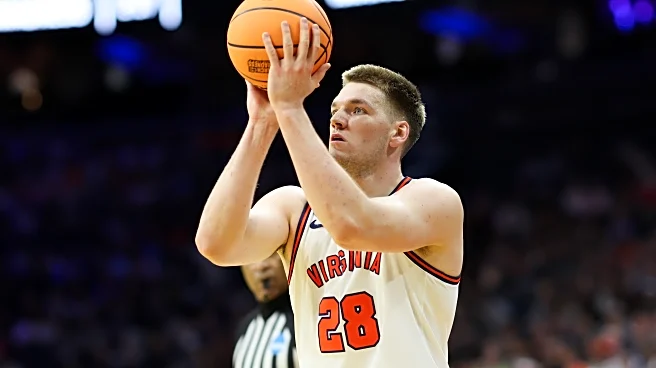
While in most cases, rebounding can be UVA’s safety net, as alluded to, Tennessee prides themselves on making sure it’s one-and-done for the opposing offense. Those shots will have to be worthwhile. Not only does Jacari White need to continue his tear, but Sam Lewis and Malik Thomas likely cannot afford a cold night either.
Ball security is another clear elephant in the room, as the Cavaliers turned the ball over 14 times against Wright State. Although Tennessee’s defense is not necessarily designed to take the ball away so they can run in transition, they are known to make offenses uncomfortable with length, aggressive on-ball coverage, and constant denials of passing lanes.
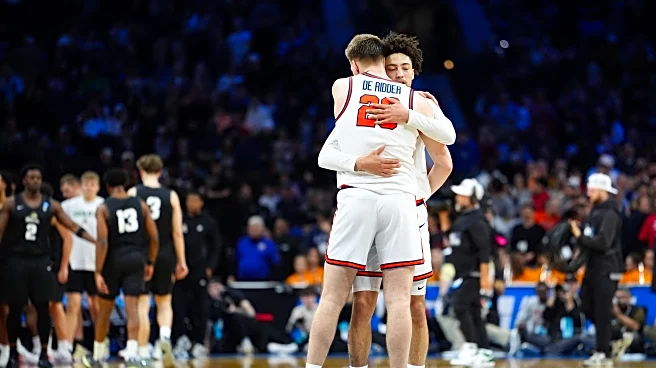
Defensively, the x-factor is Thijs De Ridder and his likely matchup with Ament. De Ridder has improved massively in terms of his ability to utilize his footwork and lateral quickness to stay in front of his man without fouling, and that will be challenged significantly in this one.
We also have to imagine that Tennessee will be more committed to attacking the rim, as opposed to Wright State who had no desire to go anywhere near the paint. Virginia’s center tandem of Johann Gruenloh and Ugo Onyenso will have to step it up physically against their Volunteer counterparts in order to maximize their shot blocking abilities, though. While this team does not have the ability to shut down opposing stars a la Tony Bennett, making Gillespie more one-dimensional could go a long way.
Prediction
One of the major underlying questions regarding this game is whether it will be a 40-minute dog fight or the offense will open up. UVA has been successful in either type of matchup, but if they can get out and take transition threes off of misses and turnovers, it will bode a lot more favorably against Tennessee.
At the end of the day, the ‘Hoos are more than capable of winning this game — it will just take an above average effort in multiple key facets of their game.
Virginia has been able to run poor defensive teams off the floor with explosive offensive nights where they seemingly cannot miss. That’s not Tennessee. But, Tennessee will not return that favor either.
If Ryan Odom can design a game plan that plays to the Cavaliers’ strengths and they can display enough shotmaking, Virginia should survive and advance.
Virginia 71, Tennessee 70