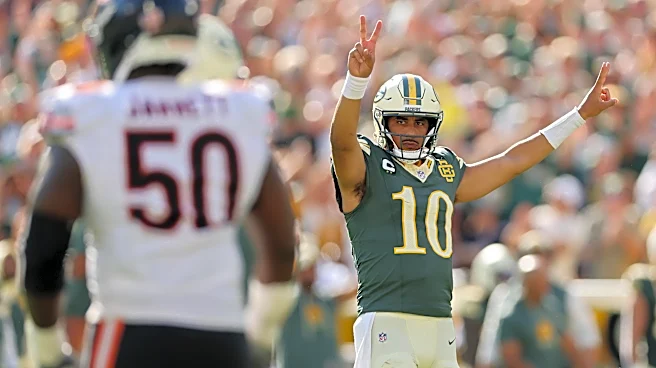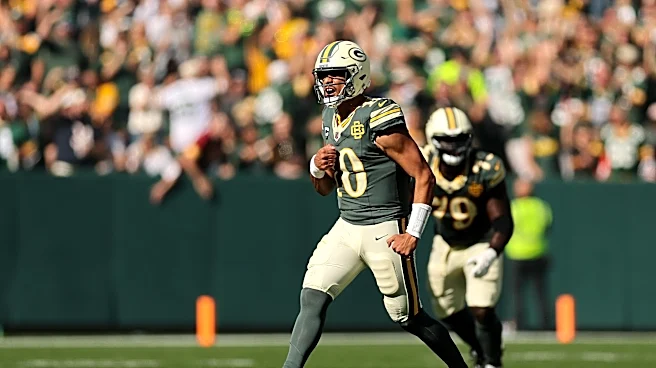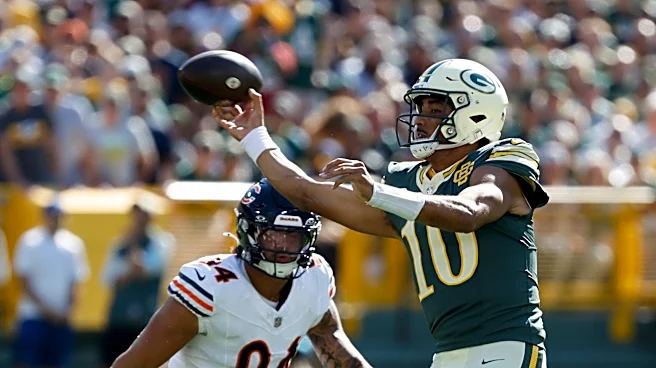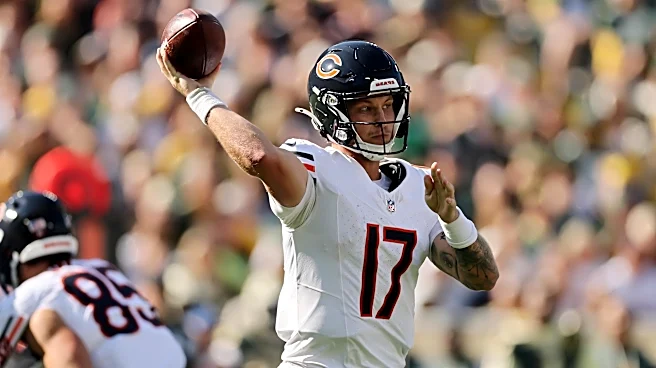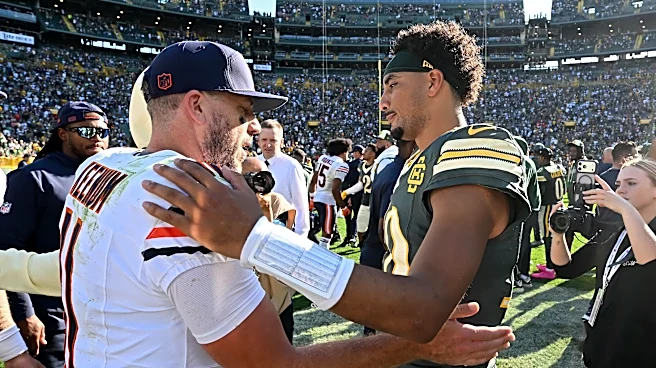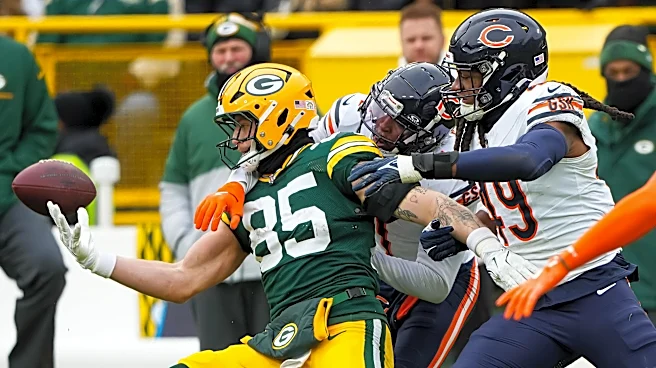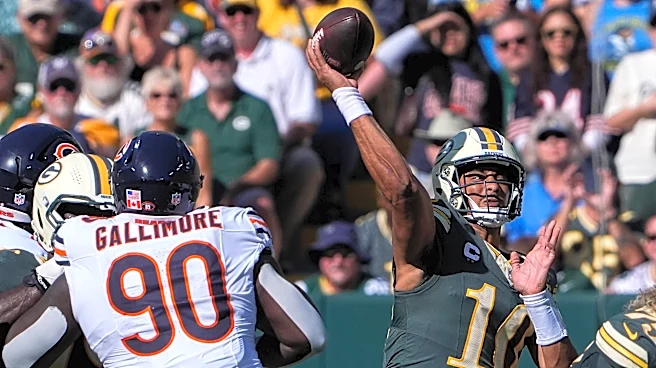

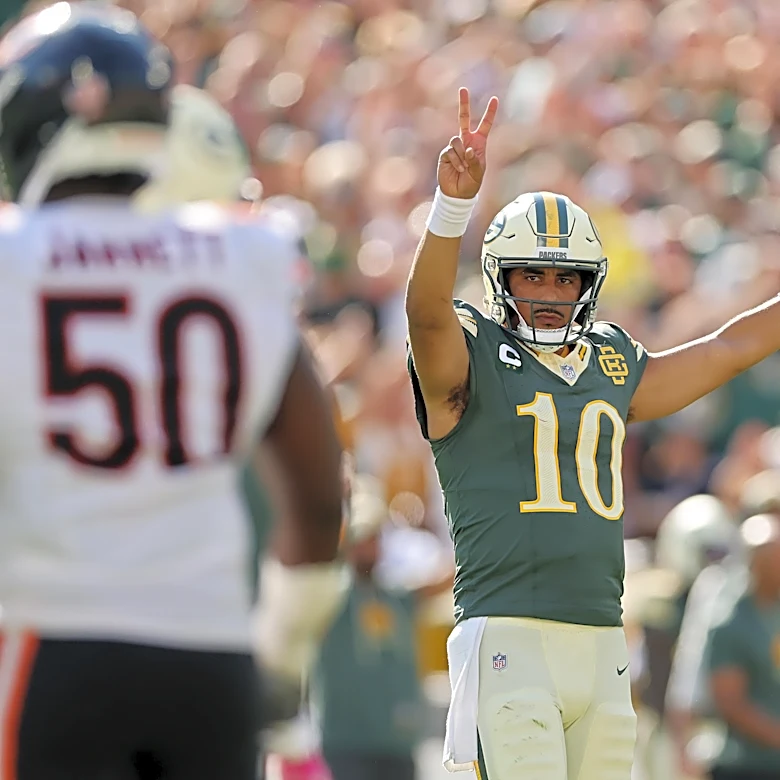

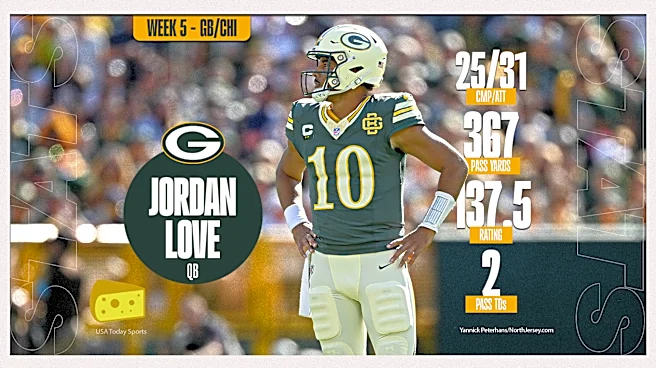
As we do every week in this space, we’re looking at some stats from the Green Bay Packers’ most recent game, courtesy of SumerSports. Today we’re looking at the 31-7 victory over the Chicago Bears in Week 5.
Offense
Last week we saw a drastic decrease in the Packers usage of 11 personnel (1 RB, 1 TE, 3 WR), and a big uptick in their usage of 13 personnel (1 RB, 3 TE, 1 WR). Their usage of 11 jumped a bit from last week, but this feels more like the area they want to live in if given the opportunity. Here
was the Packers personnel usage this week:

The running game was still churning out negative numbers no matter which personnel grouping they were in, but their passing game was positive EPA in every grouping they trotted out. It’s worth noting that most running offenses post a negative EPA per Play. The Packers posted a rush EPA per Play of -0.09 in both 11 & 12 personnel, which would put them 20th in the league. They posted a 50% Success Rate when running out of 12 personnel, which is a very good rate.

In terms of Success Rate, their 12 and 13 personnel packages were doing work in the passing game. They posted a 70% success rate in 12 and 50% in 13.
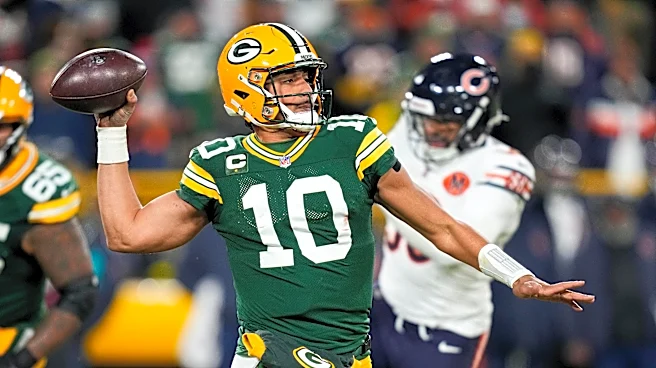
I don’t need to tell you all, but Jordan Love was chucking the ball. He averaged 2.54 seconds to throw. He was still operating off a quick release (his average time to throw in 2025 was 2.89 seconds), but 2.54 seconds is something that can resemble a functional offense. (For reference on that time to throw, Aaron Rodgers had the fastest time to throw in 2025 and he averaged 2.59 seconds to throw. So it could be better, but, based on how the first few weeks went, I’ll take 2.54 seconds.)

Loved turned in an absolutely absurd game when throwing deep. Look at those numbers, man. They’re beautiful.
He was also very good against the blitz. When blitzed, Love was 8/10 for 130 yards (+0.6 EPA per Play). When not blitzed, he was 17/21 for 237 yards (+0.43 EPA per Play). He was absolutely shredding this week, man.
Their run/pass ratio on the game looked a lot like last season. For the game, they were passing 55.9% of the time, but that’s in part due to taking the air out of the ball in the 4th quarter. They came out relatively conservative (52.6% pass rate in the 1st quarter), cranked up the rate in the 2nd quarter (77.8%), kept their foot on the gas in the 3rd quarter (75%), then throttled down the pass rate in the 4th quarter (26.7%). Even then, they didn’t truly let off the gas until midway through the 4th. They opened the 4th with a 66.7% pass rate and didn’t go run-heavy until there was 8:26 left in the game, holding a 31-7 lead (it’s worth noting that they broke a 23 yard run after winding down the game).
That’s how I’d like to see them operate. Set some stuff up in the 1st, attack in the middle quarters, then finish the game off. Zero complaints with the run/pass mix this week.
Let’s talk receivers because, buddy, they were putting on a show. Christian Watson caught 6 of his 8 targets for 143 yards and 2 TDS (+1.29 EPA per Reception). Matthew Golden caught 6 of his 7 targets for 123 yards (+1.08 EPA per Reception). We also saw Tucker Kraft show up, catching all 5 of his targets for 64 yards (+0.62 EPA per Reception), with 38 yards after the catch.
Defense
You know who else showed up? My guy Dani Dennis-Sutton.
He posted a 25% pressure rate, with a 50% pressure rate on stunts (34.8% above the NFL average). When he’s been on the field he has looked like a monster.
In terms of personnel, the Packers primarily lived in Nickel in this game (85.3% Nickel, 13.2% Base, 1.5% Dime). That makes sense given the Bears approach in this game. Here is their personnel breakdown:

The Packers dialed down their blitz rate significantly in this game, choosing instead to drop back into coverage. After being pretty blitz-heavy through the first 4 weeks, the Packers only blitzed on 14.9% of dropbacks this week, 15.2% below NFL average. Despite that, they generated pressure on 40.4% of dropbacks, +0.58% above NFL average. That pressure rate was more due to forcing the QB to hold the ball than anything else. Their quick pressure rate of 17% was 2.9% below NFL average. For the QBs, Tyson Bagent averaged 2.67 seconds to throw while Case Keenum averaged 2.92 seconds to throw.
Albums listened to: The Rocky Valentines – Happy Halloween EP; The Tallest Man on Earth – Just Beyond Endless Mountain; Bon Iver – Bon Iver, Bon Iver