


April showers might bring May flowers, sure, but quality basketball in April opens the door to May games. Perhaps even June. This is the stretch where teams tighten things up, clean their rotations, and get ready for the games that actually matter. Unless you are tanking, of course. Thankfully, the Phoenix Suns are not in that lane. They do not have a draft pick waiting to reward losing, so the mission is simple. Compete. Use these games to learn who shows up when the lights get hot, who fades, and what
you actually have before a very real offseason arrives.
And yet, things feel off in Phoenix.
This is not a team sharpening its tools. This is a team still rummaging through the toolbox, trying to find those damn needlenose pliers. Health has been part of the story all season, and now that bodies are back, it almost feels like there are too many levers to pull. There are too many tools in the proverbial toolbox. There are too many options and not enough clarity. They are not honing an edge. They are still deciding which blade to pick up.
That early-season run? It was real. They took the league by surprise and stacked wins. It is also worth remembering how it happened. Jalen Green, the $33.6 million man, missed 45 games. During that stretch, something formed. Roles made sense. Chemistry showed up. Guys knew where to be and what to do. The team is 16-15 in games in which he has played. They were 27-21 in games without him. Not a singular cause, but worth noting.
Now he is back. Dillon Brooks is back. Mark Williams is back. The team is the healthiest it’s been all season. And somehow, the picture is less clear. The Suns feel uneven, the roles are less defined, and the team is sputtering. Possession to possession, quarter to quarter, game to game. The identity that once felt loud now feels distant.
If you zoom out and look at the month-by-month counting stats for the Phoenix Suns, you can start to see where things are drifting. April is a small sample. Three games are not enough to plant a flag and call it a full-blown trend. But when you layer it on top of what we have been watching in the weeks leading up to it, the picture becomes a little clearer.
The numbers do not exist in a vacuum. They are confirming what the eye test has been telling you. Certain areas are slipping. Possessions that used to be under control are now loosening. Defensive breakdowns that used to be occasional are becoming routine. Fourth quarters are a barren offensive landscape. And when you connect those dots from late March into April, it stops feeling like a blip and starts feeling like direction. And right now, that direction is not the one you want heading into the postseason.
What is concerning? Let’s delve.
Opposing Points in the Paint

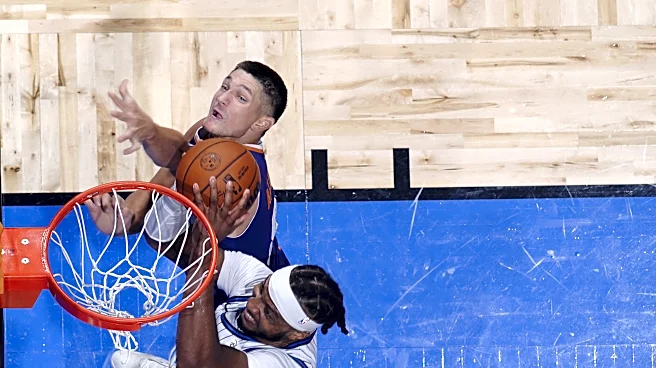
We talked about it in the Weekly Recap, and the numbers keep reinforcing it. Month by month, Phoenix is allowing more damage in the paint, not less. They are allowing 56.0 points in the paint in April, whereas they were permitting 48.5 during the first six months of the year. An extra 8 points nightly is not what anyone would label as “ideal”. That is the wrong direction this time of year. You already know why it matters. The paint is where the highest percentage shots live. Layups, dunks, second-chance looks; all of it adds up quickly when you do not protect that space.
And right now, teams are getting there far too easily. Opposing teams’ offensive rebound percentage in the month of April is 46.5%. It was 32.0% between October and March. The team, as they’ve navigated away from size, has permitted the opposition to roam free to snag offensive rebounds. There is no deterrent, there is no resistance.
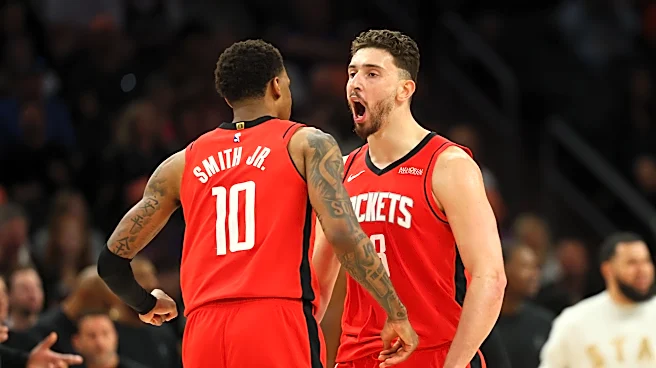
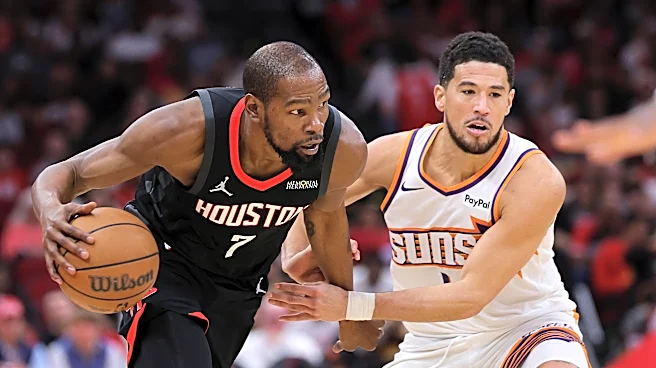
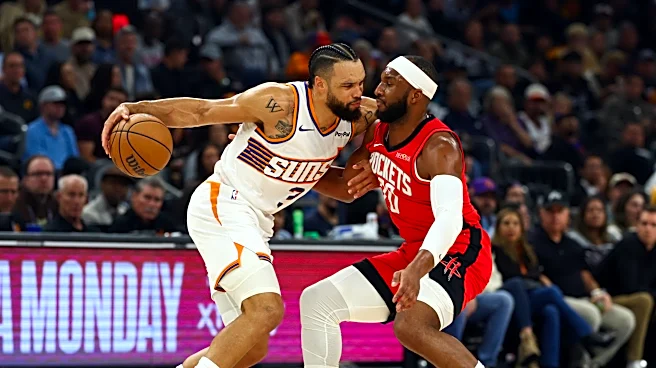
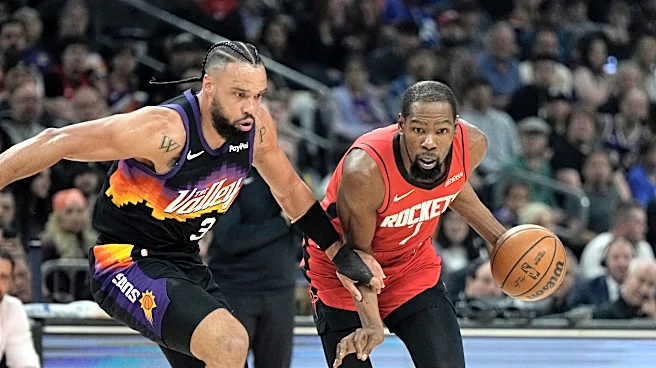
Whether it is guards turning the corner without resistance or bigs cleaning up on the glass, as we saw with the Houston Rockets on Tuesday, it becomes a steady diet of easy points. Missed box outs become putbacks. Broken containment becomes a layup line.
That is not something you can live with. Good teams identify this early. They adjust. They tighten things up. They make the paint uncomfortable. Phoenix is going the other way.
Steals Per Game

The calling card for the Phoenix Suns this season, at least for the first half of it, has been defense. Not passive defense, not sit back and react, but pressure. Disruption. The kind that makes teams uncomfortable and speeds them up. That is the identity. Or at least it was. That is what has separated Phoenix when they are right.
But as the season has moved forward, that edge has dulled.
The steals are not showing up at the same rate. This was the league’s top team in steals at one point. They are now ranked 4th, which obviously isn’t horrible. But they are not trending upward, especially when compared to the front-end of the season.
The activity might still be there, the intent might still exist, but the results are not matching it. Hands are a half step late. Rotations are a beat behind. What used to turn into turnovers is now turning into clean looks.
You can point to fatigue and you can point to injuries. Both are part of the story. None of this happens in isolation. But it is still something you have to acknowledge. Because when your identity is built on disruption, and the disruption starts to fade, everything else becomes harder.
Assist Percentage

One of the more concerning developments with the Phoenix Suns is how sharp the drop has been in certain areas, and assists sit right at the center of it. Yes, the April sample is small. Three games are not enough to paint the full picture. But the recent results have been alarming. Their 49.6 assist percentage is dead last in the NBA.
The scoring is still there, although 110.7 points per game in April is 4th least in the league. A primary reason for this is that the assist numbers have fallen off. 19.7 assists on 39.7 made field goals is a significant shift from what the first six months of the season carried, which was 25 assists on 41 field goals made, a 60.8 assist percentage.
The ball is sticking more. The natural flow that defined this team earlier in the season is not showing up with the same consistency.
When the ball moves, the offense breathes. When it doesn’t, everything tightens. Shots become tougher, possessions become more predictable, and the margin for error shrinks. What you are seeing is a lack of cohesion. Not complete dysfunction, but enough of a drop to notice. Enough to question.
And that is the part that lingers. Because when you move into the postseason, those cracks do not hide. They get exposed.
Fourth Quarter Net Rating

Ummm…gross, right?
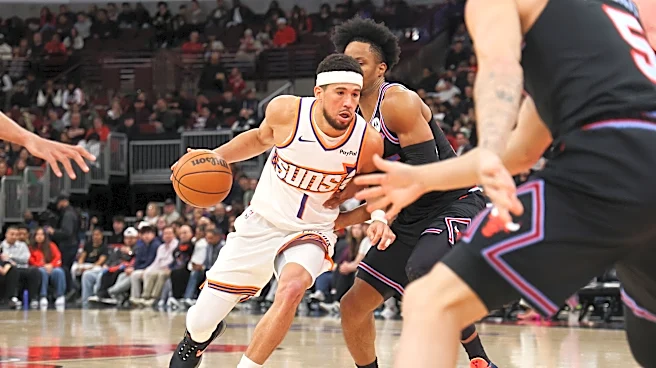
This team is not closing well. The execution slips, the flow disappears, and possessions start to feel heavy. Devin Booker has not elevated in those moments, and when he shifts into deferment mode, the response around him has not been there either. No one is picking up the slack. No one is carrying the weight.
And that is where games are decided. The fourth quarter is where you win or lose, and right now, Phoenix is not holding up in those minutes. Especially in April. The same issue keeps showing up. The same script keeps playing out. When the moments matter most, the Suns are coming up short.
It’s been a season-long issue. The Suns are the worst team in the NBA in fourth quarter scoring, averaging 25.9 points per Q4.
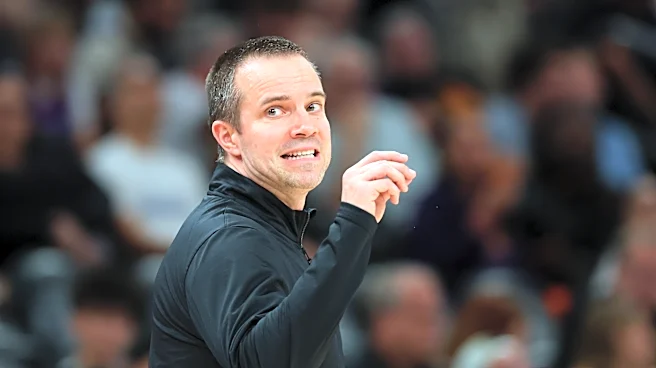
Thankfully, there is still time. Not much, but some. Three games left for the Phoenix Suns before the Play-In, before everything tightens, before every possession carries a little more weight. And that is where the focus turns to Jordan Ott and the rotations.
He is tightening them. That part is clear. But the question that keeps hanging in the air is whether he is tightening in the right places. Because right now, the productivity is not matching the decisions. The lineups are not producing the consistency you need this time of year.
How long do you keep searching? How long do you keep running out combinations that are not giving you what you need, hoping that something clicks? Because at some point, the window for experimentation closes, and the need for clarity takes over.
That is where Phoenix is right now. Three games to figure it out. Three games to find the groups you trust. Three games to build something that can hold when the pressure rises. After that, there is no more searching. Only results.
In a recent article, written in The Players Tribune, Dillon Brooks stated the following:
We got everybody in the league looking down, staring at their shoes.
Honestly, answer me…. Who in their right mind wants to see the Phoenix Suns right now?
My guess is that the answer to that question is a lot of teams.
That disruptive identity they built early in the season? It has faded. Teams are getting into the paint whenever they want. The activity is there at times, but it is not turning into steals. The ball is not moving with purpose, assists are down, and possessions feel heavier. And when the game tightens in the fourth, things fall apart.
Those are all symptoms of the same thing. Execution.
You can point in a lot of directions. Jordan Ott and the rotations. The players and their ability to carry out what is being asked. Even the roster construction itself. It sounds strange, but this team might be too deep for its own good right now. Too many options, not enough clarity. And when you are still trying to figure out who plays, when they play, and how they fit together this late in the season, it shows.
Because instead of leaning into an identity, you drift away from one. Instead of being disruptive, you become disjointed. Disconnected. Discombobulated. The version of this team we saw early, the one that had a clear edge and a clear purpose, that version feels distant. And with the postseason around the corner, that is the part that should make you uneasy.