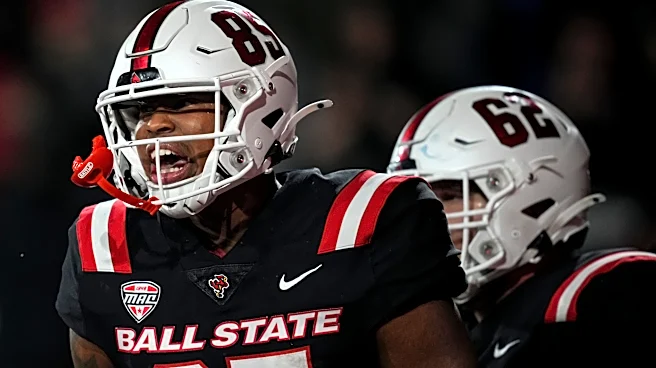



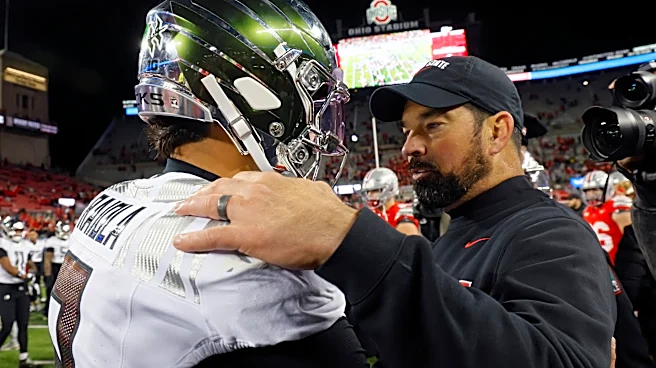
Something needs to change in Columbus, Ohio. Anyone who watched this team play over the last two weeks would likely be in agreement with that.
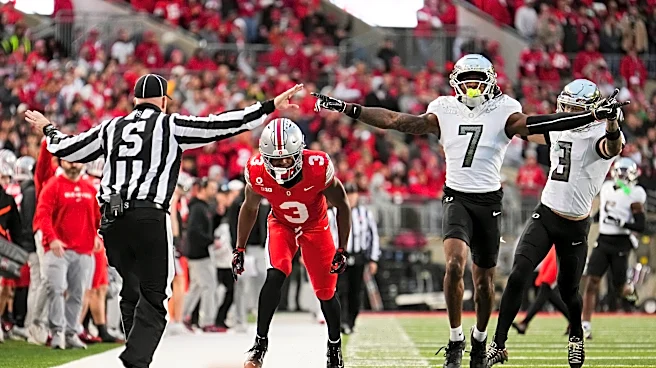
Ohio State, who ranked No. 1 in the preseason polls, fell to 6-3 Saturday after allowing 38 unanswered points en route to getting walloped at home by Oregon, 41-28.
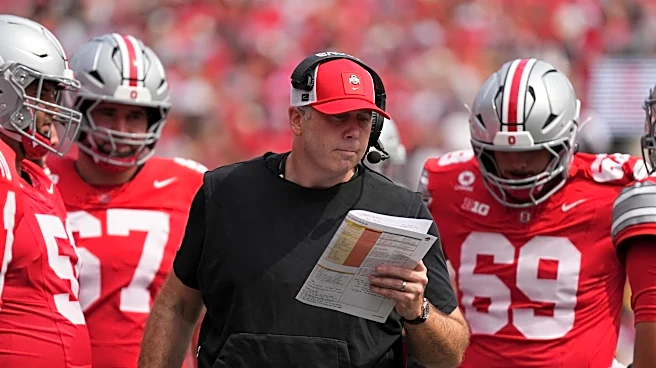
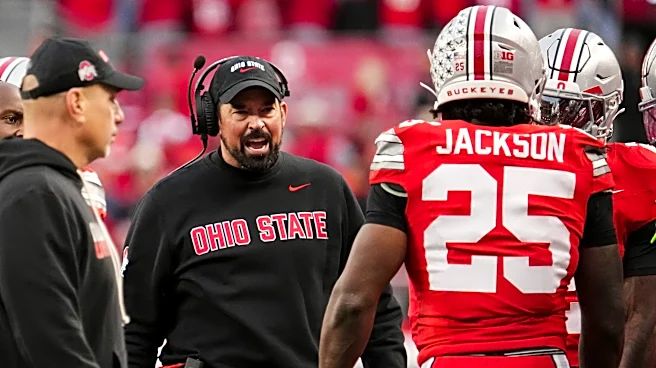
But when Ryan Day said he would “have to evaluate everything” to figure out what went wrong, I didn’t necessarily think he’d start with special teams coordinator Robby Discher, who was fired Monday
after less than a season with the team.
It’s not that Discher was fired without cause. The Buckeyes’ special teams have been a mess this season, with sloppy penalties and frustrating mistakes proving costly. Particularly infuriating was Oregon’s fake punt conversion on 4th-and-9, arguably one of the biggest momentum shifts for the Ducks in the game.
Through Week 10, Ohio State ranked 102nd nationally out of 138 teams in ESPN’s special teams efficiency rankings, falling further when we look at punt return average (113th nationally with 5.9 yards per return) and kickoff return average (118th nationally with 17.4 yards per return).
All of these are significant drops from last season, and when we evaluate the Buckeyes’ three losses, special teams failures factored in critically in each of them.
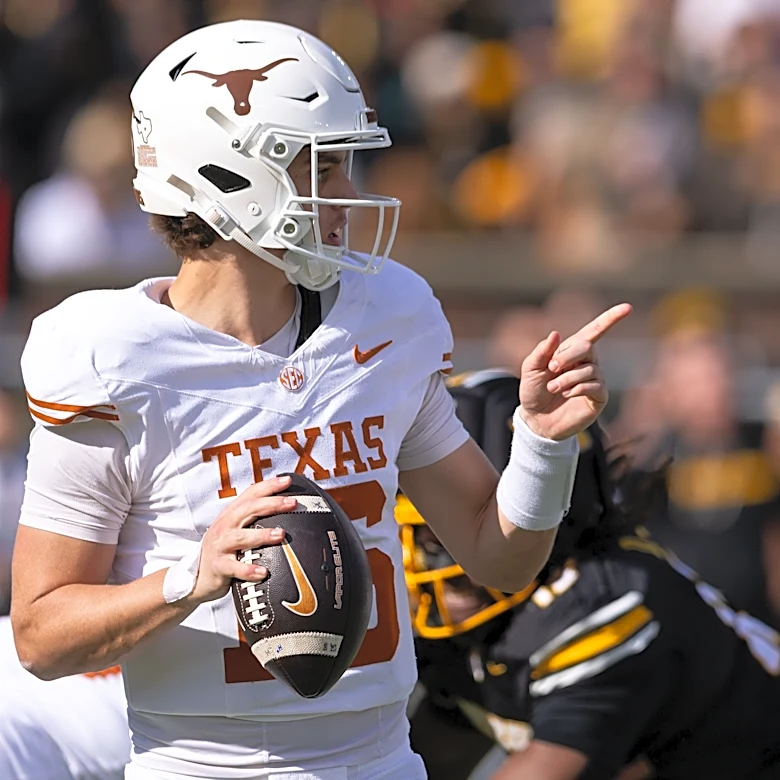
Against Texas, kicker Connor Hawkins’ missed a 45-yard field goal in a game that was determined by one point. Against USC on Halloween, the Buckeyes had three special teams penalties and allowed a 44-yard punt return on Joe McGuire’s 32-yard punt. And then there was Oregon’s fake punt.
These are legitimate failures on the part of Discher and Ohio State’s special teams. He was hired to fix a problem, and he was fired because that problem persists. But let’s not pretend like special teams problems didn’t predate his arrival.
Ohio State has been without a dedicated special teams coordinator since 2023. Fans are still haunted by missed field goals in the Buckeyes’ 13-10 loss to Michigan in 2024 and 13-10 loss to Indiana in last year’s Big Ten Championship.
Both of those kicks were shorter than 35 yards.
When we consider what Discher walked into, it hardly feels fair to have him shoulder the entire blame for the shortcomings. He didn’t wander into Columbus without qualifications. At Illinois, Discher’s special teams unit ranked 16th and 30th nationally in 2024 and 2025, significantly higher than Ohio State’s in the same years, and he has success developing kickers and returners.
That he failed to deliver comparable results at Ohio State shouldn’t negate his previous accomplishments, and while it’s certainly fair to criticize his results with the Buckeyes, it also raises a fair question: Was the problem entirely Discher, or were there personnel, execution and organizational issues that further contributed to the special teams failures?
If coaches and players are being held accountable for the mess Ohio State currently finds itself in, then firings are going to be an unfortunate part of that deal. But Discher should not become a scapegoat for the entire program’s disappointing season.
While Discher’s special teams have been a liability, the Buckeyes have a much bigger problem: an offense that has consistently looked uninspired and lifeless. If we’re showing people to the door, offensive coordinator Arthur Smith should have been much closer to the front of the line than Discher.
As the new guy in town, Smith deserved a week or two to figure things out—a learning curve, if you will. But the fact that the Buckeyes are nine games into the season with seemingly no vision is a major problem.
The Buckeyes have historically been at their best when they play explosive football. With Smith steering the ship, they have lacked both explosiveness and creativity. In fact, the fake punt was infuriating as a Buckeye fan, but it’s also the kind of inspired play calling Ohio State’s offense could use.
Even when Julian Sayin was on the field before his injury, it felt like they could never establish any rhythm this season. This should never happen—and certainly not on an offense that has both Sayin and Jeremiah Smith, whose talents have, frankly, been squandered this season.
It’s fair to say Smith, like Discher, inherited some issues, particularly on the offensive line, which has negatively impacted both the passing and rushing offenses alike. Problems with the O-line pre-date Smith, and responsibility must be shared with position coaches and recruiters.
But Smith was also handed an offense whose overall talent is an embarrassment of riches, and just like Discher was hired to fix a problem and was fired for not doing so, Smith isn’t finding a solution for the problems he inherited.
The offense has struggled to create favorable matchups for its receivers, and any semblance of aggressive play calling has been hard to find. A good offensive coordinator is going to put his players in the best possible position to succeed.
Rather than setting up his players for success, Smith seems intent on imposing his style on the offense rather than tailoring his system to the strengths of his talent.
It’s left this very talented Buckeye offense looking ordinary in spite of top-tier recruiting and top-tier talent, not the least of which is Jeremiah Smith, widely considered the best player in college football. If this offense is underperforming, some of the heat has to be on the coaches.
Despite being the type of player who can turn a game around with one play, Jeremiah Smith went two full quarters without a target against Oregon. Against Indiana, he came off the field while the Buckeyes were in the red zone.
Under no circumstances should the best player in college football ever be off the field unless there’s an injury.
Ultimately, the coaching staff needs to be the ones to answer for the mediocrity, because the talent isn’t the problem.
I know what you’re thinking—but Jami, maybe if Sayin didn’t get injured, things would be different.
Maybe they would be! Certainly, Arthur Smith gets a little bit of grace because he’s accounting for Luke Fahey’s inexperience. It would be unfair to evaluate his efforts without acknowledging the cost of Sayin’s injury or the fact that with Sayin throwing the ball, this is a different football team.
But—and it’s a big “but”—even Sayin seemed to struggle with Smith’s offense, and part of a coordinator’s job is to adjust to the players available to him. Sayin’s injury cannot be a permanent excuse for offensive failings when the coaches have a responsibility to ensure they’ve done enough to develop a backup should the time come.
Now, I do need to address the elephant in the room: according to The Columbus Dispatch, Discher will be owed more than $500,000 in his contract buyout.
Smith, whose contract runs through 2027, signed a contract worth $3.5 million for two years. He would be owed far more. Very probably, the details of Smith’s contract have factored into the decision to keep him on for now.
But we need to ask ourselves, how much is it costing Ohio State in the long run if they miss the playoffs (or worse—if this season hurts recruiting, which has long-term implications for the team’s success)? Smith’s contract is likely a drop in the bucket comparatively.
At the end of the day, it’s entirely possible Discher needed to go. But the Oregon game exposed issues that went far beyond a fake punt. That play was a major failure, but so were 38 unanswered points, and that play came early enough in the game that Ohio State needed to have an answer.
The fake punt was a bad moment, but the offense’s shortcomings are indicative of a larger pattern. A championship-caliber offense has to find a way to respond when its opponents make a run. Instead, the Buckeyes failed to sustain drives or regain control of the situation on their home field.
Ohio State’s season deteriorated before our eyes as a result.
Was special teams a problem for Ohio State on Saturday? Absolutely. Has it been a problem all season long? Most definitely. But does there also seem to be a program-wide problem involving offensive execution, player development, coaching decisions and the ability (or lack thereof) to respond to adversity? One hundred percent.
If Day believes that firing Discher was a critical piece of getting this team back on track, then I’m not going to fight that decision.
He needs to apply the same logic and accountability to his offensive staff, particularly Smith. Otherwise, we’re just rearranging furniture while the house is burning.