
For the most part, NFL Draft prospects tend to fall into general ranges when evaluating them: clear top-10 picks, first-rounders, Day 2 targets, Day 3 players and many other categories.
Every year, though, there are a handful of prospects who defy that structure. These are the players with wide draft ranges, the ones teams struggle to place because of scheme fit, injuries, projection, or inconsistency.
Looking at this class with the Kansas City Chiefs in mind, five prospects stand out as particularly
difficult to gauge:
1. TE Eli Stowers, Vanderbilt

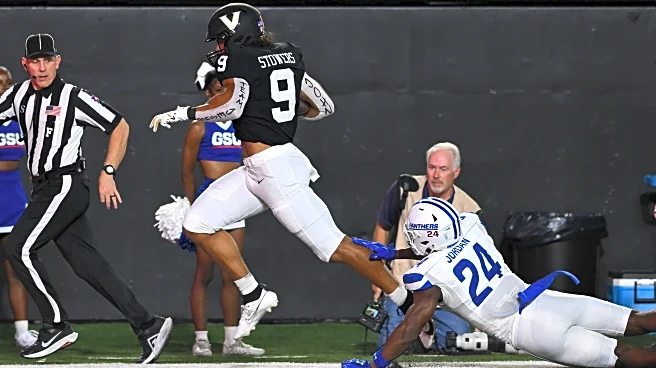
Stowers transitioned to tight end just three years ago after being a four-star quarterback recruit out of high school. He quickly developed into one of the best receiving tight ends in college football and played a key role in Vanderbilt’s turnaround.
His performance at the NFL Scouting Combine only added to the intrigue, as he posted elite numbers across the board — including a blazing 40-yard dash time of 4.51 seconds and impressive results in explosive tests.
On paper, that profile screams top-50 pick, but Stowers comes with a major caveat: he’s essentially a non-factor as a blocker right now. He was rarely tasked with it in college, and the few examples ended poorly. Given his size and inexperience, it’s unlikely he’ll be able to hold up as an in-line tight end early in his NFL career.
That means Stowers will have to carve out a role as a big slot receiver, where he thrived for the Commodores. To justify being on the field, he’ll have to be a better option than the actual slot receivers.
That’s a thin needle to thread, but the upside of a player with this athleticism is so high, it might be worth it.
2. TE Michael Trigg, Baylor

Watching Trigg feels like riding a roller coaster. At his best, he’s a dynamic, big-bodied receiver with the ability to stretch the field and create after the catch. His special flashes hint at a player who could develop into a high-end offensive weapon.
The problem is consistency. Trigg’s hands can be unreliable, his route running varies from rep to rep, and he doesn’t offer much as a blocker. Even within the same game, his performance can swing dramatically between highlight-reel plays and frustrating mistakes.
That volatility makes him one of the toughest players in the class to project. If a team believes it can unlock more consistency, his ceiling could justify a relatively early selection, but his floor is much lower.
It wouldn’t be surprising to see him come off the board somewhere in the middle of Day 2 — or slide all the way into Day 3. He has one of the widest gaps between floor and ceiling in the class.
3. DT Caleb Banks, Florida
Banks might be the most fascinating first-round wild card. Physically, he checks every box you could want in a defensive tackle at 6 feet 6 inches tall, over 320 pounds, and equipped with 35-inch long arms. He has rare explosiveness that is difficult to find matched with his physique.
His performance at the Combine only reinforced that, especially knowing he reportedly tested while dealing with a fractured foot.
That injury history is the biggest question about his status and draft value. Foot injuries are always concerning for players of his size, and missing significant time in 2025 only adds to the uncertainty.
On film, Banks is more advanced than he often gets credit for. He consistently disrupts the backfield, using a combination of quickness, power, and strong hands to beat blockers. His biggest area for growth is finishing plays: turning pressures into sacks, and consistently capitalizing on the advantages he creates.
Ultimately, Banks has the traits to become one of the best defensive tackles in the league if everything clicks — but durability concerns lead to the reasons he would be a risky selection.
4. CB Brandon Cisse, South Carolina

Cisse has started to generate first-round buzz, largely because of his athletic profile. While he is under 6 feet tall and just under 190 pounds, he’s an explosive athlete.
The explosiveness shows up on tape, particularly in his ability to close on the ball and recover when initially beaten.
However, his film is more uneven than his athletic traits might suggest. Cisse is still developing in terms of route recognition and anticipation. Too often, he’s forced to rely on his recovery speed because he’s a step behind early in the rep.
There are reasons for optimism: he’s young and still learning the position, and some of his issues may be tied to coaching and scheme. If a team believes it can refine his technique and improve his processing, the physical tools are there for him to develop into a high-level starter.
That said, projecting that kind of growth is always risky. Some teams may view him as a first-round talent based on upside, while others may see a developmental player better suited for Day 2.
5. WR Chris Bell, Louisville

Bell’s late-season ACL tear prevented him from testing during the pre-draft process, leaving teams to rely on his film in evaluation.
When you watch Bell, the appeal is clear: he’s at his best working underneath and creating after the catch, using his size and explosiveness to generate yards once the ball is in his hands. His game reminds me of Chiefs’ wide receiver Rashee Rice. His best role will be in the slot, a similar role to Rice’s.
Bell hasn’t consistently shown the ability to beat man coverage on the outside, which may limit him to that slot-heavy role. That narrows his appeal, as not every team is looking for — or knows how to maximize — that type of receiver.
The knee injury adds another layer of uncertainty. If it impacts his explosiveness, it could diminish the very trait that makes him special. At full strength, Bell looks like a top-50 talent, but the combination of medical concerns and role specificity could cause him to slide.