


On paper, New England Patriots fielded one of the NFL’s most productive rushing attacks in 2025. Despite finishing sixth in rushing yards and fourth in rushing touchdowns, however, there was more to offer from the team’s designed run game.
Still, the potential upside of a second year of the Rhamondre Stevenson and TreVeyon Henderson pairing left New England comfortable making minimal changes to the room this offseason.
In the next edition of our Patriots training camp preview series, we’ll take a look
at New England’s running back corps in its entirety and discuss the biggest takeaways heading into the summer practices. Veterans will report to the facility on July 24.
*Denotes player on the Pats Pulpit 53-man roster projection
Depth chart
Starters: Rhamondre Stevenson (28)*, TreVeyon Henderson (23)* | Backups: Lan Larison (24)*, Terrell Jennings (25), Jam Miller (22/R), Myles Montgomery (23/R)
Stevenson is projected to remain the starting back in 2026 after an up-and-down season. The sixth-year back lost three fumbles within the first five weeks; however, Stevenson fought through the hurdle and established himself as a dependable presence.
En route to a Super Bowl appearance, Stevenson finished with the 10th-highest yards over expected percentage among running backs at 45% (a measure of the rushing attempts where a rusher gains more yards than are blocked for them).
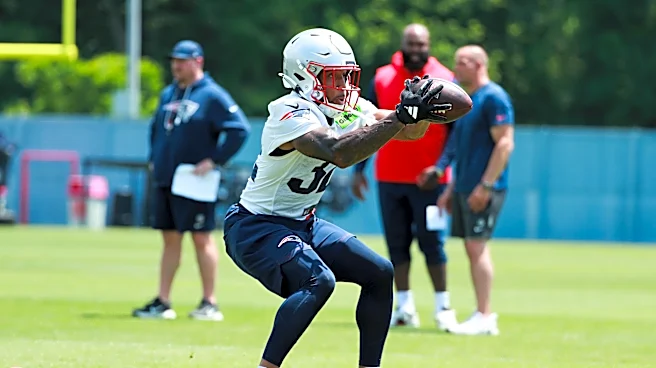
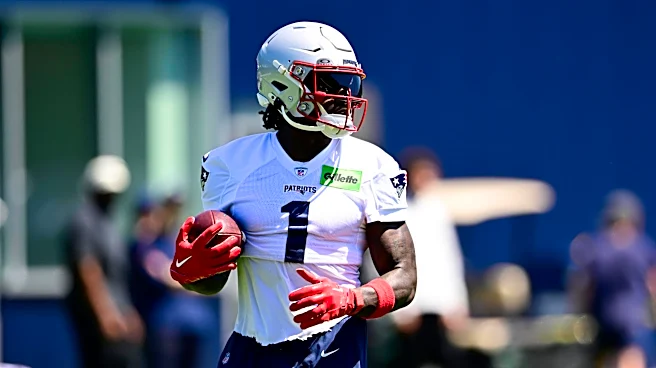
Alongside Stevenson is Henderson, who immediately established himself as one of the most explosive rushers in the league with four touchdown runs of 50 or more yards and 30 missed tackles. The 23-year-old had apparent lapses as a blocker and efficient runner between the tackles, but he’ll look to expand on a positive rookie season.
Both Lan Larison and Terrell Jennings saw time as the third running back in the rotation during spring practices and will continue to compete with each other for that role heading into training camp. Jennings has over 36 rushing attempts for the Patriots over the past two seasons and will open camp on the non-football injury list, while Larison is returning from a season-ending broken foot he suffered in 2025 as a rookie.
Rounding out the back end of the depth chart are powerful seventh-round rookie Jam Miller from Alabama and dynamic undrafted free agent Myles Montgomery from UCF. The two additions have worked with the third-team offense thus far and will continue to acclimate to the NFL as the offseason workouts progress.
Key question: Can the O-line provide enough as a run-blocking unit?
While the volume numbers reflect the run-game production near the top of the league, the efficiency metrics suggest otherwise.
New England’s running backs performed at a league-average 4.4 yards per attempt. Yet, they only totaled an EPA (expected points added) per rush of -0.03, which ranks No. 17, meaning the offense wasn’t consistently creating favorable situations on the ground.
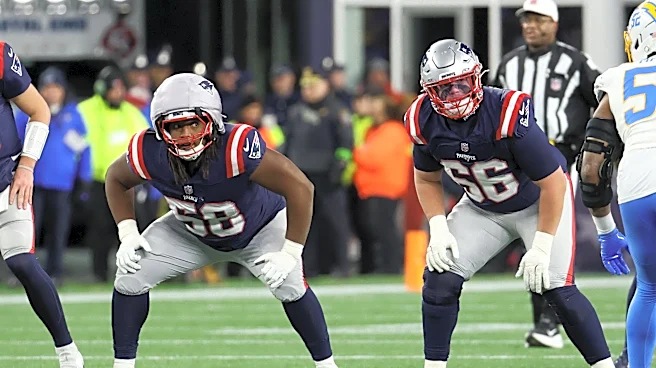
Although that figure stems from a multitude of factors, New England’s offensive line played a noticeable role in that underperformance. The Patriots’ line needed more push and play strength at the point of attack to routinely create running lanes, leading to the signing of Alijah Vera-Tucker at left guard. The former New York Jet slots in between left tackle Will Campbell and newly transitioned center Jared Wilson, who will be entering their second seasons.
Padded practices during training camp, when the offense can begin integrating live designed runs, will be a measure of how improved the run blocking will be.
X-Factor: TreVeyon Henderson
Additionally, though Henderson proved he’s a dynamic playmaker who is a touchdown threat whenever the ball is in his hands, the ball carrier’s vision and pass protection ability held him back.
The highly touted pass blocker out of Ohio State couldn’t replicate the same collegiate success during his rookie year. Furthermore, he lacked the proper field vision to improvise behind the line of scrimmage, resulting in stuffed attempts behind the line of scrimmage.
In terms of improvement, Henderson identified similar areas of emphasis earlier this offseason.
“The biggest thing I want to continue to develop, blocking and just during this time running routes out of the backfield, catching the ball out of the backfield,” Henderson said to reporters at the beginning of June. “This is a time when we can really just continue to enhance those skills. Specifically those two skills, I definitely want to continue to develop.”
Much of the running back room’s potential relies on the development of Henderson entering year two. If he can find his stride, Henderson and Stevenson can make New England’s offense a significant two-dimensional threat in 2026.