



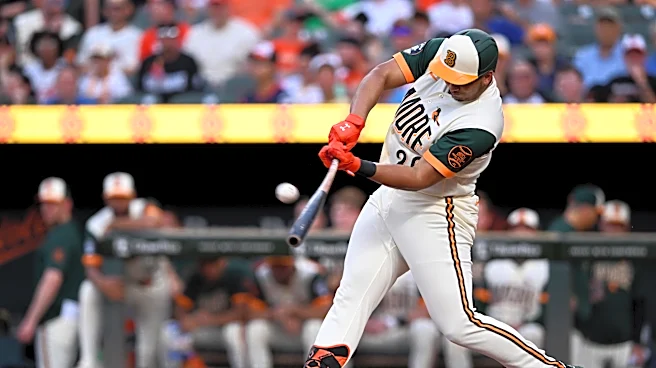
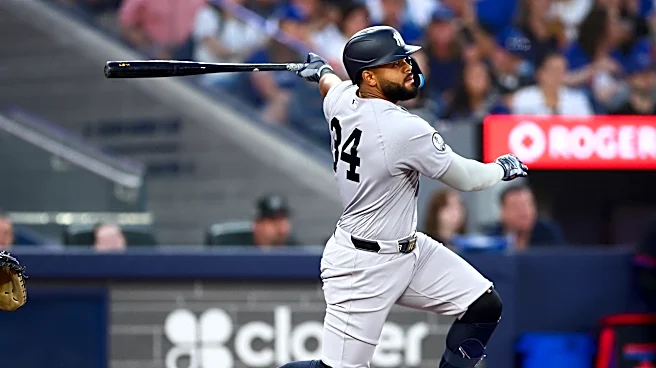
Tuesday night’s series opener against the Orioles followed the exact same script that we’ve seen the last several weeks with the Yankees. A comatose offense, an elite pitching staff, a close game late, and a battle of the bullpens where every run matters. In the seventh inning, when the Yankees ultimately found the go-ahead runs with a two-run single by Trent Grisham, I thought about some things at the start of the rally.
Spencer Jones started it with a single off Shane Baz, representing the go-ahead
run. With the team’s innate struggle to score runs of late, I immediately thought of the possibility of the guy who is regarded as the fastest player on the team being put in motion to give you three cracks at a runner in scoring position. Instead, over the next two at-bats, Jones stayed put, only advancing to second on George Lombard Jr.’s single.
This wound up not mattering due to Grisham’s heroics, but what if he didn’t come through against the lefty? While trying not to fall victim to Michael Kay’s fallacy of the predetermined outcome, if Jones ran on a relatively poor thrower in Carlos Narvaez and got to second, he would’ve scored easily on the slow grounder through the left side.
It’s not the first time I’ve felt something like this watching the Yankees (try to) hit. As much as the optics look bad when you mess up on the basepaths, the Yankees are just not good enough offensively to trust themselves to get runners over and hit them in right now. With the most athletic roster they’ve had in quite a long time, the Yankees need to lean into their speed and use it to push the envelope offensively, even if it means risking more outs on the bases.
For much of the season, it was part of the Yankees’ identity to leverage their speed. Through the Fourth of July, the Yankees were second in all of baseball in stolen bases with 92, leading all American League teams by at least 10. They had a teamwide Baserunning Runs (BsR) of 5.8, which was already their highest since 2017 while at the season’s halfway mark. It was a stark reversal from years past, when baserunning was perhaps the least important aspect of the game to them.
Fast forward six weeks, and things have changed. Since July 5, they’ve slowed their pace of stolen bases to eighth in baseball with 28, but the more stark decline is going from one of the best baserunning teams in baseball to the worst, recording -1.6 BsR in six weeks, a number that rivals the old, unathletic Yankees teams we saw a few years ago. This is coming with the most athletic roster the team has ever had, particularly with Aaron Judge and Giancarlo Stanton on the shelf due to injury.
There have been times when the Yankees are not as willing to push the envelope on the basepaths, likely due to the game situation. With the offensive struggles, they don’t want to risk giving away outs, which might make them intuitively less aggressive in certain situations. This doesn’t stop the speedy guys who get great jumps from stealing, but it tries to eliminate risk. Despite this, the team’s success rate has declined from a rate of 77.9 percent to just 70 percent while attempting just 1.08 stolen bases a game, compared to 1.34 before. Declining both efficiency and quantity is a no-go.
The decrease in BsR may also be correlated with the flip side, being too aggressive to try and steal a run. Two recent examples include Ryan McMahon attempting to advance to third last week against Seattle on a botched relay to ensure Jazz Chisholm Jr. scored, and this near-perfectly executed play by José Caballero to stay in a rundown long enough to get Chisholm to score an insurance run.
Both of these plays symbolize a team that wants to ensure they can get a singular run, at the expense of a larger rally, due to their current capabilities, but the second one was significantly wiser than the first and is the sort of thing you want to see. Not only did Charles McAdoo get the tag on by only a millimeter, but if Caballero didn’t slip on the rundown, he would’ve been safe at second while simultaneously scoring Chisholm. These are the kind of plays and the kind of players that you want to do this with.
The Yankees don’t have baserunning savants that can make slower players threats on the bases like Antoan Richardson did with Juan Soto last year in Queens, but they do have speed. On any given night, they boast at least three plus-plus runners: Chisholm, Caballero, Jones, and Lombard. These guys have some problems getting on base, for sure, but there have been situations almost nightly where they can contribute.
Getting thrown out trying to steal a base is brutal, especially for an offense that is struggling to score, but the upside is tremendous. One of these fast players leading off an inning with a walk or single and immediately getting into scoring position gives you three opportunities with RISP. Chisholm leads MLB in steals of third base, where the Yankees as a team are the best in baseball at (24-for-27). Those are especially valuable with less than two outs.
There’s also a formula that shows it’s worth it to have some risk attached. Look at the AL East-leading Rays. They almost always lead the league in outs on the bases and currently sit fifth this year while also being picked off a league-high 16 times. They get thrown out at home more than anyone but the Nationals. For a team that’s seen as the beacon of fundamental baseball, they make these mistakes way more often than the Yankees, but they do it with a method of aggressiveness that overall makes them a net positive.
Baseball Savant has more complex baserunning stats that show another side to this. The most aggressive teams in the sport at taking the extra base are among the best in their version of Baserunning Runs, while teams that are more passive are towards the bottom. The only thing that really stands out here with the Yankees is that they have -4 BsR on steals of second, which tracks with their mediocre 73 percent rate of successful steals. Part of that is likely dragged down by Cody Bellinger’s struggles this year (9-for-15) and Caballero’s propensity to overslide and get picked off.
All of this is an exercise in measuring risk. Is the benefit of trying to take the extra base and maximize RISP opportunities for an offense that consistently strands them worth the downside of giving away outs in an already perilous situation? For at least the time being, it just might be.