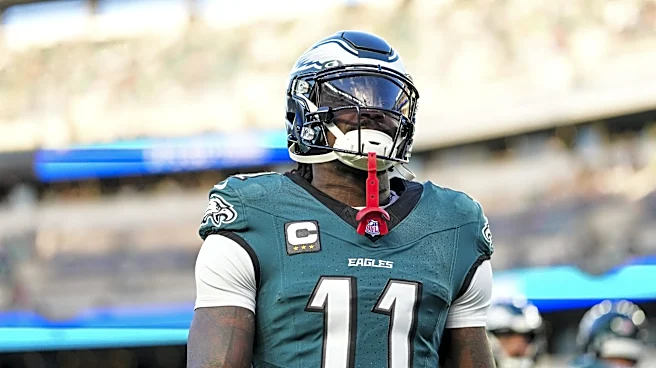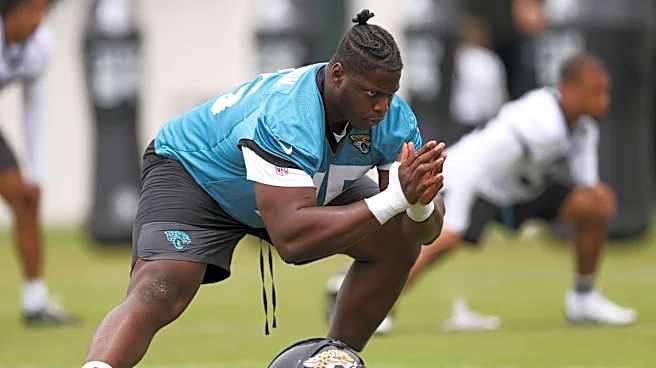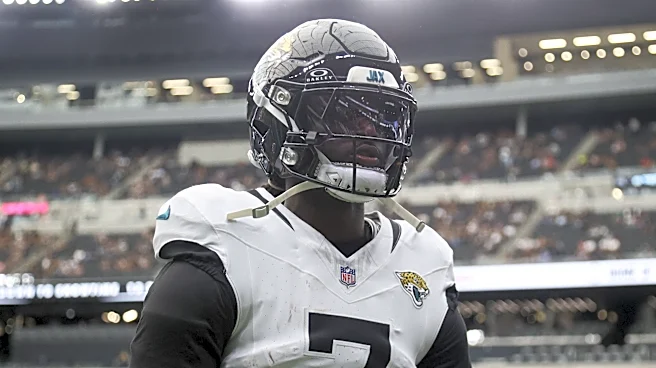





The Brian Thomas Jr. trade rumors have taken on a Groundhog Day quality in recent weeks, the same reports cycling through the NFL media landscape with just enough variation to keep the conversation alive. Given that, it feels like the right time to do something the fanbase hasn’t fully been willing to do: lay out every argument, for and against, as objectively as possible.
Bleacher Report’s James Palmer is the most recent NFL insider to link Jacksonville to a potential AJ Brown trade, while also reporting
that he’s heard conflicting information behind closed doors, that Brian Thomas Jr. both is and isn’t available depending on who you ask. Even Adam Schefter weighed in on his podcast, stating he expects Brown to be traded after June 1st, though he had no specific word on Jacksonville’s interest level, if any exists at all.
Within the fanbase, the conversation has been almost exclusively one-directional, reasons why it won’t happen. And there are legitimate reasons for that. But discussing only why a move won’t happen, when genuine arguments exist for why it would and wouldn’t would be irrational. That’s precisely how you never see something coming. So let’s get into all of it.
The Case For A Move

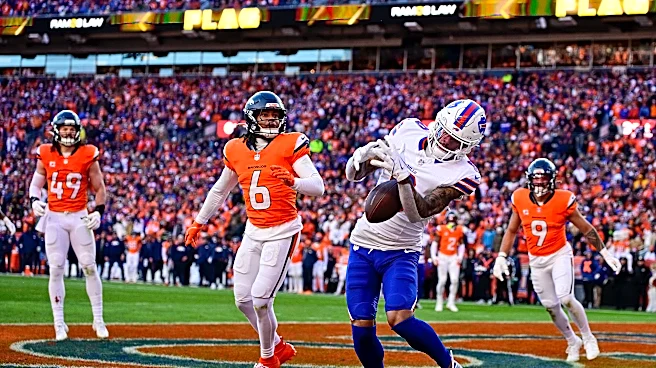
If Jacksonville were to acquire AJ Brown in a Brian Thomas Jr. trade, the most immediate impact would be felt in the vertical passing game. Brown is a proven vertical threat who wins one-on-one matchups at an elite level, the kind of player who would give Trevor Lawrence the most accomplished wide receiver of his NFL career, while simultaneously giving Brown the best quarterback of his. Think of it as a Stefon Diggs arriving in Buffalo in 2020-type of move. Brown is coming off a “down” 2025 season with 78 catches on 121 targets, for 1003 yards, seven touchdowns, in 15 games played. That’s an 1,136 yard, 8 touchdown “down season” with 17 games played. The offensive implications would be significant, with Brown’s ability to force defensive attention. A true X receiver of Brown’s caliber virtually guarantees two-high safety looks from opposing defenses, which in turn opens the running game and creates easier throws across the rest of the formation.
The current state of Jacksonville’s receiver room also makes this conversation more nuanced than most are willing to admit. With Travis Hunter’s ability to run clearout routes and much more, and creating matchup problems from multiple alignments, the Jaguars have a legitimate argument that they could absorb the loss of Thomas Jr. without the offensive drop-off being significant. This is particularly true, given the volume of receiver talent brought in this offseason. Jacksonville drafted two late-round receivers, added multiple undrafted free agents in a Parker Washington-like developmental mold, and has genuine depth throughout the position group. The options exist to move on, even if the probability remains low.
There’s also an on-field evaluation component that deserves honest acknowledgment. Thomas Jr. showed visible uneasiness running routes across the formation or into the teeth of the defense in 2025. He looked significantly more comfortable later in the season when the offense simplified his route tree, leaning more heavily on straight vertical routes and limiting the option-based concepts. That adjustment appeared to be born out of necessity rather than preference, and it raises a legitimate question about the ceiling of his role within the full version of this offense.
Finally, context matters when considering who James Gladstone is and how this front office operates. The Rams model, the blueprint Gladstone was trained in, has never been shy about trading away draft capital for proven, Pro Bowl-caliber talent. The most recent example being Los Angeles’ trade for Trent McDuffie for their first round pick. With nearly a full season of in-house evaluation on Thomas Jr. completed, Gladstone has more information on this player than any outside analyst. The question of whether to acquire AJ Brown isn’t philosophically different from trading away a first round assett for an established receiver while Jacksonville’s Super Bowl window is open. Brown is arguably the more certain investment, albeit for a shorter timeframe, due to age differences. That has to matter in this equation.
The Case Against A Move

The counterarguments against moving Thomas Jr and adding Brown are equally compelling, and there are several worth taking seriously. The financial reality is perhaps the most straightforward obstacle. Jacksonville has Parker Washington approaching a contract year, Jakobi Meyers most recently paid, and Brian Thomas Jr. under three years of team control on a cost-controlled rookie deal. Layering AJ Brown’s contract, which runs through his age-32 season, on top of that structure is a significant ask with Jacksonville’s limited cap space. Brown is 30 years old. Thomas Jr. is 23. The math of roster building doesn’t easily accommodate that trade-off.
The locker room dimension is more complicated. Brown’s behavior in Philadelphia when things weren’t going his way was visible and documented. Bringing in a player of that personality type, one who would command targets and cap space simultaneously, carries real risk. The flip side of that argument is also worth considering. A locker room that claims to have the right structure and leadership voices in year two of a culture build should, theoretically, be equipped to absorb a complicated personality, provided the talent justifies it. This was, essentially, the Jalen Ramsey conversation in its time. When the ability is elite enough, teams find ways to make the personality work. You do anything for a win. If that means bringing in a paid mercenary into the fold, then welcome aboard.
The Clock Is Ticking
Perhaps the most underappreciated element of this entire conversation is its timing. If Liam Coen and James Gladstone have any genuine concern about the limitations Thomas Jr. showed in 2025, specifically his reluctance in the short and intermediate areas of the field, then there is a running clock on this decision. Once that information, of continued struggles, becomes league-wide knowledge via joint practices and preseason performance, his trade value immediately diminishes. At the latest, and assuming a reasonably normal preseason and early season performance (without drops or middle field struggles), the window to move Thomas Jr. for a first or second-round pick realistically extends to this year’s trade deadline, and not much further.
The Central Question
The entire analysis rests on what Brian Thomas Jr will Jaguars fans see in the 2026 offseason: ṭhe complete X receiver who can threaten defenses at every level? Or is he an outside vertical option, a clearout specialist in the tradition of Brandin Cooks, Van Jefferson, or Tutu Atwell from the Rams’ receiver carousel? Opposing defenses often played softer coverage against Thomas Jr, effectively removing him from plays. For that to change, Thomas Jr. must demonstrate a willingness and ability to win in the middle field, catch-and-run game, which then creates the leverage for the deep shots to become more consistent, by moving coverage up.
If he does that, the decision is easy, you keep him and move on from this conversation entirely. But if the questions linger into 2026, the decision becomes harder. And hard decisions in the NFL have a tendency to resolve themselves in ways that fans don’t see coming.
The Brian Thomas Jr trade discourse isn’t going away any time soon, Duval. At least, not until the games are played. For clarity, no one is saying the June 1st AJ Brown trade is likely. It probably isn’t, with his likely landing spot being the New England Patriots. But dismissing it as impossible, without honestly accounting for why it wouldn’t be irrational, is how fanbases end up blindsided. The arguments exist on both sides. Now you have all of them.
How do you see the 2026 season shaping up for Thomas Jr, BigCatCountry? Give us your yardage and touchdown projections for this season in the comments!