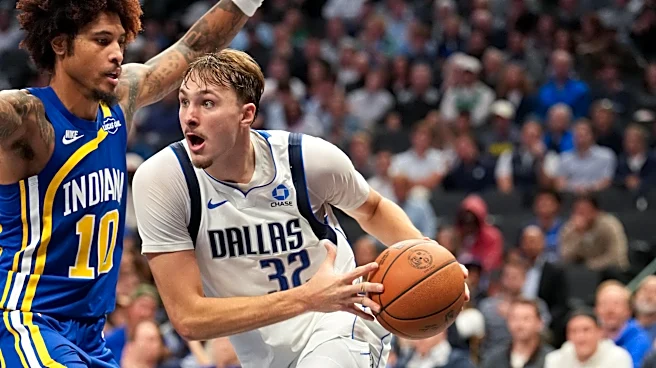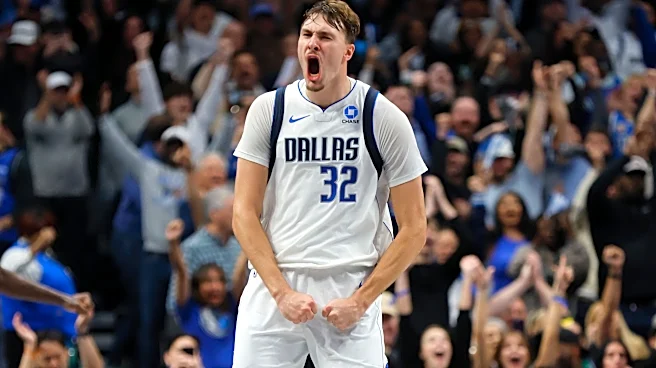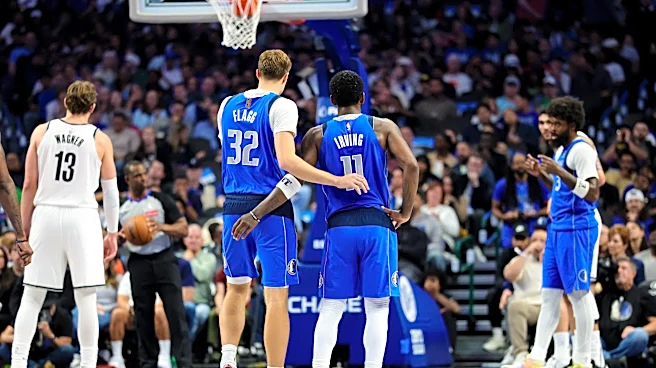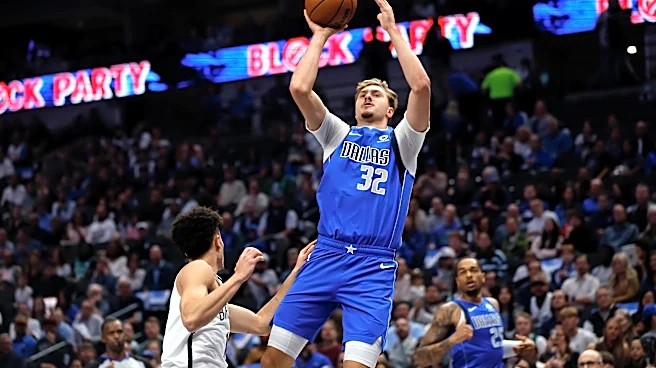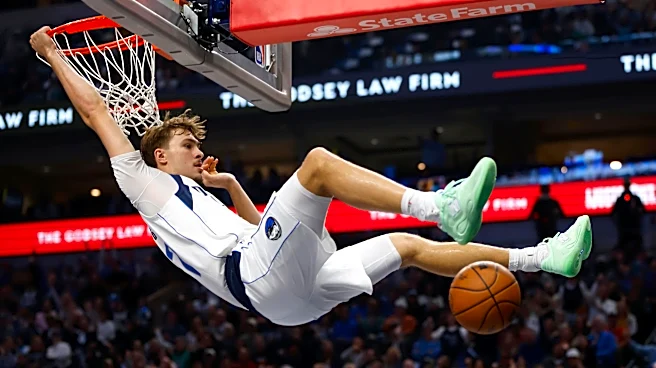

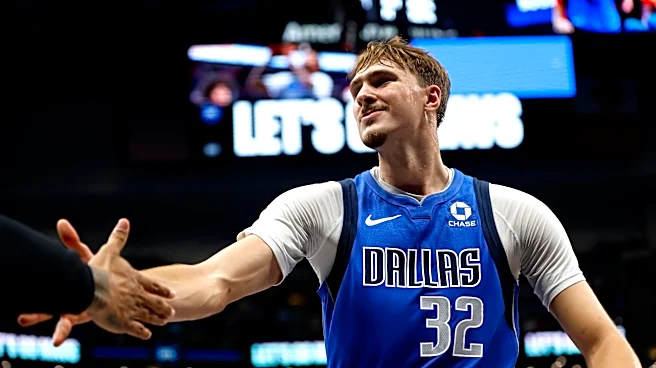
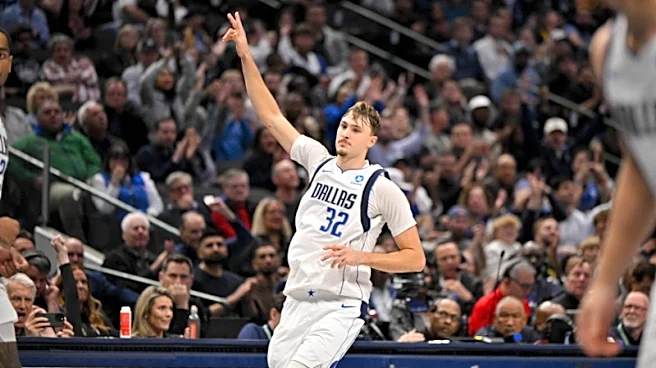
After an impressive Rookie of the Year campaign in the 2025-2026 season, Cooper Flagg entered this year looking to polish his offensive game and bring the Dallas Mavericks back to relevance. So far, he’s exceeded expectations in both.
Through 11 games, the Mavericks are 7-4 and have faced one of the league’s tougher schedules. Flagg has played in 10 of those games and is averaging 25.9 points, 6.9 rebounds, 6.9 assists, and 2.2 steals per game. He’s 19 years old. He joins a short list of only Luka
Doncic and LeBron James as one of the youngest players in NBA history to average at least 25 points, 5 rebounds, and 5 assists per game. At 20 years old, Doncic averaged 28.8 points, 9.4 rebounds, and 8.8 assists per game, while James, at 20, averaged 27.2 points, 7.4 rebounds, and 7.2 assists.
What’s been most impressive about his leap is Flagg’s shooting. He’s knocking down 50.0% of his shots, on 61.2% true shooting. He’s also been excellent at the free-throw line, shooting 90.3% there. Put those numbers together, and you get a player whose scoring efficiency is looking much more advanced than you might expect from a 19-year-old. Let’s take a deeper dive into the numbers.
He’s getting into the paint
Flagg has attempted 42 shots at the rim (in the restricted area), making 28 of them for 66.7%. That’s roughly 22% of his total attempts. It’s not an enormous portion of his shot diet, but he can get there whenever he wants. Flagg often uses his size and athleticism to his advantage. At 6-foot-9, he can finish with ease over smaller defenders but also has the finesse to finish around larger ones. That combination makes his drives difficult to contain. Unlike some young perimeter players who settle for difficult jumpers when their initial attack gets cut off, Flagg has multiple ways he can beat you off the dribble.
Flagg has taken 47 shots in the portion of the paint outside of the restricted area, the most of any zone on the floor. He’s made 27 of them, giving him a 57.4% shooting percentage. That’s roughly 26% of all his field-goal attempts. The non-restricted-area paint has become something of a sweet spot for Flagg because it allows him to use his size and touch without having to completely beat the defense to the rim. It’s also a shot that can be available when a defense successfully cuts off his initial drive. His comfortability to get to this part of the floor and shoot over defenders has proven to be his bread and butter.
Nearly half of Flagg’s shot attempts come inside the paint, and he’s incredibly efficient, shooting 61.7% on those attempts, 55-89. A teenager being this comfortable living in the paint is pretty rare, especially in today’s NBA, where outside shooting rules. Once Flagg expands his game beyond the three-point arc, he’ll be unstoppable.
He loves the midrange
Flagg has Kevin Durant-like capabilities in his mid-range game. He has attempted 43 mid-range shots, second only to his 47 attempts in the non-restricted-area paint. He’s made 21, good for 48.8%. That’s an important number because the mid-range is often treated as something players should eliminate from their offensive diet. For Flagg, that’s not necessarily the case. Use Durant as the example, who is currently fifth on the all-time NBA scoring leaders list, as he approaches 33,000 points.
At nearly 49%, Flagg is making enough of these shots to justify taking them — particularly because many of them are self-created. If a defender backs up to protect the drive, Flagg can shoot. If the defender presses up, he can attack. If the help defender steps into the lane, he can stop short. That puts a lot of pressure on the defense and leaves them with no real solution in guarding him.
There’s a tendency in modern basketball analysis to look at a player’s shot chart and immediately identify mid-range attempts as something that needs to be reduced. That isn’t necessarily true for Flagg. An efficient mid-range shooter who can also get to the rim, shoot threes and create for teammates is a completely different proposition than a player who lives in the mid-range because he can’t do anything else. Flagg is not that player. The mid-range is one part of his offensive toolkit, and right now, it’s a pretty good one.
One blemish: 3-point shooting
Now for the part nobody needs to sugarcoat – 29.2% from three isn’t good, making 14 of 48. The shot-chart data shows that almost all of Flagg’s three-point attempts are coming above the break. He has attempted 42 above-the-break threes and made only 10, good for 23.8%. That’s the biggest blemish on his shooting profile. The good news is that he’s actually been excellent from the corners. Flagg has attempted just six corner threes, but he’s made four of them for 66.7%. Obviously, that’s an extremely small sample, but worth noting. But it does reinforce an important point: the problem isn’t that Flagg can’t physically make a three. It’s consistency, particularly on higher-volume, above-the-break attempts.
One thing not to lose in the discussion about his three-point percentage is the fact that Flagg is willing to take them. He’s attempted 48 total threes. That’s enough volume to matter. He’s not hiding from the shot. He’s not passing up every open look. He’s taking the shots defenses are giving him. If he can get this percentage to 34-36%, Flagg will enter 30 points per game territory.
The verdict through 11 games
It’s too early to call Flagg a great shooter, but at 19 he is a great scorer. Shooting wasn’t his calling card coming into the NBA, but it’s evolving. Being an efficient scorer in today’s NBA without a reliable three-point shot (yet), bodes well for Flagg. As he continues to work on his outside shooting and that three-point percentage creeps northward, he will become one of the most unstoppable forces in the NBA. The three-point shot isn’t the foundation of Cooper Flagg’s offensive game. It’s the potential multiplier.
Flagg arrived on the heels of Luka Doncic’s departure to Los Angeles. And despite the weight of seismic expectations and a tumultuous situation when he arrived, Flagg has largely exceeded expectations. These numbers aren’t normal for a teenager. They point to something much larger – the next generational superstar.