


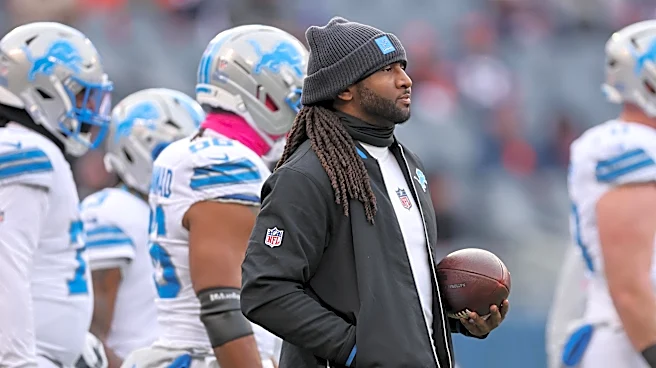
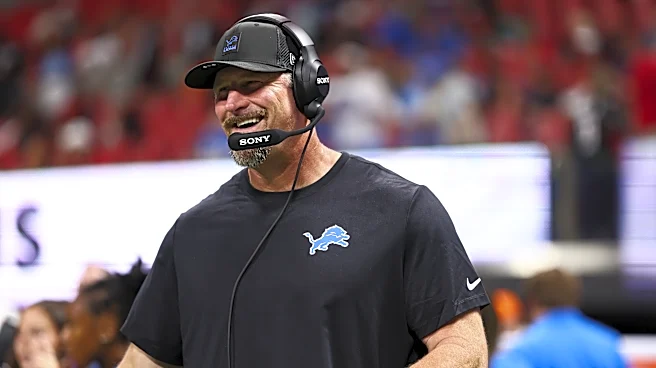
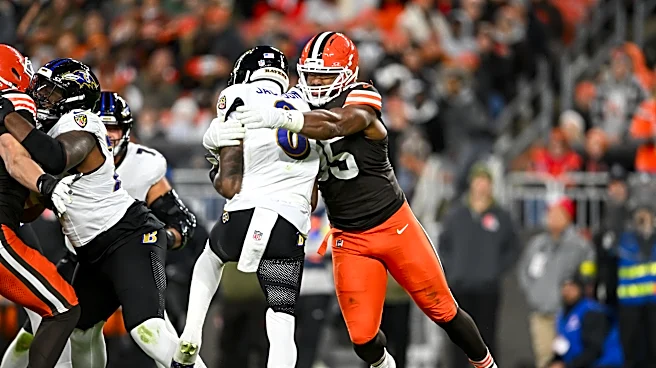
In part two of our yearly NFC North Positional Rankings, we take a deeper dive into the defensive side of the ball. Last year, two teams finished inside the Top 10 in Defensive DVOA, while the two who made the playoffs finished in the back half. While some could argue that defense wins championships, it sure didn’t win the division in 2025. A lot of that came down to injuries, especially with teams like Detroit.
That said, 2026 is a new season, and every team starts as healthy as they’ll be all season.
With the bulk of the offseason behind us, let’s take a more in-depth look at each positional group on the defensive side of the ball.
Edge Rusher
1. Minnesota Vikings
Admittedly, I’m not overly confident in any of these teams’ depth, which means the evaluation of these groups comes first on the depth chart. The Vikings are the only team with a proven one-two punch in Andrew Van Ginkle and Dallas Turner. While some might classify Turner as unproven, the second half of Year 2 was quite impressive. Depth is a big question here, but the same argument applies to all four teams. Thus, Minnesota takes the top spot simply based on the overall quality of its two starters.
2. Detroit Lions
Outside of Micah Parsons, there isn’t a better overall edge rusher in the division than Aidan Hutchinson. Fans of the other teams in the division still haven’t forgiven the Jaguars for passing on him, and rightfully so. The bigger issue for the Lions is everyone behind him. Derrick Moore has some intriguing upside, but I’d argue he was taken a round too early in April’s draft. The depth behind those two is spotty at best, although DJ Wonnum was a nice value add later in free agency.
3. Green Bay Packers
With a healthy Parsons, the Packers were one of the better defensive units in the league last season. The issue is that once he went down, the defense fell off a cliff. That’s what happens when there’s little depth behind your star player and a cornerback group that was pieced together with tape and glue. Former first-round pick Rashaan Gary is off to Dallas, leaving the Packers with even less depth. The hope is that Parsons will be ready to go around Week 5, which means the pressure is on 2023 first-round pick Lukas Van Ness to live up to his draft status. With Parsons, this group has a safe ceiling; without him, there could be problems.
4. Chicago Bears
Following last year, many expected the Bears to continue to overhaul their defensive line. Contrary to popular belief, Chicago stood pat, especially at defensive end. While that seems like a risky gamble unlikely to work out, they’ll be counting on a Year 3 step from Austin Booker, combined with better health from Dayo Odeyingbo and Shemar Stewart. Only time will tell how their gamble pays off, but it appears it’ll be another year of counting on Montez Sweat and Booker to produce a starting-level pass rush. The upside with this group is minimal.
Defensive Tackle
1. Minnesota Vikings
The top three on this list are all very closely tied together. More than anything, at least for me, this comes down to upside. Former undrafted free agent Jalen Redmond has had quite the NFL journey, but appears to have found a home in Minnesota. The Vikings added to this group with a first-round selection of Caleb Banks and a third-round pick of Domonique Orange. Banks’ upside is immense, but lingering concerns about a recurring foot injury bring plenty of risk with their first-round gamble. More than anything, it’s easy to bet on upside when Brian Flores is the defensive coordinator. That’s why they find themselves ranked 1A in this grouping.
2. Detroit Lions
If this were a year or two ago, Alim McNeill would be good enough to give the Lions the spot. Unfortunately, McNeill had a down year, and there are questions about how well he fits in this new-look Lions defense. Tyleik Williams should take a big step in Year 2, but unless Levi Onwuzurike proves that he can stay healthy, the depth behind the top two is in rough shape. If McNeill can get back on track and Williams lives up to his draft status, this is a very good group. There are simply too many questions for me to confidently rank them as No. 1 on this list, though.
3. Green Bay Packers
Before his season-ending injury, Devonte Wyatt looked primed for a career year, at least in the sack department. Although his run defense leaves a lot to be desired, it’s clear that he’s a pass-rushing force from the interior. A similar statement could be said for newcomer Javon Hargrave. He’s still a quality pass rusher despite his age, but his work against the run is a liability at best, which is why Minnesota cut him loose after just one year. Karl Brooks and third-round pick Chris McClellan provide better depth than any other team in the division, but stopping the run could be an issue for this group, which lowers their floor and ceiling.
4. Chicago Bears
Outside of a few key names over the years, Dennis Allen’s defenses have never been known for big names on the defensive line. So far in Chicago, that has remained true. Former second-round pick Gervon Dexter Sr. is entering a contract year but has yet to show consistency despite the flashes. The gamble, at least in year one of Grady Jarrett, did not pan out, and it’s hard to imagine things getting much better considering his age. Outside of those names, they’ll be relying on career backups like Neville Gallimore to help improve the unit. There’s internal optimism for sixth-round pick Jordan van den Berg, but he’s more of a developmental player than someone they should be counting on during his rookie season. On paper, this is unquestionably the worst group of the bunch.
Linebacker
1. Detroit Lions
When the picks of Jahmyr Gibbs and Jack Campbell happened in real time, it was easy to question the Lions’ overall strategy. A few years later, it became abundantly clear that general manager Brad Holmes knew exactly what he was doing. Campbell is a budding star and was rewarded with a hefty extension. Derrick Barnes is a quality player and has plenty of versatility. With Alex Anzalone off to Tampa Bay, both Barnes and Malcolm Rodriguez will see bigger roles. Keep an eye on rookie Jimmy Rolder as someone who could also carve out a role, even coming in as a Day 3 pick.
2. Green Bay Packers
Speaking of budding stars, Edgerrin Cooper looks well on his way to becoming one of the Packers’ best defenders heading into Year 3. The exit of former first-round pick Quay Walker marked a disappointing four-year stint, but the hope is that veteran Zaire Franklin still has some juice left in the tank and that his vast experience can help stabilize a group that needs more in 2026. Overall, this isn’t a super deep group. Still, the star power of Cooper, combined with the veteran presence of Franklin, should be enough to keep them in the “above average” category for the upcoming season.
3. Chicago Bears
Over the last few seasons, the Bears have had one of the more expensive linebacking corps in the league, and suffice to say, the production did not match the cost. With Tremaine Edmunds off to New York, Chicago chose to bring in Devin Bush, who is coming off a career year in Cleveland. Although T.J. Edwards is expected back this year, don’t be surprised to see a starting duo of Bush and DeMarco Jones, with Edwards coming off the bench as the primary SAM. Speed was a big focus this offseason, and with that addressed and quality depth behind the starters, the hope is that Allen can rely more on his linebackers in coverage.
4. Minnesota Vikings
On paper, this Vikings group is nothing to write home about. Eric Wilson and Blake Cashman are quality veterans, but the upside relies on second-round pick Jake Golday having a major impact in Year 1 as a rookie. Ivan Pace was a fun story as an undrafted free agent, but his production has gone down every year since he’s come into the league as an undrafted free agent. While I wouldn’t classify this group as “bad”, they are the only ones in the division without a proven difference-maker, which earns them the last spot on this list.
Cornerback
1. Chicago Bears
The top spot in these rankings assumes that both Jaylon Johnson and Kyler Gordon return to health and stay healthy. It wasn’t very long ago that Johnson was considered one of the top cornerbacks in the league, but after an injury-filled season, he’ll need to reprove himself in Chicago to stick around long-term. With Gordon, there’s little question he’s one of the best nickels in the league, but his availability was called into question after two separate long IR stints in 2025. The final starting spot comes down between former second-round pick Tyrique Stevenson and this year’s fourth-round pick Malik Muhammad. Luckily, the depth is solid across the board. This is one area of the defense that Allen relies heavily on for his defense to succeed.
2. Minnesota Vikings
Flores’ defenses have typically gotten the most out of every player on the field, but that didn’t stop the Vikings from making an under-the-radar signing in free agency with James Pierre. On paper, Minnesota might have the most stable starting three of the division; the bigger question is their overall ceiling as a group. Byron Murphy is damn-good, and Isaiah Rodgers had a very nice first year for the team. Depth is the biggest question for this group, followed by overall upside. This unit should play at an above-average level, but the two concerns above are why it ranks No. 2 on this list.
3. Detroit Lions
The Lions’ inability to hit at the top of the draft at this position is a big reason why they aren’t higher on the list than they should be. So far, Terrion Arnold has struggled to stay healthy, and when he’s been on the field, it hasn’t been pretty. D.J. Reed is a well-above-average player, but even he has holes in his game. The hope is that the added depth between Roger McCreary, Keith Abney, Rock Ya-Sin, and Ennis Rakestraw Jr. will produce a quality competition for the two corner spots opposite Reed. This feels like a make-or-break year for both Arnold and Rakestraw, but Abney produces some additional youthful upside. We’ll see if this is the year their long-term plan finally starts to come together.
4. Green Bay Packers
One year ago, the Packers took a swing in free agency on Nate Hobbs, and it failed miserably. Lingering durability concerns persisted, and his play, when healthy, simply wasn’t good. It allowed players like Keisean Nixon and Carrington Valentine to step up, but without an elite front seven, this group has plenty to be concerned about. Benjamin St. Juste and second-round pick Brandon Cisse join the mix, which should help raise the floor, but St. Juste is coming off a career year, and typically rookies like Cisse struggle to find their footing until later in the year. On paper, this isn’t as bad of a group as last year, but there are plenty of questions, especially with new defensive coordinator Jonathan Gannon taking over.
Safety
1. Detroit Lions
When healthy, there might not be a better safety duo in the league than Kerby Joseph and Brian Branch. That said, both struggled with injuries last year and will need to have a healthy year to regain their top form. On the plus side, their depth is improved with the free agent addition of Christian Izian and Chuck Clark, which will help if one (or both) of their starters go down again this season. Overall, the top-end talent and depth are unmatched, which is why they take the top spot for the second straight season.
2. Green Bay Packers
Last year’s top free agents might have been a disaster, but the 2024 group was a different story. That’s how they landed Xavier McKinney, who has consistently become one of the best ballhawking safeties in the league. When healthy, Evan Williams is a great complement. Their depth is a bit questionable with no proven names behind the starting two, but with a duo as good as what Green Bay has, it’s good enough to rank No. 2 on this list.
3. Chicago Bears
Heading into free agency, the Bears didn’t have a single safety under contract. While many expected them to retain All-Pro Kevin Byard, they decided to go in a different direction at not one, but two starting safety spots. First, they signed recent Super Bowl winner Coby Bryant to a three-year deal, and then took Dillon Thieneman with their first-round pick. In addition, they brought back Elijah Hicks and signed Cam Lewis for additional depth. The vision is there, but until Thieneman proves to be worth his draft position, they’ll hang out at No. 3.
4. Minnesota Vikings
Without Harrison Smith, the Vikings safety room is guaranteed to look different for the first time in over a decade. Many believed they would take Thieneman, but instead they gambled on the upside with Banks. While Josh Metellus is a fun (and good) player, the lack of a No. 2 option and overall depth keeps Minnesota at the bottom of the division to start the season at safety. Jay Ward should get the first opportunity to start, but don’t overlook third-round rookie Jakobe Thomas. There’s upside with the group, but the floor is unstable, to say the least.
Cumulative Scores:
1. Detroit Lions (1.8)
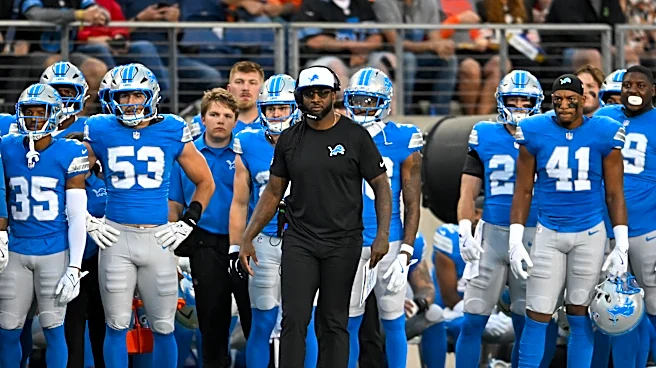
Similar to last year, the Lions have the most well-rounded defense on paper. That doesn’t mean it’ll play out that way, but second-year defensive coordinator Kelvin Sheppard did an outstanding job, especially considering the sheer amount of injuries he dealt with on that side of the ball. Ideally, the Lions will find a way to add another pass rusher, but even if they don’t, this unit has the best combination of talent, upside, and floor out of any of the four teams in the division.
2. Minnesota Vikings (2.4)
2025 didn’t play out the way Vikings fans had hoped, but most of that could be pinned on the offensive side of the ball. Although Minnesota lacks star players, they have a good mix of proven veterans, a deep defensive line, and enough youthful upside. Really though, the “secret weapon” continues to be Flores. With him calling the defensive plays, this is going to be a tough unit for any offense to scheme for.
3. Green Bay Packers (2.8)
The Packers might be coming in at No. 3 on this list, but with a healthy Micah Parsons and some more answers along the defensive line, this could still be a Top 7-10 unit in the league. Cornerback is one area that gives me some pause, and without a proven option opposite Parsons, the edge has some questions too. That said, if they can find their identity early in the season and continue to see growth from younger players, they should be just fine.
4. Chicago Bears (3)
I think I speak for most Bears fans when I say that I expected much more from them this offseason. Sure, they added Gallimore and three other names at defensive tackle, but the edge room remains untouched, and there are still questions along the back seven. The upside with this group isn’t great, and even with Allen’s creative scheme, it’s hard to see this group being much better than league-average. Frankly, league-average would be a best-case scenario. The floor for this group, especially without a league-high in takeaways, is much lower than it should be for a team that had its window open a year early.
How would you rank the defenses in the division?