



New York was so good on Wednesday that the Knicks made me hate them for effectively finishing my 2-hour night plan in 20 minutes.
I’m cool with the 4-1 in the last five, but let’s make it a bit more competitive for entertainment’s sake, please and thank you (I know I’m in the minority here. Alas)
Here’s everything said before and after yesterday’s bullfighting.
Mike Brown
On the entire Knicks roster contributing to the victory over Chicago:
“I take my hat off to everybody on the roster, because everybody contributed in some way, shape or form.”
On the Knicks delivering their most complete performance of the season against Chicago:
“That was as close to a 48-minute game as our group has had yet.”
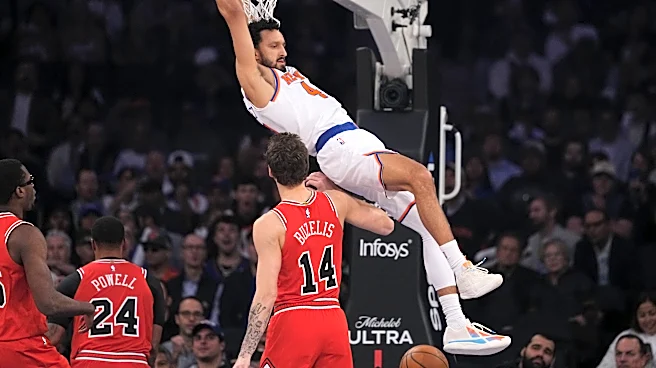
On the Knicks’ franchise-record-tying 84-point first half:
“It was a really good half, in terms of doing what we believe, what we should be doing offensively as our staples. Everybody was really good in those areas.”
On the Knicks’ spacing, ball movement and offensive execution against Chicago:
“I really liked how we started out. Spacing the floor well, touching the paint, and then re-spacing too. Our re-spacing was really quick and really decisive. We had some great, great looks early on. And everybody played well offensively. Our pace was pretty good, it’s something we’ve been talking about. Our offensive rebounding, for shooting a high percentage, was pretty good. Just a lot of good things.”
On Brunson finally making the shots he had been missing earlier in the season:
“He’s obviously missed some shots but he took the same shots tonight that he’s been taking. And, we felt we’ve gotten some good shots in previous games that just haven’t gone down. But the good part about it is, they went down tonight, and we defended. A great game by him as well as everybody else.”
On Jalen Brunson’s unusual endurance and how the Knicks track player fatigue:
“Our analytics guys [chart] how guys play in two-minute increments. Some guys, after six minutes, their three-point field-goal percentage drops. They also can track their movement — how quickly they’re still moving out on the floor, if that slows down or not. Jalen’s just seems to go up every two minutes.”
On Brunson’s toughness and why he must avoid overworking him before the playoffs:
“He’s about as durable as anybody I’ve been around. He’s mentally tough, physically tough, and he can push himself to go… But at the end of the day, it’s going to impact him, in my opinion, come playoff time, so I have to be conscious of not going to the well too much, especially at this point in the season.”
On why he did not let Brunson continue playing after his 22-point first quarter:
“No, because he played 12 straight minutes.”
On Brunson’s ability to maintain his production over extended playing time:
“Jalen’s numbers just seem to go up every two minutes and there’s really no time when it’s down. So, can he play 12 straight minutes? Yes. Can he play 36-38 minutes? Yes. But, at the end of the day, it’s going to impact him, in my opinion, come playoff time. I have to be conscious not to go to the well too much, especially at this point in the season.”
On Landry Shamet earning playing time through his performances:
“The tough part about it is I don’t remember when that happened last year, but it’s more so the reality [that] Landry is playing well. Landry, he played well in the last game. As you guys can see I’ll try to go with who I think is playing well. I’ll try to find minutes for them . . . Sometimes the other guys are playing good and that’s who you rock with to try to get the win at times.”
On Tyler Kolek replacing Jose Alvarado as the Knicks’ backup point guard:
“I said this before, every position coming off the bench is a competition, all the time. Nobody’s minutes are set in stone. … Jose had the first opportunity in our last game. And then I gave Tyler an opportunity in the second half [against the Nets] and Tyler played well. So I’m gonna go with Tyler. And if I think I need to make a change because Tyler’s not getting it done in my eyes, then I’ll go back to Jose.”
On limiting the Knicks’ starters’ minutes during the first games of the season:
“I don’t want to kill these guys because they played more games — if you’re talking about last season — than most of them had in their career. And the offseason was a lot shorter than what it’s usually been. And it takes a toll. Playing (19) playoff games, it’s a lot different than playing (19) regular-season games. It might be a game-and-a-half just because of how physical the games are and the mental stress that goes into it, the attention to detail in each individual possession.”
On the physical and mental toll of the Knicks’ championship season and balancing rest with winning:
“It can be a mental and physical toll that can impact everybody differently. I have to be careful of not overreacting and trying to lay the hammer, especially early, on every little thing. I got to let our guys breathe a little bit and get their feet underneath them, not just from a physical standpoint, but a mental standpoint as well, because we played a lot of basketball last year and we’re right back to it. I also need to be careful in making sure that I’m not overextending all of our guys early. I wanted to use a 10-man rotation. There were a couple of games I think I went to nine.
“I hate saying this — I want to win, I’m going to try to win, but I’m not going to do that to the detriment of our group later on. So, I’ve got to find the balance of how to use my bench a little better to give these guys some more needed rest during the course in games, so they’re not at 35, 36, 37 minutes right now. I thought that helped us out a lot last year. We’ll up their minutes as the year goes along. I haven’t been too good with that so far this year.”
On adjusting the rotation after the Knicks’ slow start:
“We experimented with different stuff and our players not getting it done caused us to start off a little slow. So, to get us on track, we’re going to hold the fort down with a veteran group of guys.”
On managing the Knicks’ practices and playing time:
“I have to be conscious of how we practice. And I have to try to be conscious of guys’ minutes.”
On calling out his players for losing track of the game at times:
“We hit a three, we celebrated the three and they got a layup on the other end… that’s one of the little things that we talk about embracing playing with next play speed, playing the right way no matter what the score is… (by not doing that), that’s how you build bad habits.”
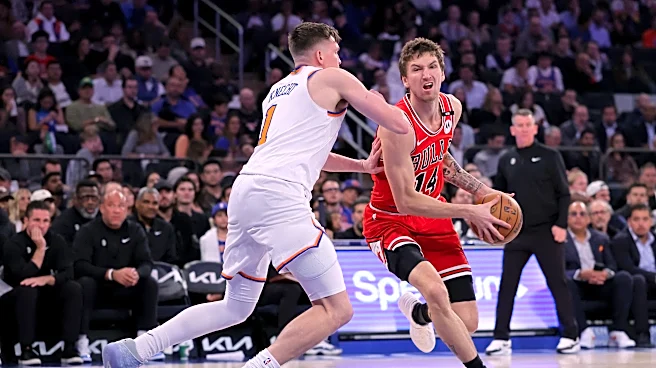
On Dalton Knecht’s offensive versatility and defensive development:
“He’s a scorer. He’s not just a shooter. A lot of people think he’s a shooter because he’s white. I said it for you, I hope I don’t get in trouble. He can go get it. He can shoot from range, he’s got a medium game, he can get to the rim, and he can pass. He’s got to work defensively and I thought tonight, he tried to play within himself and contributed the best way he could.
“There were a couple things defensively that he can do a little better and that’s what he really has to concentrate on but I thought he gave us a nice little lift, especially offensively when he played towards the end of the first half.”
On the Knicks’ improvement despite their early-season inconsistency:
“You want it, but you can’t live and die by trying to have everything be great and-or perfect in a matter of a week or two weeks. We know we can play better. The crazy part about it is we’re 3-1 in our last four. Knowing that we’re hungry for more, and that strive for perfection is going to help us out when it really counts at the end of the day.
“So we just can’t let go of the rope, we have to keep trying to get better on both sides of the ball and make sure that we’re embracing the little things so that we can hit a groove so we’ll be where we want to be at the end of the season — but knowing that we’re going to go through ups and downs throughout the course of the year.”
On giving starters more opportunities to overcome their struggles than bench players:
“Our starters are going to get a lot more rope than the guy’s coming off the bench, you know? And that’s kind of how I look at it. Again, this is a process and I have to always be careful of not trying to want [perfection]. You want it, but you can’t live and die by trying to have everything be great and/or perfect in a matter of a week or two weeks.”
Jalen Brunson
On finding his rhythm and creating offense through defense:
“Obviously, making 3s, but I think making our two-pointers are really important as well. When you have it going, it feels good. Just trying to play off that and use your gravity to make plays. I feel like it really started on the defensive side of the ball, we were able to get stops and get out in transition.”
On using his scoring gravity to get teammates involved:
“When you have it going, it feels good. And then just trying to play off that and using my gravity to get teammates involved.”
On whether he would ask Mike Brown to leave him in a game to pursue an exceptional scoring performance:
“Possibly, but it has to be the right moment, right time. I don’t want to say no because you never know when you’re in this situation, but I just want to respect the game as much as possible.”
On the Knicks’ defensive effort setting up their offensive breakout against Chicago:
“I feel like it started on the defensive side of the ball. We were able to get stops and get out in transition, create a comfortable lead, and I think we played well with the lead for the most part.”
Karl-Anthony Towns
On the Knicks’ familiarity with their Eastern Conference rivals and the advantage of roster continuity:
“I think everyone in the East knows each other. This is our third year now with each other, so you know, it’s rare. That’s one of our advantages.”
On comparing the current Knicks to LeBron James and the Miami Heat’s Big Three era:
“At the end of the day, people knew, when LeBron and the Big Three were there, you had to go out there and beat them. Everyone brings their best against the New York Knicks. You’ve got to protect the jersey, the city at all costs.”
On handling the distractions and pressure of playing in New York:
“I mean, we did it all last year. You’re in New York, you’ve got to play through distractions; that’s what comes with playing here. There’s a lot of pressure, a lot of noise.”
On the Knicks’ ability to accomplish something special by staying united:
“But as long as this locker room, which has shown it can do, stays together and continues to just believe and fall into each other when things get tough, we can do something special.”
On how the Knicks grew closer during their difficult stretch after winning the NBA Cup:
“We didn’t look our best version, and we heard about it. This team continued to fall into each other instead of splitting away and … separating. We got closer and closer.”
Josh Hart
On the pressure of playing in New York and how quickly fans’ expectations can change:
“I guarantee you, I’m going to be sitting here rock bottom. I don’t think I’m ever going to be on my high horse, either. We’re in New York. Everything rides on the next game. We go on a 10-game winning streak and the next game we lose, they’re ready to burn the place down. We know what it is. It’s the tough part of being in New York.”
On the Knicks’ short offseason and the physical toll of the championship celebrations:
“We gotta go out there and win games. And we gotta get those championship habits back, because we were away from it for I don’t know how many months. I think it’s a tough spot. It’s kinda like a little conundrum, because obviously we played into mid-June. Then in the summer obviously you’re working out, you’re doing that, but you also are enjoying the fruits of the labor of winning in terms of going to brands, going to appearances. Off the court, it’s kind of booming for you. So, you’re doing all of that, so that takes a little bit of a wear on you. And then you get into it. So sometimes, the body has to kinda catch up.”
Miles McBride
On the Knicks’ open communication and willingness to have difficult conversations:
“It’s open. Anybody can step up, whether it’s the [bench] guys or starters. That’s the thing about this team, our chemistry is so good and we have a lot of trust because we see each other putting forth a lot of work.”
Jordan Clarkson
On accepting a reduced role and contributing energy even when he isn’t playing:
“[Brown] knows I’m always ready. My teammates know that I’m always ready and am going to try to bring the energy. If that’s not on the stat sheet or paper, just trying to do the little things, that’s something that I’ve grown in since I’ve been here. That really took priority for me.”
Dalton Knecht
On being ready when the Knicks activated him for his debut against Chicago:
“I wasn’t surprised, I just came in ready to go. The coaches said you’re active so that just means be ready.”
On his first Knicks points coming on a putback dunk and making his debut:
“It was great. Honestly I didn’t hear much just because I’m so locked in, but it was good. Pretty much my first play was a putback dunk so it’s cool, it’s great.”
On wanting to contribute as a scorer and defender:
“I think I just go out there and impact the game on all three levels. And I just wanna show on the other side of the ball, getting the ball pressure and stuff like that and going in and grabbing defensive rebounds.”
On staying prepared for opportunities and learning from teammates on the bench:
“Be ready so you don’t have to get ready. Just watching on the bench and talking to my teammates is really helpful and it was easy to get in there and play confident. All the guys out there gave me a good look.”