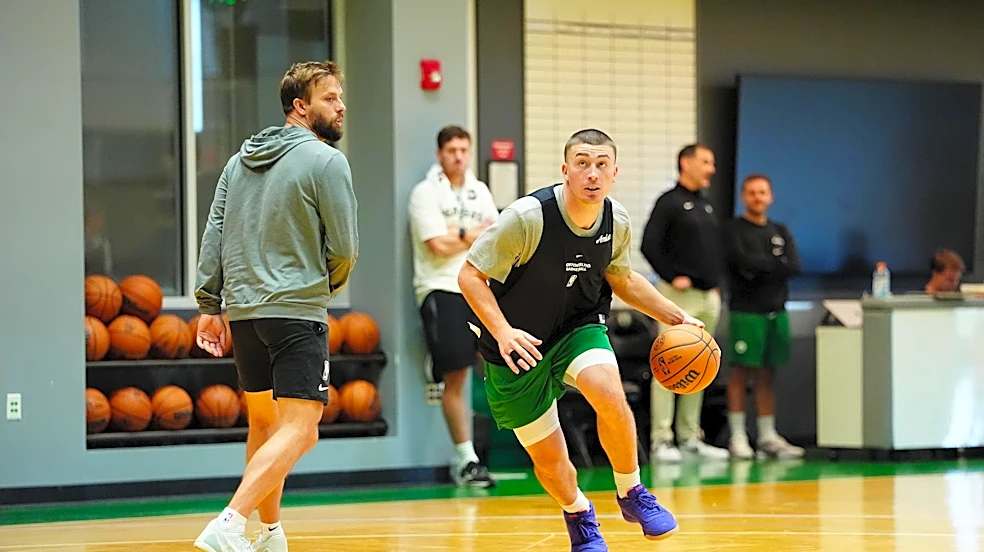



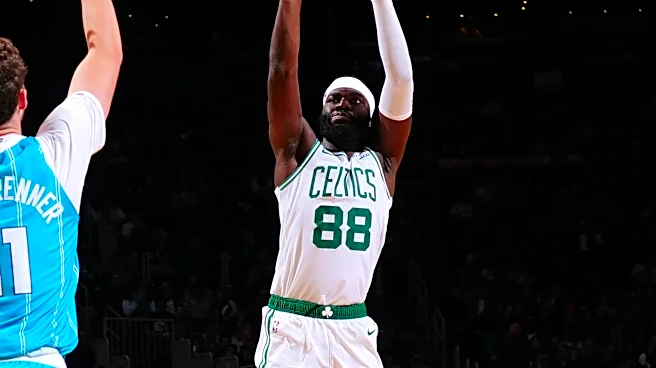
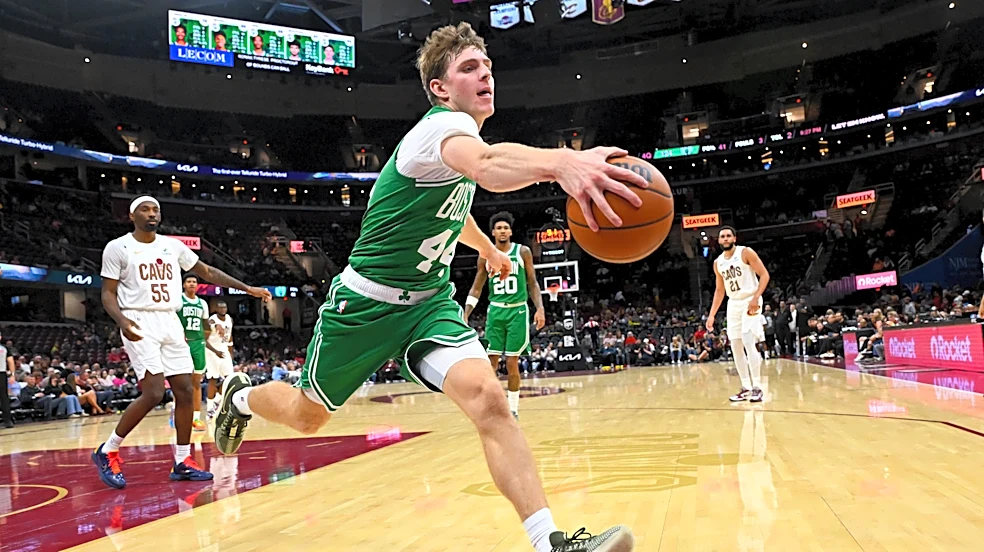

Payton Pritchard has been a starter and a sixth man. Overlooked and then underpaid. Scouted as too small, then played a big part on a championship team. Now, he’s gone from making about $8 million a year to signing a $44.2 million extension. Through all of it, he says the starting label matters a lot less than what he does once he’s on the floor.
“To me, a starter is the amount of minutes you play,” Pritchard said after Sunday’s practice. “Do you finish games? Are you playing 30-plus minutes? Then
you are a starter. You know what I mean?”
It’s a useful way to think about a lineup spot, especially on a Celtics team that will need to figure out how its pieces fit together. The starting five will get plenty of attention. Pritchard’s point is that the label doesn’t tell you much by itself.
“How do you impact the game is what really matters to me.”
The label matters less than the minutes
Pritchard has seen both sides of the conversation. He started every game through the first half of last season, then moved to the bench in February as Joe Mazzulla adjusted the rotation. He remained an important part of the team in both roles. Boston didn’t suddenly need less from him because he stopped being introduced with the starters.
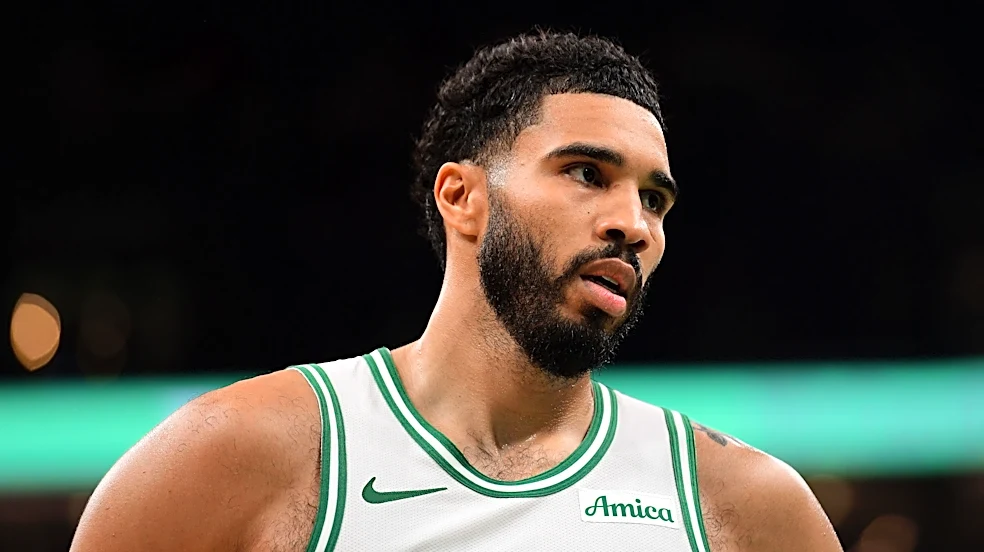
Now, the Celtics are working through another version of that question. Jayson Tatum is back, Jaylen Brown is gone, and Paul George joins Derrick White and Pritchard in a backcourt with a lot of responsibility to sort out. Pritchard could start or he could come off the bench. The decision will likely depend on what Mazzulla thinks the group needs at different moments.
Pritchard sounds comfortable leaving that choice to the coach. “If that’s what Joe thinks benefits the team the most,” he said of coming off the bench, he’ll try to be the best player he can in those minutes.
That isn’t the same as saying the role doesn’t matter. Pritchard has been clear about wanting opportunities to play and show what he can do. Rather, he seems less interested in the status attached to a role than in what he can do once he has one. A starting spot is one way to get minutes, but it isn’t the only way to matter. Pritchard knows that better than most.
Boston’s expectations suit him
He has reasons to value the demands that come with playing in Boston. Asked what he loves about the city and organization, Pritchard pointed to the expectations.
“You go for championships,” he said. “They hold you to a high standard. The media holds you to a high standard, organization too, and I appreciate being in an environment like that.”
That standard can make every rotation decision feel loaded. If a player starts, fans can read it as a sign of trust. If he comes off the bench, they might wonder what’s wrong with him. Pritchard is offering a much less dramatic read: look at how much he plays and how he affects the game.
He has earned the right to make that case. Pritchard is coming off the best season of his career, averaging 17 points, 5.2 assists and 3.9 rebounds while winning Sixth Man of the Year. He just recently signed a two-year, $44.2 million extension, giving the Celtics a longer commitment to a guard whose role has grown steadily.
Still, he isn’t talking like the contract or the award entitles him to a starting spot. His focus is on how good he can become. “I’m going after my personal greatness for basketball,” he said. “I’m not chasing anybody but myself.”
That’s a pretty ambitious goal for someone who also says he doesn’t care about hearing his name during introductions. The two ideas fit together, though. Pritchard wants to keep improving and take on more. He just doesn’t seem to think the starting lineup is the scoreboard for that.
The Celtics will have plenty to sort out before the season gets rolling. Whether Pritchard is in the first group or the second will be one of the easiest things to track, and probably one of the least useful ways to measure his importance. For him, the real question is what he does after the introductions are over.